THE ADVENTURE COLLECTIVE® · Independent discovery and booking for outdoor travel

Wander narrow alleys and rooftop viewpoints in Bukchon Hanok Village with a self-guided audio tour. Download the app, follow the route, and trade the bustle of Seoul for quiet courtyards, craft workshops, and layered history.
Wander narrow alleys and rooftop viewpoints in Bukchon Hanok Village with a self-guided audio tour. Download the app, follow the route, and trade the bustle of Seoul for quiet courtyards, craft workshops, and layered history.
You step off the polished city street into a web of narrow alleys where wooden eaves lean close and tiled roofs crowd the skyline. The walk guides you up gentle slopes between Gyeongbokgung and Changdeokgung; each hanok seems to watch your passage, its carved beams whispering histories. The audio guide cues stories as you pause at courtyards, letting the village breathe around you.
Verified experiences and guided adventures in the surrounding area.
Operated by TouringBee · Seoul, Seoul
You step off the polished city street into a web of narrow alleys where wooden eaves lean close and tiled roofs crowd the skyline. The walk guides you up gentle slopes between Gyeongbokgung and Changdeokgung; each hanok seems to watch your passage, its carved beams whispering histories. The audio guide cues stories as you pause at courtyards, letting the village breathe around you.
Bukchon sits on Seoul’s central ridgeline and preserves architecture from the Joseon era through the early 20th century. Traditional hanok layout — inner courtyards, ondol floors, and protective roof tiles with guardian japsang figures — reveals social order and craft traditions. The neighborhood’s proximity to royal palaces made it a home for scholars and officials; later, craftsmen and modern restorations layered new details onto old timber.
Cultural stops along the route include small museums, craft workshops, and the Bukchon Observatory, which frames the collision of wooden roofs and glass towers. Local etiquette matters: these are lived-in homes, not staged sets. The audio tour includes 22 narrated stops and an offline map so you can wander at your own pace without a human guide.
Practical notes: allow 2–3 hours for a thorough self-guided loop, download the app and audio before you go, and carry a power bank. Wear sturdy shoes for steps and uneven pavements, and visit early morning or late afternoon to avoid crowds. Museum entries and hands-on workshops usually require separate tickets; check opening hours in advance. With navigation in your pocket and respect for residents, Bukchon rewards slow walking and attentive listening.
easy.
2–3 hours.
Suitable for most fitness levels; able to walk on uneven stone steps and gentle inclines for a few hours
No—once downloaded the tour operates offline; download audio and the map on Wi‑Fi before you arrive.
No—entry fees to houses, museums, and workshops are typically separate and must be purchased on site.
The route is family-friendly but includes narrow lanes and steps that make stroller access difficult in places.
Plan 2–3 hours to follow the full route at a relaxed pace, including short stops at observatories and craft centers.
Bukchon developed as a residential quarter for Joseon-era officials between the royal palaces; many hanoks survive because of sustained preservation efforts since the mid-20th century.
Visitors are asked to tread lightly—stay on public paths, respect private property, and support local crafts and museums that fund restoration.
TouringBee operates guided outdoor trips and adventures with an emphasis on safety, stewardship, and memorable experiences.

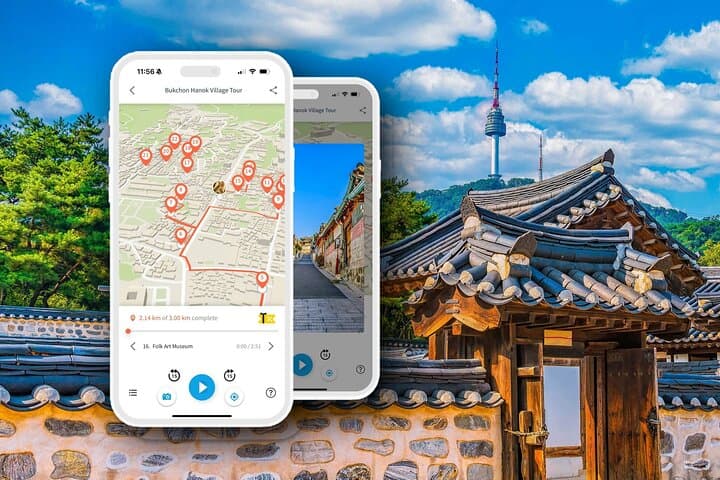


You step off the polished city street into a web of narrow alleys where wooden eaves lean close and tiled roofs crowd the skyline. The walk guides you up gentle slopes between Gyeongbokgung and Changdeokgung; each hanok seems to watch your passage, its carved beams whispering histories. The audio guide cues stories as you pause at courtyards, letting the village breathe around you.
You step off the polished city street into a web of narrow alleys where wooden eaves lean close and tiled roofs crowd the skyline. The walk guides you up gentle slopes between Gyeongbokgung and Changdeokgung; each hanok seems to watch your passage, its carved beams whispering histories. The audio guide cues stories as you pause at courtyards, letting the village breathe around you.
Bukchon sits on Seoul’s central ridgeline and preserves architecture from the Joseon era through the early 20th century. Traditional hanok layout — inner courtyards, ondol floors, and protective roof tiles with guardian japsang figures — reveals social order and craft traditions. The neighborhood’s proximity to royal palaces made it a home for scholars and officials; later, craftsmen and modern restorations layered new details onto old timber.
Cultural stops along the route include small museums, craft workshops, and the Bukchon Observatory, which frames the collision of wooden roofs and glass towers. Local etiquette matters: these are lived-in homes, not staged sets. The audio tour includes 22 narrated stops and an offline map so you can wander at your own pace without a human guide.
Practical notes: allow 2–3 hours for a thorough self-guided loop, download the app and audio before you go, and carry a power bank. Wear sturdy shoes for steps and uneven pavements, and visit early morning or late afternoon to avoid crowds. Museum entries and hands-on workshops usually require separate tickets; check opening hours in advance. With navigation in your pocket and respect for residents, Bukchon rewards slow walking and attentive listening.