THE ADVENTURE COLLECTIVE® · Independent discovery and booking for outdoor travel

See Bologna as locals do: glide under arcades, ring past medieval towers and cross lively squares on a 2-hour guided bike tour. Learn quick city history while covering more ground than on foot.
See Bologna as locals do: glide under arcades, ring past medieval towers and cross lively squares on a 2-hour guided bike tour. Learn quick city history while covering more ground than on foot.
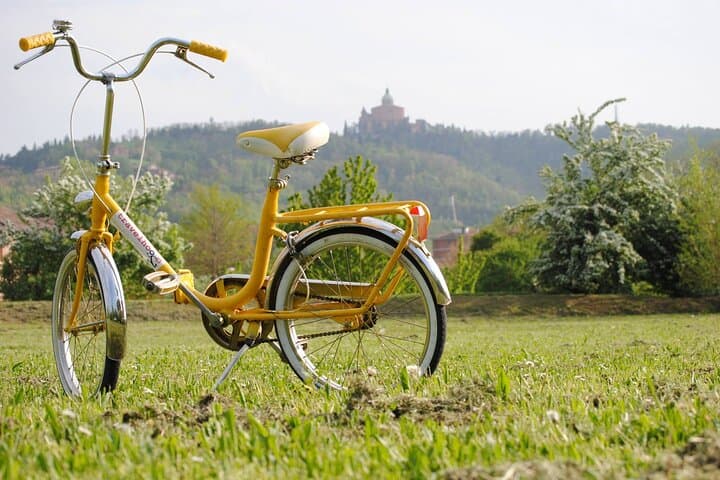
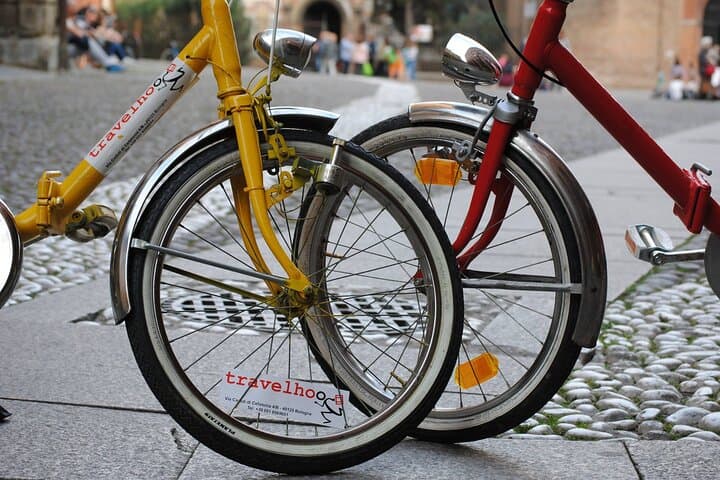
Pedaling away from Piazza Maggiore, the city opens in a succession of stone facades and long arcades that both shade and steer your route. The porticoes seem to reach forward, guiding wheels over cobbles and smooth pavement as you move between medieval towers, church squares and university courtyards.
Verified experiences and guided adventures in the surrounding area.
Operated by TRAVELHOO · Bologna, Emilia-Romagna
Pedaling away from Piazza Maggiore, the city opens in a succession of stone facades and long arcades that both shade and steer your route. The porticoes seem to reach forward, guiding wheels over cobbles and smooth pavement as you move between medieval towers, church squares and university courtyards.
This two-hour loop threads together Bologna’s layered past: Roman roads that became the Via Emilia, the medieval towers that marked family power, and the Renaissance palazzi that now house civic life. Geologically the city sits on the Po Plain—flat, with soils that supported agriculture and the growth of the trade routes that made Bologna a crossroads of culture and cuisine.
Culturally the ride is compact history: a stop at Piazza Maggiore, a glance at the Two Towers, a pass by the Archiginnasio and the Basilica of San Domenico. Local life unfolds at market stalls and café tables; your guide will point out culinary landmarks as readily as architectural ones. The route favors low-grade streets and protected cycle paths, making it accessible but lively—expect short stretches of cobbles and occasional tram tracks that demand attention.
Practical guidance: come with a helmet (often provided), a filled water bottle, and comfortable shoes. The tour covers roughly 8–12 km on mostly flat terrain with minimal elevation gain; group size is typically small (under 15). Aim for morning or golden-hour rides to avoid heat and busy vehicle traffic. Keep a moderate pace to absorb history without losing the rhythm of the city—Bologna rewards steady curiosity as much as speed.
easy.
2 hours.
Light cardio and basic balance; suitable for beginners and most ages
Most local operators supply helmets; you can bring your own for comfort—confirm during booking.
Expect about 8–12 km over two hours on mostly flat terrain; the pace is moderate and suitable for casual cyclists.
Tours commonly begin at a central meeting point such as Piazza Maggiore; exact meeting details are provided after booking.
Children with experience on bikes can join; the tour is not recommended for pregnant travelers or those with serious cardiovascular conditions.
Bologna grew around the Via Emilia and the medieval university; its towers once marked rival family power and civic pride.
Ride with respect for pedestrian zones and historic surfaces; use bike racks and avoid off-route shortcuts that erode pavements.
TRAVELHOO operates guided outdoor trips and adventures with an emphasis on safety, stewardship, and memorable experiences.
Pedaling away from Piazza Maggiore, the city opens in a succession of stone facades and long arcades that both shade and steer your route. The porticoes seem to reach forward, guiding wheels over cobbles and smooth pavement as you move between medieval towers, church squares and university courtyards.
Pedaling away from Piazza Maggiore, the city opens in a succession of stone facades and long arcades that both shade and steer your route. The porticoes seem to reach forward, guiding wheels over cobbles and smooth pavement as you move between medieval towers, church squares and university courtyards.
This two-hour loop threads together Bologna’s layered past: Roman roads that became the Via Emilia, the medieval towers that marked family power, and the Renaissance palazzi that now house civic life. Geologically the city sits on the Po Plain—flat, with soils that supported agriculture and the growth of the trade routes that made Bologna a crossroads of culture and cuisine.
Culturally the ride is compact history: a stop at Piazza Maggiore, a glance at the Two Towers, a pass by the Archiginnasio and the Basilica of San Domenico. Local life unfolds at market stalls and café tables; your guide will point out culinary landmarks as readily as architectural ones. The route favors low-grade streets and protected cycle paths, making it accessible but lively—expect short stretches of cobbles and occasional tram tracks that demand attention.
Practical guidance: come with a helmet (often provided), a filled water bottle, and comfortable shoes. The tour covers roughly 8–12 km on mostly flat terrain with minimal elevation gain; group size is typically small (under 15). Aim for morning or golden-hour rides to avoid heat and busy vehicle traffic. Keep a moderate pace to absorb history without losing the rhythm of the city—Bologna rewards steady curiosity as much as speed.