THE ADVENTURE COLLECTIVE® · Independent discovery and booking for outdoor travel

A half-day visit to the Blue Eye (Syri i Kaltër) delivers startling turquoise springs, karst geology, and a chance to spot the rare blue dragonfly. Practical guidance on timing, footwear, and conservation helps you plan a respectful visit.
A half-day visit to the Blue Eye (Syri i Kaltër) delivers startling turquoise springs, karst geology, and a chance to spot the rare blue dragonfly. Practical guidance on timing, footwear, and conservation helps you plan a respectful visit.
You step off the shaded trail and the forest exhales: cool, damp air that carries the metallic hint of limestone and the hush of water. The Blue Eye reveals itself as a circular ulcer of turquoise, its surface glassy and impossibly clear, fed by an ancient karst spring that seems to breathe from the hillside.
Verified experiences and guided adventures in the surrounding area.
Operated by Rei Tours · Sarandë, Vlorë County
You step off the shaded trail and the forest exhales: cool, damp air that carries the metallic hint of limestone and the hush of water. The Blue Eye reveals itself as a circular ulcer of turquoise, its surface glassy and impossibly clear, fed by an ancient karst spring that seems to breathe from the hillside.
Geology here is straightforward and dramatic — limestone fractured by time creates underground channels, and a concentrated upwelling sends cold, mineral-rich water to the surface. Locals have long treated the site as a landmark; it appears in regional stories and was a stopping place on rural footpaths connecting villages. The rare Blue Dragonfly mentioned by guides is a real, showy inhabitant, hovering above riffles where minnows dart.
The visit is a short, low-effort nature loop. Expect shaded boardwalks and some uneven stone steps; the spring itself drops steeply and is deeper than it looks (diving is not advised). Photography is excellent in morning or late afternoon light when the colors spike and the stream below dares you toward its current.
Practical notes: tours from Sarandë are typically half-day and include transport; wear grippy shoes for wet rock, bring layers—the spring stays cold even in summer—and insect repellent. Respect marked trails, avoid entering the source pool, and carry out any trash; the setting is fragile and recovery slow. A 2–3 hour stop here makes for a memorable half-day escape from the coast.
easy.
3 hours.
Suitable for most fitness levels; requires short walks on uneven paths and steps.
Most visitors take a guided half-day tour or drive ~25–40 minutes inland; roads are a mix of paved and maintained rural surfaces.
Swimming in the actual spring source is discouraged or prohibited to protect water quality and because the pool is very cold and deep.
There are short boardwalks and viewpoints suitable for many visitors, but access to the immediate shoreline involves steps and uneven ground.
Early morning or late afternoon outside of summer peak season reduces both crowds and glare on the water.
The spring sits within traditional rural routes and features in local folklore; communities historically valued it for freshwater and seasonal foraging.
The karst spring is sensitive to runoff and litter; follow paths, avoid entering the source, and use local waste facilities to minimize impact.
Rei Tours operates guided outdoor trips and adventures with an emphasis on safety, stewardship, and memorable experiences.
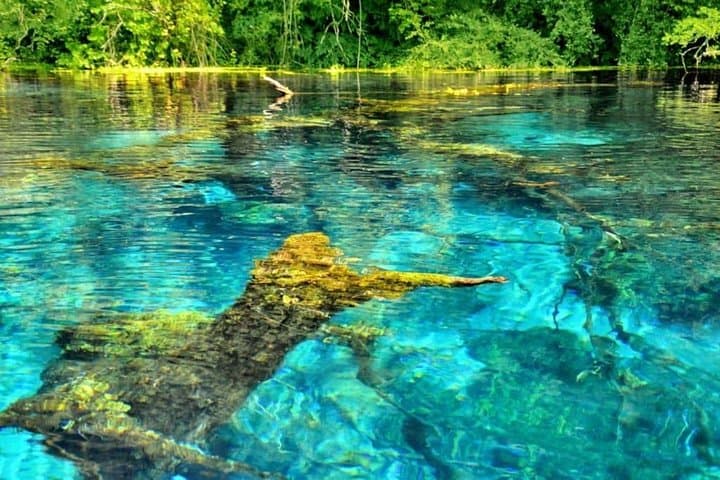


You step off the shaded trail and the forest exhales: cool, damp air that carries the metallic hint of limestone and the hush of water. The Blue Eye reveals itself as a circular ulcer of turquoise, its surface glassy and impossibly clear, fed by an ancient karst spring that seems to breathe from the hillside.
You step off the shaded trail and the forest exhales: cool, damp air that carries the metallic hint of limestone and the hush of water. The Blue Eye reveals itself as a circular ulcer of turquoise, its surface glassy and impossibly clear, fed by an ancient karst spring that seems to breathe from the hillside.
Geology here is straightforward and dramatic — limestone fractured by time creates underground channels, and a concentrated upwelling sends cold, mineral-rich water to the surface. Locals have long treated the site as a landmark; it appears in regional stories and was a stopping place on rural footpaths connecting villages. The rare Blue Dragonfly mentioned by guides is a real, showy inhabitant, hovering above riffles where minnows dart.
The visit is a short, low-effort nature loop. Expect shaded boardwalks and some uneven stone steps; the spring itself drops steeply and is deeper than it looks (diving is not advised). Photography is excellent in morning or late afternoon light when the colors spike and the stream below dares you toward its current.
Practical notes: tours from Sarandë are typically half-day and include transport; wear grippy shoes for wet rock, bring layers—the spring stays cold even in summer—and insect repellent. Respect marked trails, avoid entering the source pool, and carry out any trash; the setting is fragile and recovery slow. A 2–3 hour stop here makes for a memorable half-day escape from the coast.