THE ADVENTURE COLLECTIVE® · Independent discovery and booking for outdoor travel

Walk a 300-foot colonial tunnel and descend 217 steps to a volcanic, ocean-fed bathing pool at Owia. This guided half-day tour blends local history, rugged geology, and a refreshing swim in reef-fringed water.
Walk a 300-foot colonial tunnel and descend 217 steps to a volcanic, ocean-fed bathing pool at Owia. This guided half-day tour blends local history, rugged geology, and a refreshing swim in reef-fringed water.
The ocean hits the black volcanic reef and the pool answers back, its calm surface a bright green pocket against the windward coast. You step into the park above Owia Salt Pond and the scent of salt and leaf litter pulls you toward the 217-step descent that opens onto a naturally sheltered bathing pool ringed by jagged basalt.
Verified experiences and guided adventures in the surrounding area.
The ocean hits the black volcanic reef and the pool answers back, its calm surface a bright green pocket against the windward coast. You step into the park above Owia Salt Pond and the scent of salt and leaf litter pulls you toward the 217-step descent that opens onto a naturally sheltered bathing pool ringed by jagged basalt.
This short day tour pairs two contrasting pieces of northern St Vincent: a 300-foot colonial-era tunnel cut through volcanic rock around 1815 to connect Grand Sable and Byrea Bay, and a coral-ringed, ocean-fed salt pond where reef fish dart among the rocks. The tunnel is a reminder of the island’s plantation past — an engineering route for moving sugar built with forced labor — while the pond reflects the island’s living geology: lava flows, reef accretion, and a littoral forest that clings to steep slopes.
Culturally the site mixes community life and tourism: a garden with gazebos, local food stalls, and a children’s play area sit above the pond. Expect guides to point out birdlife, reef formations, and the tunnel’s stonework as part of the narrative.
Practicalities: the tour is roughly half a day, with a fair amount of climbing and uneven ground. Wear closed or sturdy water shoes for the rock and reef, bring reef-safe sunscreen, and pack at least 1–2 liters of water. Tide and swell can change pond conditions; follow your guide and avoid standing on coral. Timing mid-morning reduces wind and gives the best light for swimming and photography.
moderate.
6 hours.
Moderate fitness: able to climb 200+ steps, walk uneven volcanic rock and stand for up to an hour while exploring.
There are approximately 217 steps from the park level down to the pond; they are uneven in places so take them slowly.
Yes—the tunnel is roughly 300 feet long and usually safe with a guide; bring a small headlamp if you want extra light, though guides often carry lighting.
You can swim and shallow snorkel over the reef fringes, but avoid standing on coral and check with your guide about currents and visibility.
Yes—conditions depend on swell; guides will advise when the pond is safe for swimming and may restrict access during rough seas.
The Black Point Tunnel was cut in the early 19th century by British colonial engineers to move sugar from inland estates to coastal bays; the Owia area retains both plantation-era traces and living coastal traditions.
The reef and littoral forest are ecologically sensitive—stay on paths, use reef-safe products, and avoid touching coral to minimize impact.
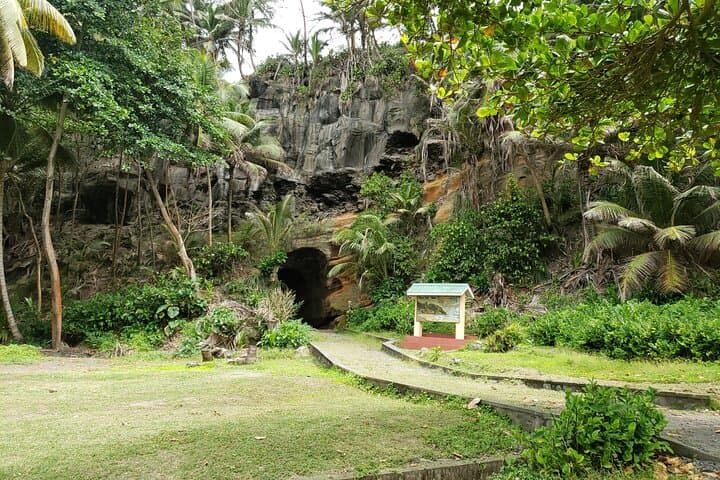
The ocean hits the black volcanic reef and the pool answers back, its calm surface a bright green pocket against the windward coast. You step into the park above Owia Salt Pond and the scent of salt and leaf litter pulls you toward the 217-step descent that opens onto a naturally sheltered bathing pool ringed by jagged basalt.
The ocean hits the black volcanic reef and the pool answers back, its calm surface a bright green pocket against the windward coast. You step into the park above Owia Salt Pond and the scent of salt and leaf litter pulls you toward the 217-step descent that opens onto a naturally sheltered bathing pool ringed by jagged basalt.
This short day tour pairs two contrasting pieces of northern St Vincent: a 300-foot colonial-era tunnel cut through volcanic rock around 1815 to connect Grand Sable and Byrea Bay, and a coral-ringed, ocean-fed salt pond where reef fish dart among the rocks. The tunnel is a reminder of the island’s plantation past — an engineering route for moving sugar built with forced labor — while the pond reflects the island’s living geology: lava flows, reef accretion, and a littoral forest that clings to steep slopes.
Culturally the site mixes community life and tourism: a garden with gazebos, local food stalls, and a children’s play area sit above the pond. Expect guides to point out birdlife, reef formations, and the tunnel’s stonework as part of the narrative.
Practicalities: the tour is roughly half a day, with a fair amount of climbing and uneven ground. Wear closed or sturdy water shoes for the rock and reef, bring reef-safe sunscreen, and pack at least 1–2 liters of water. Tide and swell can change pond conditions; follow your guide and avoid standing on coral. Timing mid-morning reduces wind and gives the best light for swimming and photography.