THE ADVENTURE COLLECTIVE® · Independent discovery and booking for outdoor travel

Walk the honest streets of Wedding and watch working-class history become studio, gallery and green space. This two-hour urban tour maps Panke, silent mausoleums turned arts venues, and the everyday grit that fuels Berlin’s creative pulse.
Walk the honest streets of Wedding and watch working-class history become studio, gallery and green space. This two-hour urban tour maps Panke, silent mausoleums turned arts venues, and the everyday grit that fuels Berlin’s creative pulse.
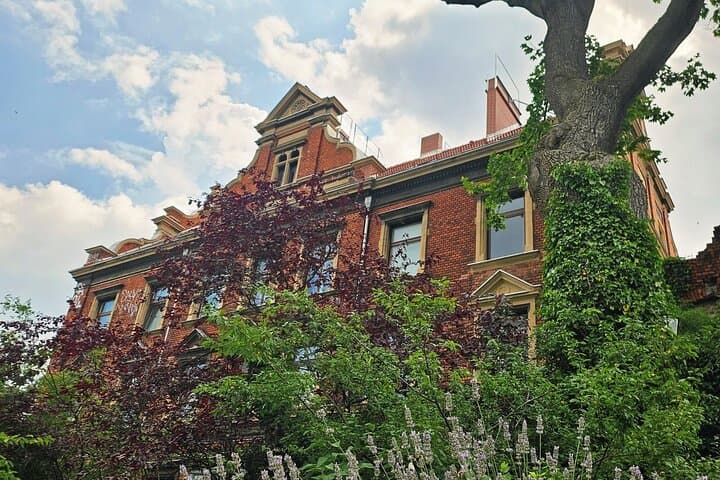
You step off the tram into a wide, honest street where the Panke river threads under bridges and old brick façades keep a steady watch. The air carries hints of frying oil from an all-day Imbiss, graffiti that argues with municipal signs, and the distant clack of bicycles on tram rails — this is Wedding, a district that refuses to be tidy.
Verified experiences and guided adventures in the surrounding area.
Operated by Positive Vibes Berlin · Berlin, Berlin
You step off the tram into a wide, honest street where the Panke river threads under bridges and old brick façades keep a steady watch. The air carries hints of frying oil from an all-day Imbiss, graffiti that argues with municipal signs, and the distant clack of bicycles on tram rails — this is Wedding, a district that refuses to be tidy.
In the 19th century Wedding grew quickly as an industrial, working-class quarter. Factories and tenements shaped its streets; after war and division, the neighborhood absorbed waves of newcomers and artists who repurposed warehouses into studios and performance spaces. Geologically there’s little elevation — the landscape is flat, carved by the small Panke stream that fed mills and shaped pockets of green amid urban blocks.
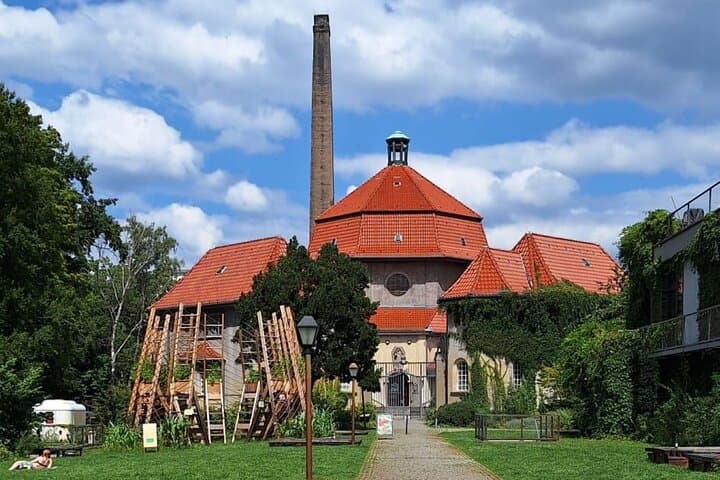
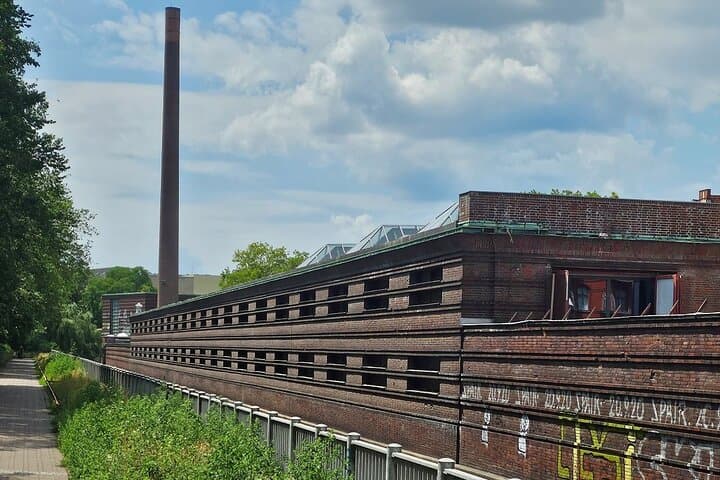
On a two-hour walk you’ll pass Silent Green (a former crematorium turned cultural venue), Wiesenburg’s courtyard gardens, the waterfront halls now home to studios, Luisenbad’s historic bathhouse façade, and the austere District Court on Gerichtstraße. The contrast between heavy masonry and fragile street gardens is Wedding’s signature.
Practically: expect 3–4 km on mostly even pavement with occasional cobbles, easy walking pace, and public-transport access at multiple points. Bring comfortable shoes and a light jacket — weather in Berlin can shift quickly. Visit late morning for cafés and markets, or early evening to see converted industrial spaces glow under sodium lamps. This tour is for curious travelers who want urban history, working-class culture, and contemporary creativity without the polish of Mitte.
easy.
2 hours.
Low to moderate; suitable for those who can stand and walk for two hours with short stops.
The tour runs about 2 hours and covers roughly 3–4 km on mostly flat urban terrain with periodic stops.
Yes — the route is stroller-accessible and physically easy, though some cobbles and curbs may require attention.
Yes — Wedding is well served by Berlin’s U-Bahn and S-Bahn lines plus buses; guides will advise the best stop for your start or finish.
Highlights are primarily exterior and neighborhood-focused; some venues are viewed from outside and an admission fee is not typically required unless a special interior visit is arranged.
Wedding expanded during the 19th-century industrial boom as factories and worker housing concentrated here; post-war migration and creative reuse reshaped many industrial sites into cultural venues.
Local groups have supported Panke restoration projects and small community gardens to increase biodiversity; visitors are encouraged to stay on paths and respect private courtyards.
Positive Vibes Berlin operates guided outdoor trips and adventures with an emphasis on safety, stewardship, and memorable experiences.
You step off the tram into a wide, honest street where the Panke river threads under bridges and old brick façades keep a steady watch. The air carries hints of frying oil from an all-day Imbiss, graffiti that argues with municipal signs, and the distant clack of bicycles on tram rails — this is Wedding, a district that refuses to be tidy.
You step off the tram into a wide, honest street where the Panke river threads under bridges and old brick façades keep a steady watch. The air carries hints of frying oil from an all-day Imbiss, graffiti that argues with municipal signs, and the distant clack of bicycles on tram rails — this is Wedding, a district that refuses to be tidy.
In the 19th century Wedding grew quickly as an industrial, working-class quarter. Factories and tenements shaped its streets; after war and division, the neighborhood absorbed waves of newcomers and artists who repurposed warehouses into studios and performance spaces. Geologically there’s little elevation — the landscape is flat, carved by the small Panke stream that fed mills and shaped pockets of green amid urban blocks.
On a two-hour walk you’ll pass Silent Green (a former crematorium turned cultural venue), Wiesenburg’s courtyard gardens, the waterfront halls now home to studios, Luisenbad’s historic bathhouse façade, and the austere District Court on Gerichtstraße. The contrast between heavy masonry and fragile street gardens is Wedding’s signature.
Practically: expect 3–4 km on mostly even pavement with occasional cobbles, easy walking pace, and public-transport access at multiple points. Bring comfortable shoes and a light jacket — weather in Berlin can shift quickly. Visit late morning for cafés and markets, or early evening to see converted industrial spaces glow under sodium lamps. This tour is for curious travelers who want urban history, working-class culture, and contemporary creativity without the polish of Mitte.