THE ADVENTURE COLLECTIVE® · Independent discovery and booking for outdoor travel

Pedal through Berlin’s Soviet past on a focused half-day tour from Pankow to the Brandenburg Gate. Visit memorials, monumental boulevards and Cold War landmarks while riding the city’s secure bike lanes.
Pedal through Berlin’s Soviet past on a focused half-day tour from Pankow to the Brandenburg Gate. Visit memorials, monumental boulevards and Cold War landmarks while riding the city’s secure bike lanes.
The ride begins in the cool shade of Pankow, pedals clicking as you push into a city where concrete and propaganda still leave a visible script on the streets.
Verified experiences and guided adventures in the surrounding area.
Operated by Spoutnik Voyage · Berlin, Berlin
The ride begins in the cool shade of Pankow, pedals clicking as you push into a city where concrete and propaganda still leave a visible script on the streets.
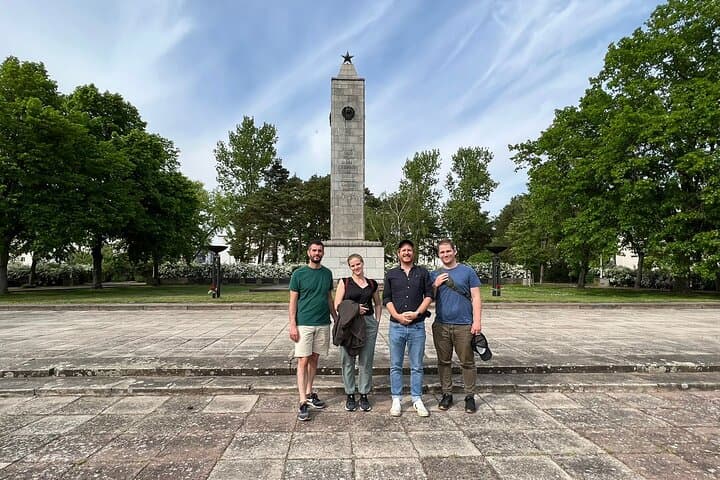
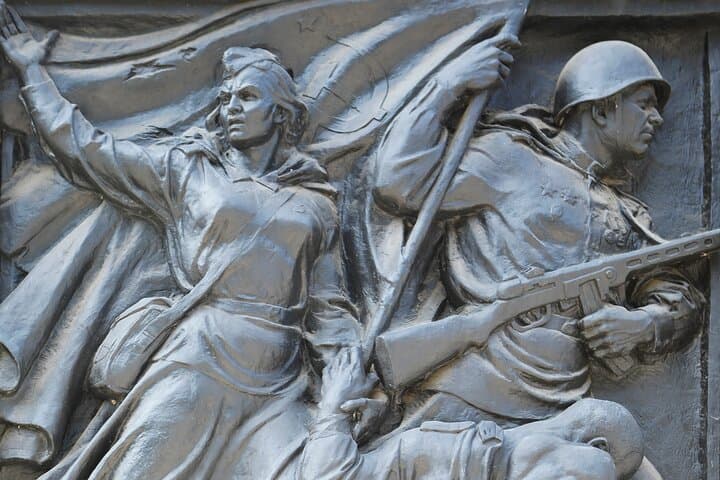
This half-day guided route threads Soviet-era monuments and architecture across Berlin — from the solemn rows of graves at Schönholzer Heide to the grand, Stalinist proportions of Karl-Marx-Allee and the monumental war cemeteries at Treptow and Tiergarten. Along the Panke river you cross Bornholmer Straße, the spot where the wall first opened in November 1989, and feel the scale of events that reshaped Europe.
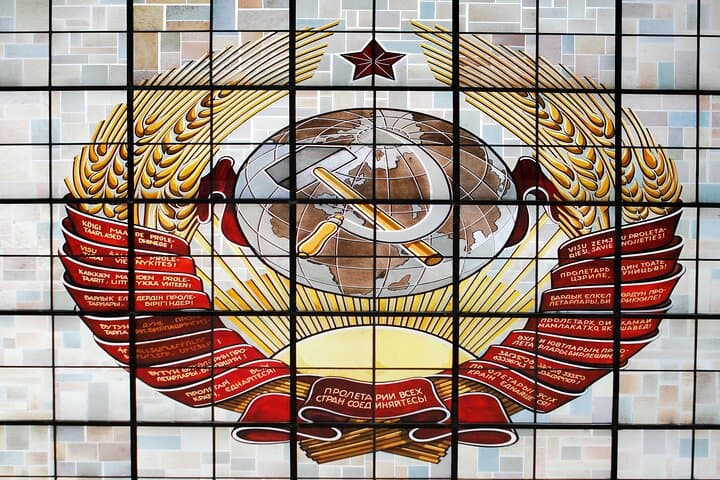
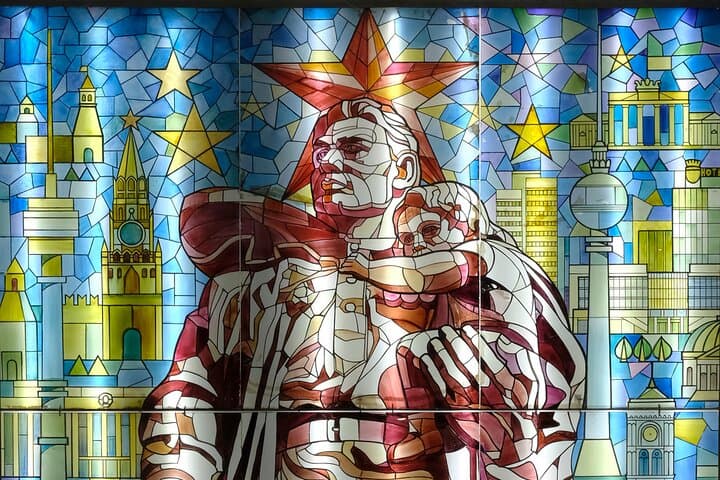
Berlin's Soviet remains are a lesson in 20th-century geopolitics and urban planning. Schönhausen Palace speaks to GDR statecraft; Alexanderplatz and its mosaics show postwar reconstruction and socialist public art; Karl-Marx-Allee displays the city’s attempt to codify ideology in stone and housing.
Geology and elevation are barely part of the story here — the route is flat, riding on dedicated cycle lanes that make the city comfortably navigable by bike. Culture sits in façades and public squares: cafés, old cinema marquees and workers' apartments give texture to the narrative.
Practical guidance: plan for 4–5 hours and roughly 12–15 km of mostly flat riding at an easy-to-moderate pace. Bring water, a camera, and a light jacket for winds in open boulevards. Tours run year-round but spring and autumn give the most pleasant light for monuments and photography. Expect short walking sections at memorial sites and bring respectful behaviour; many stops are cemeteries or protected monuments.
moderate.
4–5 hours.
Moderate fitness: comfortable cycling for 12–15 km with brief walking and standing at sites.
Many operators offer bikes or allow you to join by car; confirm during booking if a bike is included or if you should bring/rent one.
The route is stroller- and wheelchair-accessible in many areas, but expect short walking at memorials; children should be comfortable cycling in traffic-separated lanes.
This specific itinerary is offered in French; private bookings may accommodate other languages on request.
Yes — the itinerary is designed for bike travel but is also available by car for guests who prefer not to cycle.
The route traces sites central to East Germany’s government and Soviet commemoration — Karl-Marx-Allee and Schönholzer Heide were major GDR projects and postwar Soviet memorialization.
Many memorials are protected historic sites; visitors should stick to paths and avoid touching sculptures or reliefs to preserve deteriorating materials.
Spoutnik Voyage operates guided outdoor trips and adventures with an emphasis on safety, stewardship, and memorable experiences.
The ride begins in the cool shade of Pankow, pedals clicking as you push into a city where concrete and propaganda still leave a visible script on the streets.
The ride begins in the cool shade of Pankow, pedals clicking as you push into a city where concrete and propaganda still leave a visible script on the streets.
This half-day guided route threads Soviet-era monuments and architecture across Berlin — from the solemn rows of graves at Schönholzer Heide to the grand, Stalinist proportions of Karl-Marx-Allee and the monumental war cemeteries at Treptow and Tiergarten. Along the Panke river you cross Bornholmer Straße, the spot where the wall first opened in November 1989, and feel the scale of events that reshaped Europe.
Berlin's Soviet remains are a lesson in 20th-century geopolitics and urban planning. Schönhausen Palace speaks to GDR statecraft; Alexanderplatz and its mosaics show postwar reconstruction and socialist public art; Karl-Marx-Allee displays the city’s attempt to codify ideology in stone and housing.
Geology and elevation are barely part of the story here — the route is flat, riding on dedicated cycle lanes that make the city comfortably navigable by bike. Culture sits in façades and public squares: cafés, old cinema marquees and workers' apartments give texture to the narrative.
Practical guidance: plan for 4–5 hours and roughly 12–15 km of mostly flat riding at an easy-to-moderate pace. Bring water, a camera, and a light jacket for winds in open boulevards. Tours run year-round but spring and autumn give the most pleasant light for monuments and photography. Expect short walking sections at memorial sites and bring respectful behaviour; many stops are cemeteries or protected monuments.