THE ADVENTURE COLLECTIVE® · Independent discovery and booking for outdoor travel

Spend a full day exploring remote Angkor-era sites beyond Angkor Wat. This private tour pairs jungle treks and off-the-beaten-path temples—Beng Mealea’s collapsed grandeur, Kbal Spean’s river-carved lingas, and the pink sandstone reliefs of Banteay Srei.
Spend a full day exploring remote Angkor-era sites beyond Angkor Wat. This private tour pairs jungle treks and off-the-beaten-path temples—Beng Mealea’s collapsed grandeur, Kbal Spean’s river-carved lingas, and the pink sandstone reliefs of Banteay Srei.
You step out of the air-conditioned van and the world shifts: humidity lay draped over stone, and roots have braided the fallen blocks into new architecture. Beng Mealea greets visitors like an unfinished story—towers half-standing, corridors choked with brush, and sunlight sifting through a canopy that has learned to live in the ruins.
Verified experiences and guided adventures in the surrounding area.
Operated by Happy Angkor Tour · Siem Reap, Siem Reap Province
You step out of the air-conditioned van and the world shifts: humidity lay draped over stone, and roots have braided the fallen blocks into new architecture. Beng Mealea greets visitors like an unfinished story—towers half-standing, corridors choked with brush, and sunlight sifting through a canopy that has learned to live in the ruins.
These sites span the height of the Khmer Empire’s temple-building, from Banteay Srei’s finely carved pink sandstone of the 10th century to Banteay Samre’s 12th-century lines echoing Angkor Wat. Geology matters here: soft sandstone and laterite weather quickly in Cambodia’s monsoon climate, which is why some temples remain unrestored and others were carefully rebuilt. Kbal Spean, the “River of a Thousand Lingas,” is different—its art lives in moving water: lingams and deities carved into the bedrock upstream, revealed after a 45–60 minute jungle climb.
Practical note: expect a long day—8–10 hours including drives between remote sites—so timing and logistics matter. The Beng Mealea visit is exploratory and uneven underfoot; Kbal Spean requires a roughly 1.5 km uphill walk with about 100 m of elevation gain over rooty, sometimes muddy trail. Banteay Srei rewards close inspection of delicate reliefs and is best seen in softer morning or late-afternoon light. Pack water, sun protection, insect repellent and wear sturdy shoes with good grip. Local guides add context on iconography and Khmer history and help navigate loose stones and small crowds. Start early to beat heat and plan for modest vehicle travel on rural roads—this is temple exploration with a dose of jungle adventure.
moderate.
8–10 hours.
Suitable for travelers with basic fitness who can handle a half-hour uphill hike and a full day in tropical heat.
This is a full-day tour with short exploratory walks at several temples; Kbal Spean requires a roughly 1.5 km uphill trek (about 45–60 minutes) over uneven jungle trail.
Confirm with the operator—some bookings include park entrance fees while others require you to pay locally; have cash ready for any tickets not covered.
Yes—many parts are accessible, but the Kbal Spean climb and uneven surfaces at Beng Mealea can be challenging; inform the operator of mobility needs for a private vehicle and pace adjustments.
Early morning or late afternoon offer cooler temperatures and softer light for photography; mid-day is hottest and busiest on nearby roads.
The tour visits monuments spanning the 10th–12th centuries tied to the Khmer Empire; Banteay Srei is famed for its finely carved pink sandstone, while Kbal Spean’s carvings were intended to sanctify water flowing to Angkor’s temples.
Many sites are susceptible to erosion—stay on marked paths, don’t climb on fragile masonry, and use local guides whose fees support site protection and village economies.
Happy Angkor Tour operates guided outdoor trips and adventures with an emphasis on safety, stewardship, and memorable experiences.
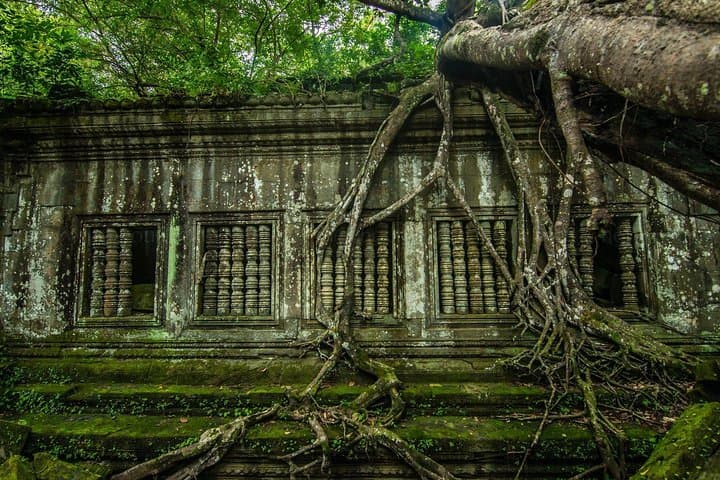
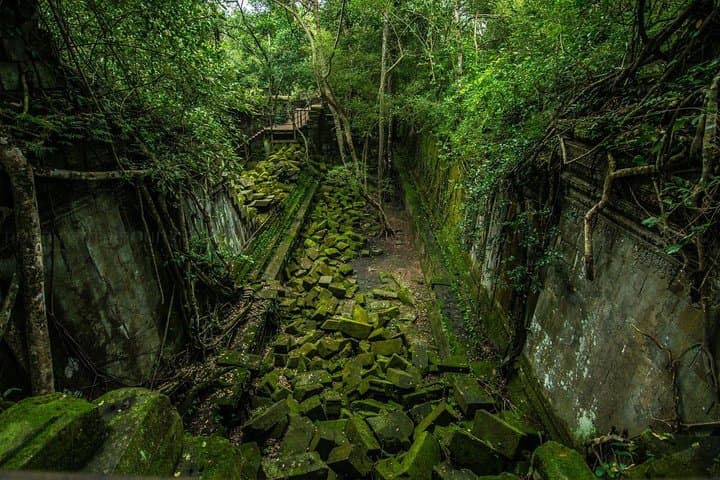
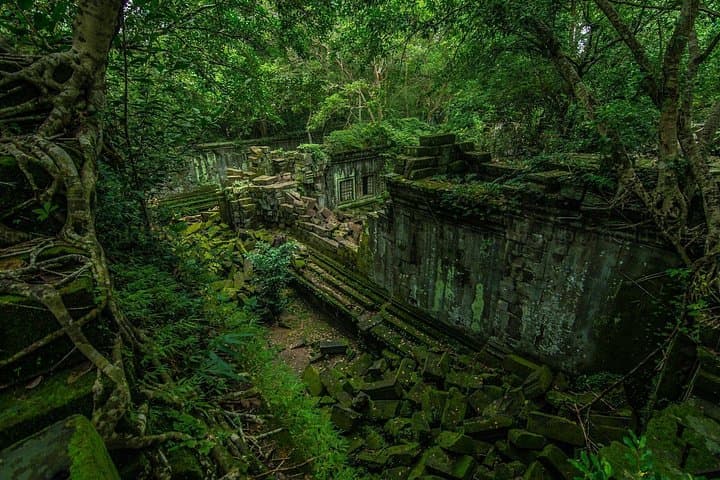
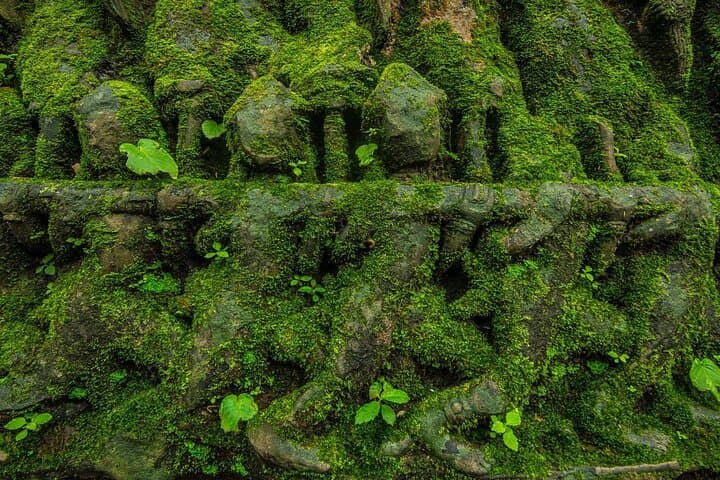
You step out of the air-conditioned van and the world shifts: humidity lay draped over stone, and roots have braided the fallen blocks into new architecture. Beng Mealea greets visitors like an unfinished story—towers half-standing, corridors choked with brush, and sunlight sifting through a canopy that has learned to live in the ruins.
You step out of the air-conditioned van and the world shifts: humidity lay draped over stone, and roots have braided the fallen blocks into new architecture. Beng Mealea greets visitors like an unfinished story—towers half-standing, corridors choked with brush, and sunlight sifting through a canopy that has learned to live in the ruins.
These sites span the height of the Khmer Empire’s temple-building, from Banteay Srei’s finely carved pink sandstone of the 10th century to Banteay Samre’s 12th-century lines echoing Angkor Wat. Geology matters here: soft sandstone and laterite weather quickly in Cambodia’s monsoon climate, which is why some temples remain unrestored and others were carefully rebuilt. Kbal Spean, the “River of a Thousand Lingas,” is different—its art lives in moving water: lingams and deities carved into the bedrock upstream, revealed after a 45–60 minute jungle climb.
Practical note: expect a long day—8–10 hours including drives between remote sites—so timing and logistics matter. The Beng Mealea visit is exploratory and uneven underfoot; Kbal Spean requires a roughly 1.5 km uphill walk with about 100 m of elevation gain over rooty, sometimes muddy trail. Banteay Srei rewards close inspection of delicate reliefs and is best seen in softer morning or late-afternoon light. Pack water, sun protection, insect repellent and wear sturdy shoes with good grip. Local guides add context on iconography and Khmer history and help navigate loose stones and small crowds. Start early to beat heat and plan for modest vehicle travel on rural roads—this is temple exploration with a dose of jungle adventure.