THE ADVENTURE COLLECTIVE® · Independent discovery and booking for outdoor travel

Trade packed Angkor circuits for a hands-on half-day at Beng Mealea—an early 12th-century ruin where roots and rubble turn exploration into a tactile puzzle. This private trip mixes quiet corridors, satellite shrines and local landscape for a memorable, low-traffic temple visit.
Trade packed Angkor circuits for a hands-on half-day at Beng Mealea—an early 12th-century ruin where roots and rubble turn exploration into a tactile puzzle. This private trip mixes quiet corridors, satellite shrines and local landscape for a memorable, low-traffic temple visit.
The morning heat lifts off the paddies as an air-conditioned vehicle draws you toward a cluster of stone teeth rising from the jungle. Arriving at Beng Mealea, visitors trade paved paths for uneven flagstones and tunneled corridors where roots thread through masonry and sunlight punches through collapsed roofs.
Verified experiences and guided adventures in the surrounding area.
Operated by Siem Reap Experience · Siem Reap, Siem Reap Province
The morning heat lifts off the paddies as an air-conditioned vehicle draws you toward a cluster of stone teeth rising from the jungle. Arriving at Beng Mealea, visitors trade paved paths for uneven flagstones and tunneled corridors where roots thread through masonry and sunlight punches through collapsed roofs.
Beng Mealea dates to the early 12th century and is often compared to Angkor Wat for its original plan; it was likely built under King Suryavarman II. Generations of teak and strangler fig have rearranged the layout—blocks lie in tangled heaps, and the eastern baray once held water that local authorities have considered reflooding to restore the original landscape. The ruins sit within a working rural landscape where rice fields and fishing ponds frame the temple; small villages nearby give a direct line to contemporary Khmer life.
On a half-day private visit expect 3–5 hours on site including travel from Siem Reap, a knowledgeable English-speaking guide, and time to clamber over mossy rubble. The walk is uneven and occasionally steep; hands-on scrambling replaces built stairways. Wear sturdy closed-toe shoes, bring at least 1–2 liters of water, and plan earlier or later in the day to avoid the strongest sun.
Respect the stone—avoid standing on carved surfaces—and follow your guide toward quieter satellite shrines such as Prasat Chrey. Weather can shift rapidly in the wet season, so a lightweight rain layer is useful. For travelers seeking atmospheric Angkor-era ruins with fewer crowds, Beng Mealea delivers an honest, tactile encounter with history.
moderate.
4–5 hours.
Comfortable walking fitness; able to scramble over uneven, occasionally steep rubble and climb low walls.
Typical half-day tours run about 4–5 hours round-trip from Siem Reap, including transport and 1–2 hours exploring the temple depending on pace.
Admission is not always included—confirm with the operator; Beng Mealea requires a site ticket separate from Angkor Park passes in some arrangements.
Families can visit but should note the temple requires climbing over uneven rubble; supervision for children and a steady pace for older visitors is advised.
Yes, open year-round; the dry season (November–April) is cooler and easier for walking, while the wet season can make stones slippery and bring sudden showers.
Built in the early 12th century and attributed to Suryavarman II’s era, Beng Mealea shares architectural ties with Angkor Wat but remains more overgrown and ruinous due to its remote location.
Visitor traffic can accelerate erosion of fragile masonry; stick to routes your guide recommends, avoid climbing on carved panels, and support local guides to keep income in the community.
Siem Reap Experience operates guided outdoor trips and adventures with an emphasis on safety, stewardship, and memorable experiences.
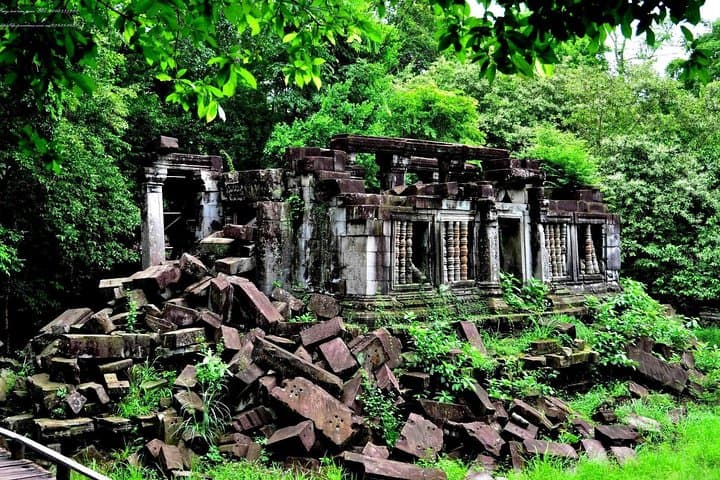
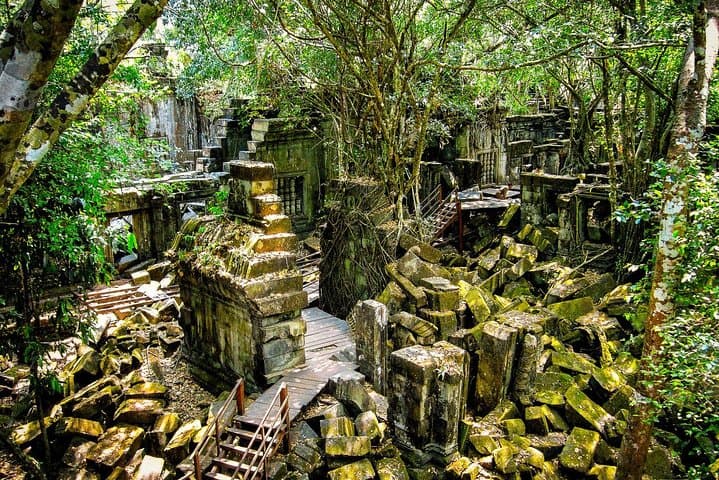
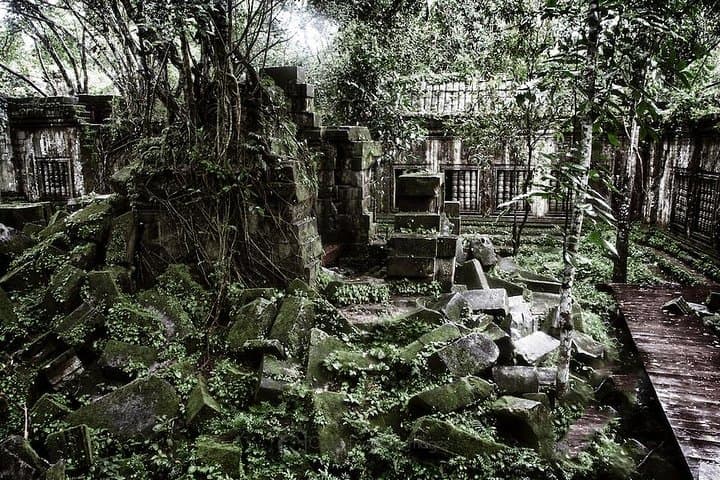
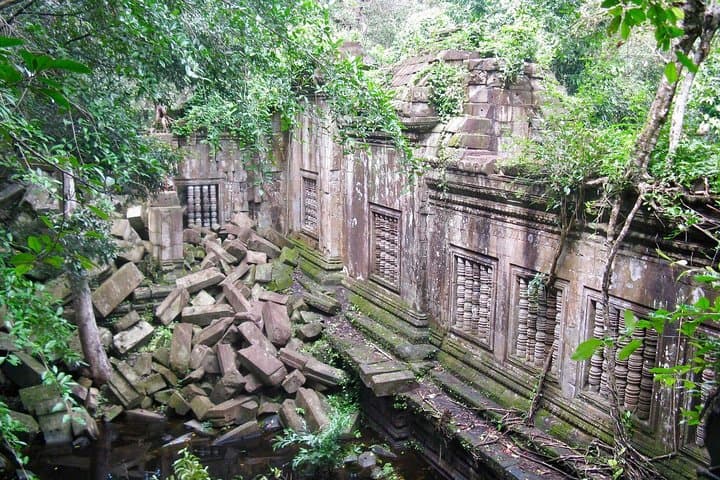
The morning heat lifts off the paddies as an air-conditioned vehicle draws you toward a cluster of stone teeth rising from the jungle. Arriving at Beng Mealea, visitors trade paved paths for uneven flagstones and tunneled corridors where roots thread through masonry and sunlight punches through collapsed roofs.
The morning heat lifts off the paddies as an air-conditioned vehicle draws you toward a cluster of stone teeth rising from the jungle. Arriving at Beng Mealea, visitors trade paved paths for uneven flagstones and tunneled corridors where roots thread through masonry and sunlight punches through collapsed roofs.
Beng Mealea dates to the early 12th century and is often compared to Angkor Wat for its original plan; it was likely built under King Suryavarman II. Generations of teak and strangler fig have rearranged the layout—blocks lie in tangled heaps, and the eastern baray once held water that local authorities have considered reflooding to restore the original landscape. The ruins sit within a working rural landscape where rice fields and fishing ponds frame the temple; small villages nearby give a direct line to contemporary Khmer life.
On a half-day private visit expect 3–5 hours on site including travel from Siem Reap, a knowledgeable English-speaking guide, and time to clamber over mossy rubble. The walk is uneven and occasionally steep; hands-on scrambling replaces built stairways. Wear sturdy closed-toe shoes, bring at least 1–2 liters of water, and plan earlier or later in the day to avoid the strongest sun.
Respect the stone—avoid standing on carved surfaces—and follow your guide toward quieter satellite shrines such as Prasat Chrey. Weather can shift rapidly in the wet season, so a lightweight rain layer is useful. For travelers seeking atmospheric Angkor-era ruins with fewer crowds, Beng Mealea delivers an honest, tactile encounter with history.