THE ADVENTURE COLLECTIVE® · Independent discovery and booking for outdoor travel

A private full-day tour that takes you beyond Angkor Wat to the raw ruins of Beng Mealea, the carved elegance of Banteay Srei, and the riverbed sculptures of Kbal Spean. Ideal for travelers who want solitude, detailed history, and a guide who reads stone and landscape.
A private full-day tour that takes you beyond Angkor Wat to the raw ruins of Beng Mealea, the carved elegance of Banteay Srei, and the riverbed sculptures of Kbal Spean. Ideal for travelers who want solitude, detailed history, and a guide who reads stone and landscape.
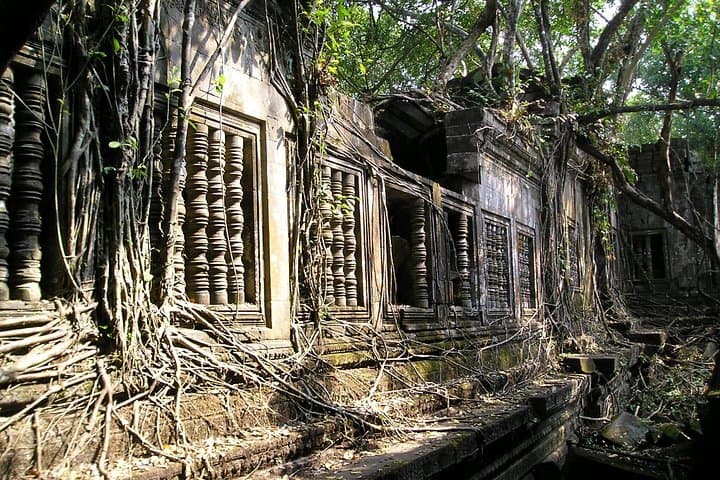
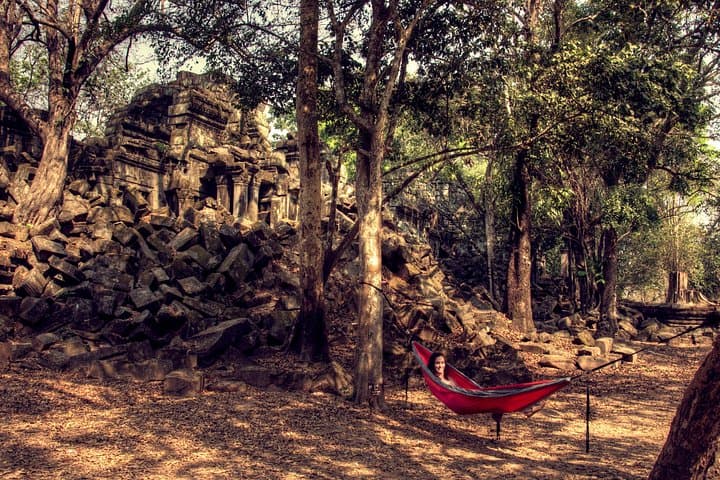
You arrive before the heat—an air-conditioned minibus delivers you through rice paddies and scrub to a temple half-swallowed by forest. Sun slices between buttress roots at Beng Mealea; stones slump like the ribs of an old ship, vines braiding through lintels. Silence here is not empty but attentive, the jungle pressing close as you pick a route through fallen galleries.
Verified experiences and guided adventures in the surrounding area.
Operated by Angkor Wat Shared Tours · Siem Reap, Siem Reap Province
You arrive before the heat—an air-conditioned minibus delivers you through rice paddies and scrub to a temple half-swallowed by forest. Sun slices between buttress roots at Beng Mealea; stones slump like the ribs of an old ship, vines braiding through lintels. Silence here is not empty but attentive, the jungle pressing close as you pick a route through fallen galleries.
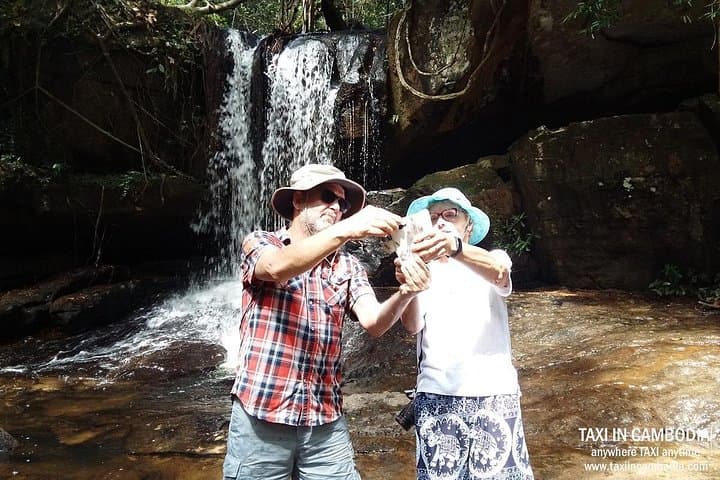
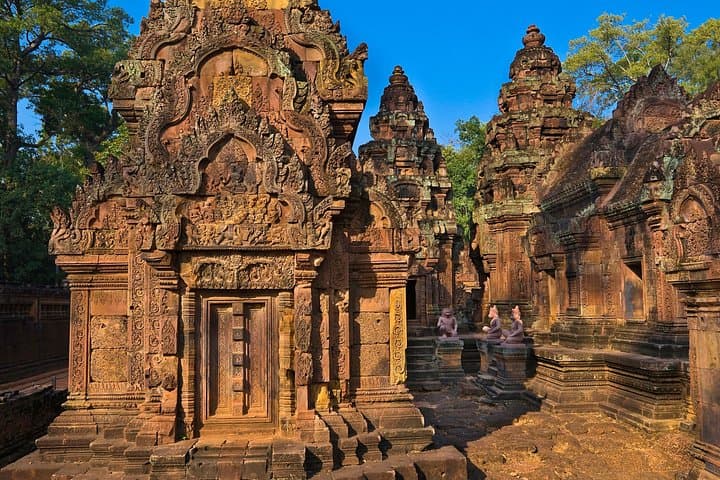
These three sites tell different parts of Angkor’s story. Banteay Srei, carved from pink sandstone in the 10th century, preserves delicate bas-reliefs that hint at how painted, ornate temples once looked. Kbal Spean, upstream on Phnom Kulen, transforms geology into ritual—the riverbed is incised with lingas and mythic figures, where water once carried blessings downstream. Beng Mealea is a 12th-century ruin of the Angkor Wat era, largely unconserved and overtaken by trees, offering a raw, exploratory feel few other temples afford.
A Khmer guide decodes iconography, Khmer royalty, and the colonial-era restorations; geology shows you sandstone, laterite and the tropical weathering that reshapes stone into rounded blocks.
Practical side: the full-day private tour runs about 8–9 hours with hotel pickup, chilled water and flexible timing. Wear sturdy shoes for uneven temple floors and a light long-sleeve for sun and mosquitoes. Bring cash for the Angkor Pass (can be bought at the ticket office) and pack a small daypack with snacks and sun protection. Expect steep steps, muddy trails after rain, and limited shade at Kbal Spean’s river crossing. A private guide keeps the rhythm—slower at carvings, quicker between sites—so you see detail without feeling rushed.
moderate.
8–9 hours.
Suitable for travelers with moderate fitness—able to walk uneven trails and climb short, steep temple steps.
Yes—an Angkor Park pass is required to enter these sites; the guide can stop at the ticket office so you can purchase one before visiting.
The tour is private and can be paced to suit families and older travelers, but participants should be able to walk uneven terrain and climb stairs; notify the operator of mobility concerns.
Entrance fees (Angkor Pass) are not included and must be purchased separately; other inclusions are private transfer, guide, and bottled water as noted.
Yes—because it’s a private tour, the start time and sequence can be tweaked to your interests and pace, subject to park opening hours.
Banteay Srei dates to the 10th century and is famed for its pink sandstone carvings; Kbal Spean’s riverbed carvings were part of Angkorian water rituals, while Beng Mealea is a 12th-century temple largely reclaimed by forest.
These sites are vulnerable to erosion and tourist wear—stick to marked paths, avoid touching carvings, and supporting official ticketing helps fund conservation efforts.
Angkor Wat Shared Tours operates guided outdoor trips and adventures with an emphasis on safety, stewardship, and memorable experiences.
You arrive before the heat—an air-conditioned minibus delivers you through rice paddies and scrub to a temple half-swallowed by forest. Sun slices between buttress roots at Beng Mealea; stones slump like the ribs of an old ship, vines braiding through lintels. Silence here is not empty but attentive, the jungle pressing close as you pick a route through fallen galleries.
You arrive before the heat—an air-conditioned minibus delivers you through rice paddies and scrub to a temple half-swallowed by forest. Sun slices between buttress roots at Beng Mealea; stones slump like the ribs of an old ship, vines braiding through lintels. Silence here is not empty but attentive, the jungle pressing close as you pick a route through fallen galleries.
These three sites tell different parts of Angkor’s story. Banteay Srei, carved from pink sandstone in the 10th century, preserves delicate bas-reliefs that hint at how painted, ornate temples once looked. Kbal Spean, upstream on Phnom Kulen, transforms geology into ritual—the riverbed is incised with lingas and mythic figures, where water once carried blessings downstream. Beng Mealea is a 12th-century ruin of the Angkor Wat era, largely unconserved and overtaken by trees, offering a raw, exploratory feel few other temples afford.
A Khmer guide decodes iconography, Khmer royalty, and the colonial-era restorations; geology shows you sandstone, laterite and the tropical weathering that reshapes stone into rounded blocks.
Practical side: the full-day private tour runs about 8–9 hours with hotel pickup, chilled water and flexible timing. Wear sturdy shoes for uneven temple floors and a light long-sleeve for sun and mosquitoes. Bring cash for the Angkor Pass (can be bought at the ticket office) and pack a small daypack with snacks and sun protection. Expect steep steps, muddy trails after rain, and limited shade at Kbal Spean’s river crossing. A private guide keeps the rhythm—slower at carvings, quicker between sites—so you see detail without feeling rushed.