THE ADVENTURE COLLECTIVE® · Independent discovery and booking for outdoor travel

Walk the compact, story-lined streets of Barcelona’s Gothic Quarter with a local guide who traces Roman foundations, medieval plazas and Catalan culture. This small-group 2½-hour route focuses on evocative stops—La Rambla, Boqueria, Plaça Reial, the Cathedral and Santa Maria del Mar—without included admissions.
Walk the compact, story-lined streets of Barcelona’s Gothic Quarter with a local guide who traces Roman foundations, medieval plazas and Catalan culture. This small-group 2½-hour route focuses on evocative stops—La Rambla, Boqueria, Plaça Reial, the Cathedral and Santa Maria del Mar—without included admissions.
Morning light threads down the Gothic Quarter and turns the cobbles to warm gray as your guide leads a small group through alleys that remember Roman footsteps. Voices and scooters drift in from La Rambla; the air carries citrus from market stalls and the faint echo of bells at Santa Maria del Mar.
Verified experiences and guided adventures in the surrounding area.
Operated by In Out Barcelona Tours · Barcelona, Catalonia
Morning light threads down the Gothic Quarter and turns the cobbles to warm gray as your guide leads a small group through alleys that remember Roman footsteps. Voices and scooters drift in from La Rambla; the air carries citrus from market stalls and the faint echo of bells at Santa Maria del Mar.
The Old Town sits on Barcino, the Roman grid that later sprouted medieval walls and Catalan Gothic façades. Many buildings here were raised with local Montjuïc stone and shaped across centuries of trade, plague and revival. The Born and El Call neighborhoods map social layers—merchant squares, cloisters and a cathedral whose gargoyles peer over narrow streets. Nearby the Boqueria market shows Barcelona’s living food culture, while Palau de la Música adds modernist flourish a few blocks away.
Expect close-quarters walking on uneven cobbles, stops at plazas and viewpoints, and short interpretive stretches rather than long museum visits; admissions to churches are usually separate. The route moves at an easy pace in a group capped at around a dozen, which helps you hear historical context about Roman remains, medieval guilds and Catalan identity without losing the city’s pulse.
Practical tips: choose morning or late afternoon to avoid the peak heat and crowds, bring a refillable water bottle and a compact rain layer in shoulder seasons, and wear shoes with good tread for slippery stone. The tour is accessible for most fitness levels and offers a concentrated primer on Barcelona’s Old Town that’s ideal for first-time visitors wanting history with immediate, walkable context.
easy.
2–3 hours.
Suitable for most fitness levels; requires steady walking on uneven urban cobbles for up to 2.5 hours.
Yes—most areas and surfaces on the route are wheelchair accessible, but some historic spots have steps; contact the operator for specific needs.
No—admissions (for example to the Cathedral or some museums) are generally not included and can be visited independently outside the tour stops.
Meeting details are provided on booking—common central meeting points include Plaça de Catalunya; the tour is led by a professional local guide in the advertised language.
Yes—children are welcome; infants often travel free and discounts may apply for young children, but check booking terms for age-related pricing.
Barcelona’s Old Town overlays the Roman settlement of Barcino and evolved into a medieval commercial hub characterized by Catalan Gothic architecture and civic squares.
Heavy foot traffic stresses historic stonework and narrow streets—respect barriers, avoid leaning on façades and support local businesses to promote sustainable tourism.
In Out Barcelona Tours operates guided outdoor trips and adventures with an emphasis on safety, stewardship, and memorable experiences.
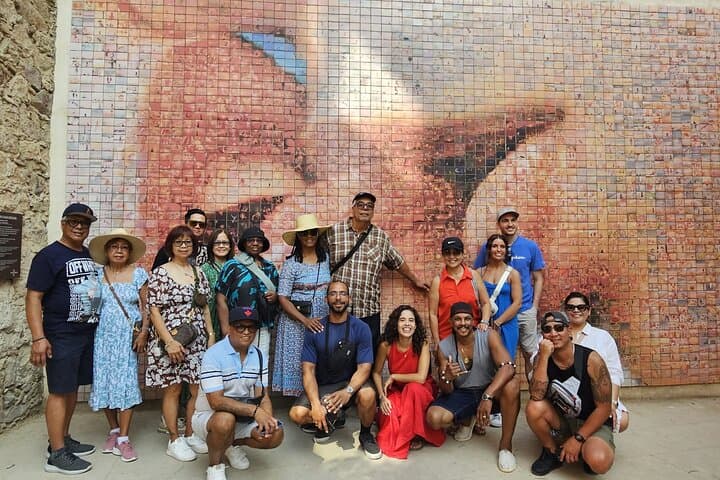
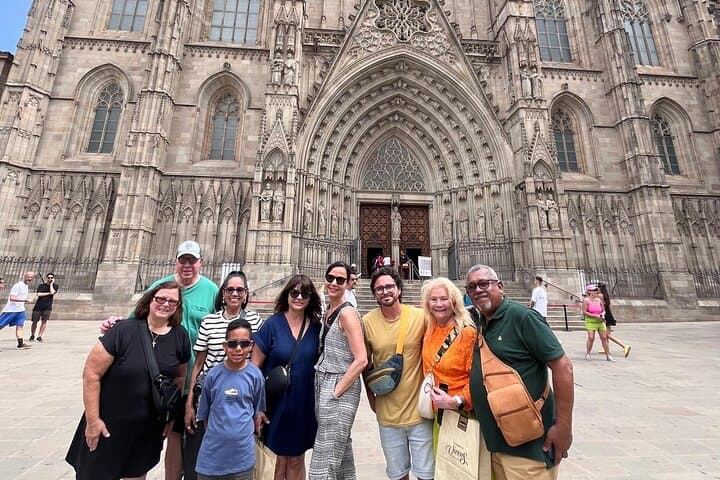
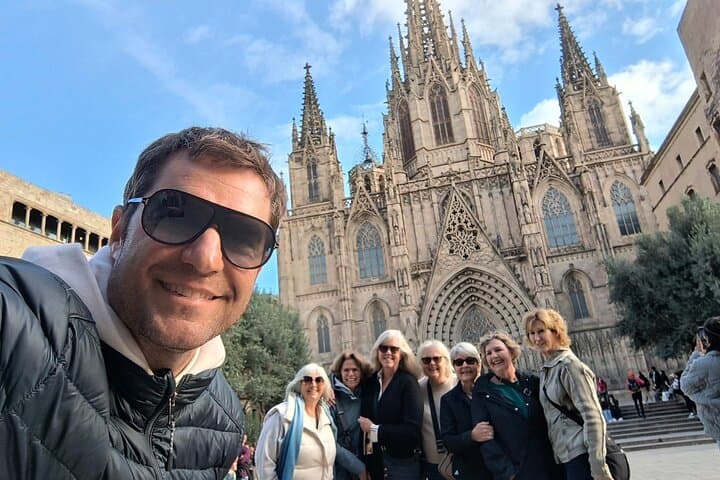
Morning light threads down the Gothic Quarter and turns the cobbles to warm gray as your guide leads a small group through alleys that remember Roman footsteps. Voices and scooters drift in from La Rambla; the air carries citrus from market stalls and the faint echo of bells at Santa Maria del Mar.
Morning light threads down the Gothic Quarter and turns the cobbles to warm gray as your guide leads a small group through alleys that remember Roman footsteps. Voices and scooters drift in from La Rambla; the air carries citrus from market stalls and the faint echo of bells at Santa Maria del Mar.
The Old Town sits on Barcino, the Roman grid that later sprouted medieval walls and Catalan Gothic façades. Many buildings here were raised with local Montjuïc stone and shaped across centuries of trade, plague and revival. The Born and El Call neighborhoods map social layers—merchant squares, cloisters and a cathedral whose gargoyles peer over narrow streets. Nearby the Boqueria market shows Barcelona’s living food culture, while Palau de la Música adds modernist flourish a few blocks away.
Expect close-quarters walking on uneven cobbles, stops at plazas and viewpoints, and short interpretive stretches rather than long museum visits; admissions to churches are usually separate. The route moves at an easy pace in a group capped at around a dozen, which helps you hear historical context about Roman remains, medieval guilds and Catalan identity without losing the city’s pulse.
Practical tips: choose morning or late afternoon to avoid the peak heat and crowds, bring a refillable water bottle and a compact rain layer in shoulder seasons, and wear shoes with good tread for slippery stone. The tour is accessible for most fitness levels and offers a concentrated primer on Barcelona’s Old Town that’s ideal for first-time visitors wanting history with immediate, walkable context.