THE ADVENTURE COLLECTIVE® · Independent discovery and booking for outdoor travel

Cover Barcelona’s iconic neighborhoods and waterfront in three hours on a guided Segway route that moves from Gothic alleys to the sea. Ideal for first‑time visitors who want efficient city coverage with local context and a short training session.
Cover Barcelona’s iconic neighborhoods and waterfront in three hours on a guided Segway route that moves from Gothic alleys to the sea. Ideal for first‑time visitors who want efficient city coverage with local context and a short training session.
You step onto the black rubber of a Segway as the city hums around you — skateboarders carving the graffiti park, trams squealing under overpasses, and the Mediterranean daring you toward the harbor. For three hours the machine becomes an easy second stride, whisking you from narrow Gothic lanes to broad avenues where modernist facades catch the light.
Verified experiences and guided adventures in the surrounding area.
Operated by Barcelona Sun & Segway · Barcelona, Catalonia
You step onto the black rubber of a Segway as the city hums around you — skateboarders carving the graffiti park, trams squealing under overpasses, and the Mediterranean daring you toward the harbor. For three hours the machine becomes an easy second stride, whisking you from narrow Gothic lanes to broad avenues where modernist facades catch the light.
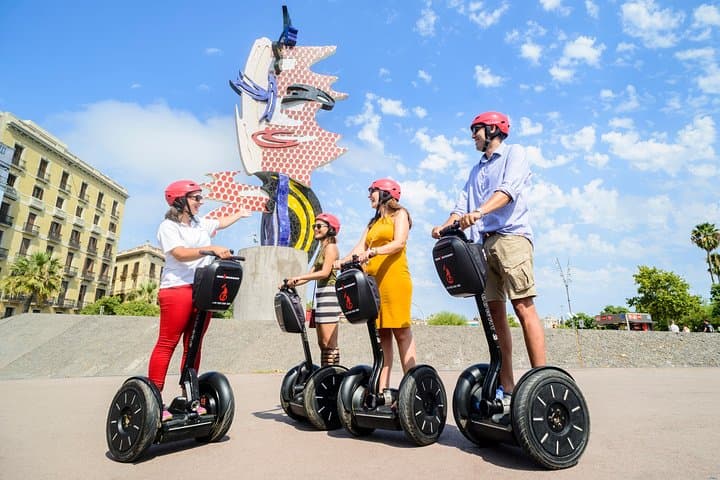
The route threads the city’s layers: Roman and medieval streets of El Born and the Gothic Quarter, the 19th‑century grid of Eixample studded with Gaudí’s audacious lines, and the waterfront that reshaped Barcelona for the 1992 Olympics. Geology matters here too — the city sits between the Collserola hills and the sea, a limit that shaped its expansion and its promenades.
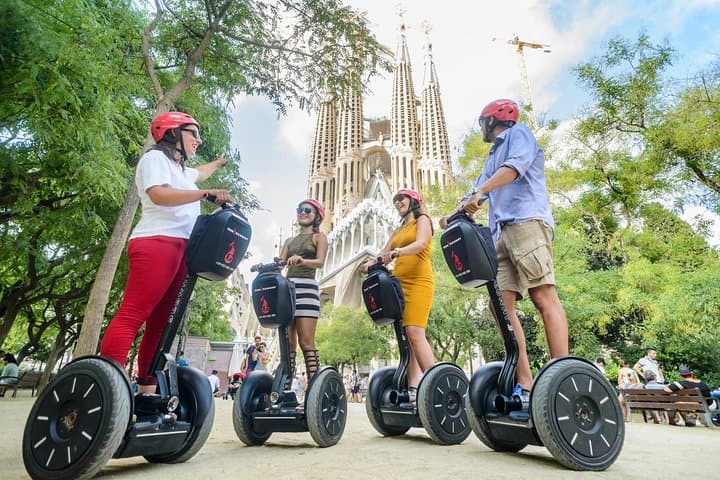
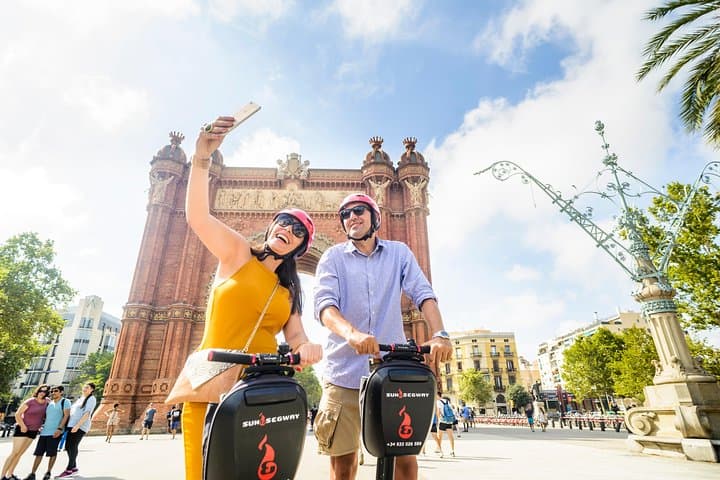
Culturally the tour moves through markets, plazas, and architectural milestones such as Sagrada Família and Arc de Triomf, offering quick stops to absorb local life — market stalls, tapas culture, and Catalan signage. Guides add neighborhood stories: industrial ports turned leisure zones, and modernism’s political echoes.
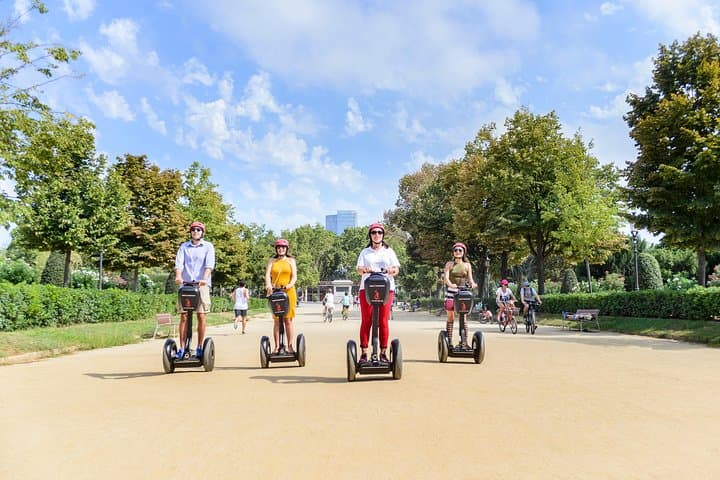
Practical guidance: expect mostly flat urban pavement with occasional cobbles; basic balance and attention to traffic rules are required. The operator supplies helmets and a short training session; minimum age and weight limits apply. Book morning or late afternoon to avoid peak heat and busier sidewalks. Wear comfortable shoes, bring a small bottle of water, and carry ID. If streets are closed or demonstrations occur, the route will shift. The experience is part sightseeing, part urban mobility lesson — a fast, accessible way to cover ground while still pausing to look up.
easy.
3 hours.
Suitable for most people with basic mobility and balance; standing for stretches and short walking between stops is required.
Participants must meet the operator’s age and weight limits (typically minimum 14 years old to ride a Segway; minimum weight around 45 kg/100 lbs and maximum roughly 120 kg/265 lbs).
No; a brief training session is provided before departure to cover balance, braking, and road rules.
Tours operate in most weather and raincoats are available; in severe weather the operator will reschedule or offer alternatives.
Yes—small backpacks or waistpacks are recommended; bulky gear can affect balance and may be restricted.
Barcelona evolved from a Roman settlement to a medieval port and then expanded in the 19th century with Ildefons Cerdà’s grid; modernism and the 1992 Olympic reshaping are key chapters in the city’s urban story.
The city emphasizes low‑emission mobility and has expanded bike lanes and pedestrian zones; follow local rules and avoid blocking sidewalks to reduce impacts.
Barcelona Sun & Segway operates guided outdoor trips and adventures with an emphasis on safety, stewardship, and memorable experiences.
You step onto the black rubber of a Segway as the city hums around you — skateboarders carving the graffiti park, trams squealing under overpasses, and the Mediterranean daring you toward the harbor. For three hours the machine becomes an easy second stride, whisking you from narrow Gothic lanes to broad avenues where modernist facades catch the light.
You step onto the black rubber of a Segway as the city hums around you — skateboarders carving the graffiti park, trams squealing under overpasses, and the Mediterranean daring you toward the harbor. For three hours the machine becomes an easy second stride, whisking you from narrow Gothic lanes to broad avenues where modernist facades catch the light.
The route threads the city’s layers: Roman and medieval streets of El Born and the Gothic Quarter, the 19th‑century grid of Eixample studded with Gaudí’s audacious lines, and the waterfront that reshaped Barcelona for the 1992 Olympics. Geology matters here too — the city sits between the Collserola hills and the sea, a limit that shaped its expansion and its promenades.
Culturally the tour moves through markets, plazas, and architectural milestones such as Sagrada Família and Arc de Triomf, offering quick stops to absorb local life — market stalls, tapas culture, and Catalan signage. Guides add neighborhood stories: industrial ports turned leisure zones, and modernism’s political echoes.
Practical guidance: expect mostly flat urban pavement with occasional cobbles; basic balance and attention to traffic rules are required. The operator supplies helmets and a short training session; minimum age and weight limits apply. Book morning or late afternoon to avoid peak heat and busier sidewalks. Wear comfortable shoes, bring a small bottle of water, and carry ID. If streets are closed or demonstrations occur, the route will shift. The experience is part sightseeing, part urban mobility lesson — a fast, accessible way to cover ground while still pausing to look up.