THE ADVENTURE COLLECTIVE® · Independent discovery and booking for outdoor travel

A full-day private excursion from Siem Reap to Banteay Chhmar takes you beyond the crowded Angkor circuit to one of Cambodia’s most remote Angkorian complexes. Expect long drives, quiet ruins, and rich cultural context with a licensed guide.
A full-day private excursion from Siem Reap to Banteay Chhmar takes you beyond the crowded Angkor circuit to one of Cambodia’s most remote Angkorian complexes. Expect long drives, quiet ruins, and rich cultural context with a licensed guide.
Morning light slices across laterite walls as the vehicle eases off the main road and into broad rice plains—this is the slow, rural approach to Banteay Chhmar. The temple sits apart from the Angkor cluster: a vast, low-profile complex ringed by a wide moat and a quiet village, where oxen graze and fishermen cast nets in the baray.
Verified experiences and guided adventures in the surrounding area.
Operated by Bayon Tabi Tour · Banteay Chhmar, Banteay Meanchey
Morning light slices across laterite walls as the vehicle eases off the main road and into broad rice plains—this is the slow, rural approach to Banteay Chhmar. The temple sits apart from the Angkor cluster: a vast, low-profile complex ringed by a wide moat and a quiet village, where oxen graze and fishermen cast nets in the baray.
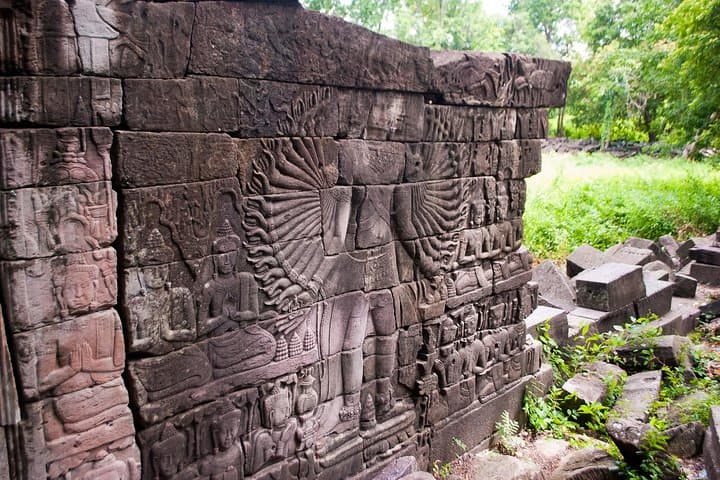
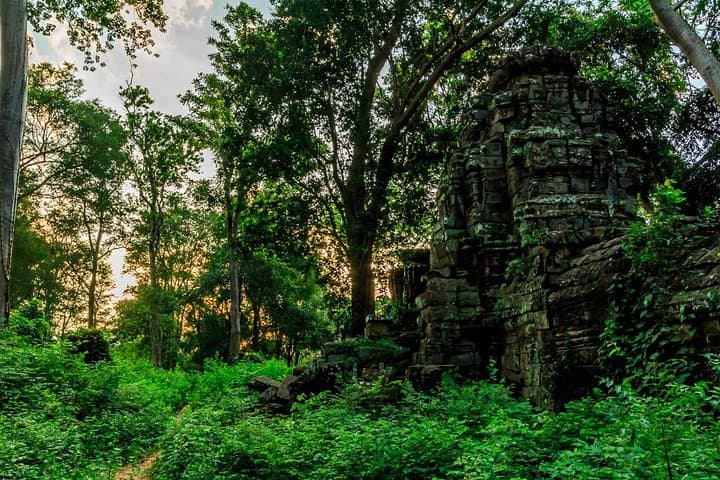
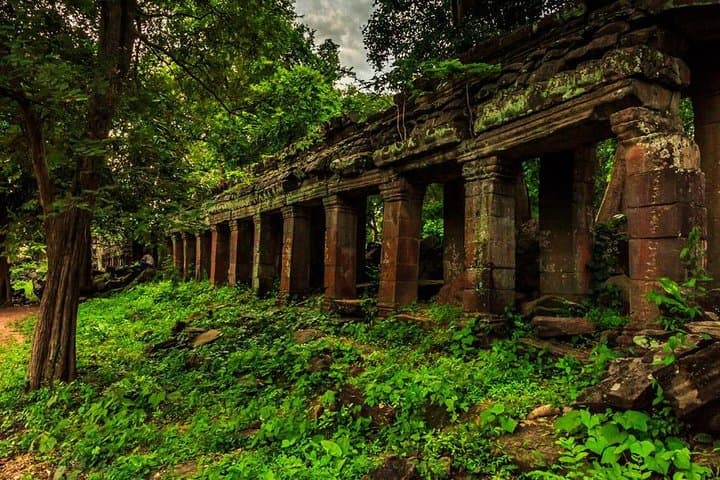
Built in the late 12th–early 13th century during the reign of Jayavarman VII, Banteay Chhmar is one of Cambodia’s largest and least-visited Angkorian sites. Its sandstone galleries once wore long bas-reliefs and enigmatic face towers that echo Bayon-style portraiture; many carvings were removed or damaged over time, but sections still reveal warrior processions, apsara panels, and devotional iconography. The geology here—sandstone over laterite foundations—means carved blocks weather and settle, creating pockets of shade and sun on the same wall.
Culture in the surrounding communes remains agrarian and open; local stilt houses, tiny markets, and temple guardians offer quick, human-scale encounters that feel authentic rather than staged.
Practical guidance: expect a long day—this private tour is roughly 10 hours from Siem Reap, including up to 2.5–3 hours each way on rural roads. Admission fees to the site are typically not included, and services are cash-friendly. Wear breathable long sleeves and sturdy shoes for uneven masonry, carry insect repellent, and plan for heat and sudden showers in the wet months. A licensed guide and AC vehicle are included in most private packages—use them to clarify history, point out conservation-sensitive areas, and navigate local customs. Arrive early to beat the hottest hours and to experience the site in relative silence.
easy.
10 hours.
Basic mobility required: you’ll walk on uneven stone surfaces for up to a few hours and spend several hours in a vehicle.
No, admission to Banteay Chhmar is typically not included—bring cash for the site fee which is collected locally.
Plan for roughly 2.5–3 hours each way depending on traffic and road conditions; the full excursion runs about 10 hours.
Accessibility is limited: many areas have uneven stones, steps, and soft earth; assistance may be required for visitors with mobility challenges.
Facilities are basic—some tours include lunch in a local restaurant or packed lunch; bring snacks and water for flexibility.
Constructed during the Jayavarman VII period, Banteay Chhmar is notable for its large scale, face towers, and extensive bas-relief sculptures, though many elements were removed or disturbed over centuries.
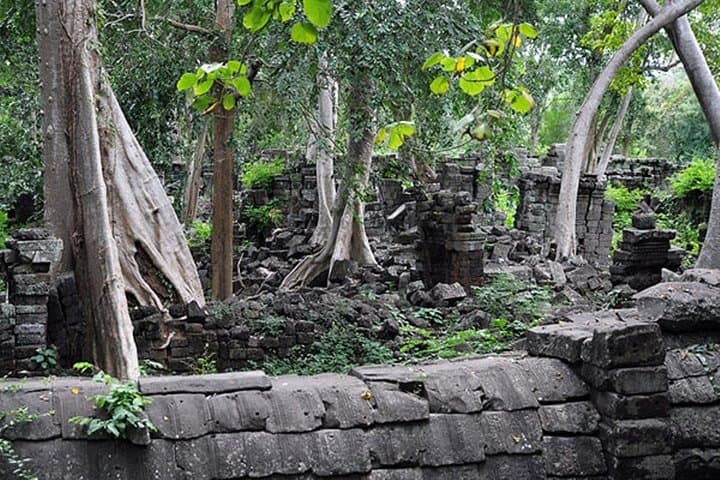
The site has been affected by looting and weathering; visitors should follow marked paths, avoid touching fragile carvings, and support licensed guides and local conservation initiatives.
Bayon Tabi Tour operates guided outdoor trips and adventures with an emphasis on safety, stewardship, and memorable experiences.
Morning light slices across laterite walls as the vehicle eases off the main road and into broad rice plains—this is the slow, rural approach to Banteay Chhmar. The temple sits apart from the Angkor cluster: a vast, low-profile complex ringed by a wide moat and a quiet village, where oxen graze and fishermen cast nets in the baray.
Morning light slices across laterite walls as the vehicle eases off the main road and into broad rice plains—this is the slow, rural approach to Banteay Chhmar. The temple sits apart from the Angkor cluster: a vast, low-profile complex ringed by a wide moat and a quiet village, where oxen graze and fishermen cast nets in the baray.
Built in the late 12th–early 13th century during the reign of Jayavarman VII, Banteay Chhmar is one of Cambodia’s largest and least-visited Angkorian sites. Its sandstone galleries once wore long bas-reliefs and enigmatic face towers that echo Bayon-style portraiture; many carvings were removed or damaged over time, but sections still reveal warrior processions, apsara panels, and devotional iconography. The geology here—sandstone over laterite foundations—means carved blocks weather and settle, creating pockets of shade and sun on the same wall.
Culture in the surrounding communes remains agrarian and open; local stilt houses, tiny markets, and temple guardians offer quick, human-scale encounters that feel authentic rather than staged.
Practical guidance: expect a long day—this private tour is roughly 10 hours from Siem Reap, including up to 2.5–3 hours each way on rural roads. Admission fees to the site are typically not included, and services are cash-friendly. Wear breathable long sleeves and sturdy shoes for uneven masonry, carry insect repellent, and plan for heat and sudden showers in the wet months. A licensed guide and AC vehicle are included in most private packages—use them to clarify history, point out conservation-sensitive areas, and navigate local customs. Arrive early to beat the hottest hours and to experience the site in relative silence.