THE ADVENTURE COLLECTIVE® · Independent discovery and booking for outdoor travel

A full-day private tour from Budapest to Banská Štiavnica delivers medieval streets, Renaissance castles, and an underground mining museum that tells the story of Central Europe’s silver boom. Plan for a 9–12 hour day with steep steps, volcanic ridgelines and one of Europe’s finest baroque calvaries.
A full-day private tour from Budapest to Banská Štiavnica delivers medieval streets, Renaissance castles, and an underground mining museum that tells the story of Central Europe’s silver boom. Plan for a 9–12 hour day with steep steps, volcanic ridgelines and one of Europe’s finest baroque calvaries.
You step out of an air-conditioned 4x4 into Trinity Square and the town seems to hold its breath: pastel facades, the Holy Trinity Column, and roofs that tumble toward a bowl of volcanic hills. The air smells faintly of wood smoke and coffee from a nearby café as old stone streets lead you toward ramparts and a baroque climb that rewards patience with a wide, quiet view.
Verified experiences and guided adventures in the surrounding area.
Operated by Tamas Varga · Banská Štiavnica, Banská Bystrica Region
You step out of an air-conditioned 4x4 into Trinity Square and the town seems to hold its breath: pastel facades, the Holy Trinity Column, and roofs that tumble toward a bowl of volcanic hills. The air smells faintly of wood smoke and coffee from a nearby café as old stone streets lead you toward ramparts and a baroque climb that rewards patience with a wide, quiet view.
Banská Štiavnica grew wealthy on silver and technical innovation; its medieval chambers and Renaissance fortifications once defended the Hungarian Kingdom’s mineral heart. The surrounding hills are not gentle knolls but the eroded remnants of ancient volcanism that concentrated ore into veins miners followed for centuries. That geology shaped a local culture of engineers and craftsmen—watch for workshops tucked behind market facades and the network of tajchy reservoirs that channelled water for ore processing.
Practicalities are straightforward: this private day tour runs roughly 9–12 hours from Budapest and includes guided walking through the Old and New Castles, an optional descent into the 17th‑century Bartolomej mine (roughly 1.2 km underground route), and the ascent of the baroque Calvary. Museums and some sites close Monday and Tuesday, so plan accordingly.
Bring sturdy shoes for cobbled streets and castle steps, a layered jacket for hilltop wind, and a small headlamp or torch if you join the underground tour. Hydrate between viewpoints and allow extra time for photos; the town’s compact scale rewards slow exploration rather than a hurried pass-through.
moderate.
9–12 hours.
Suitable for travelers in average fitness who can walk several hours with short steep climbs and stairs.
The private tour is a full-day excursion—about 9–12 hours—typically departing from Budapest and focusing on Banská Štiavnica with guided walks and transport provided.
The Bartolomej mine involves narrow passages and low ceilings; it may be uncomfortable for young children or those with claustrophobia—ask your guide about alternatives.
Bottled water, snacks and coffee are listed as inclusions, but some site admissions (museum or mine) may be optional—confirm what’s covered when booking.
Historic castles and the underground mine have limited accessibility due to stairs and uneven surfaces; select portions of the town center are walkable but not fully wheelchair friendly.
Banská Štiavnica rose to prominence in medieval times as one of Europe’s richest mining towns—its wealth funded fortresses, innovative mining schools and an extensive water-management system of tajchy.
The town’s UNESCO status protects historic structures and the tajchy system; visitors are asked to stay on paths, avoid littering, and respect restoration work to limit impact.
Tamas Varga operates guided outdoor trips and adventures with an emphasis on safety, stewardship, and memorable experiences.
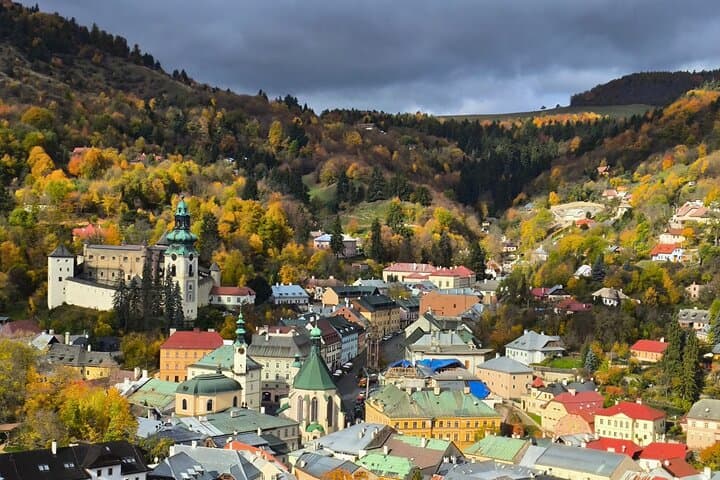
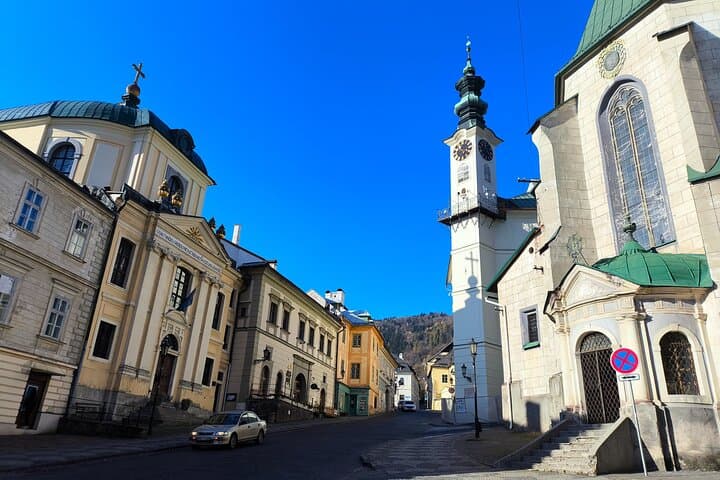
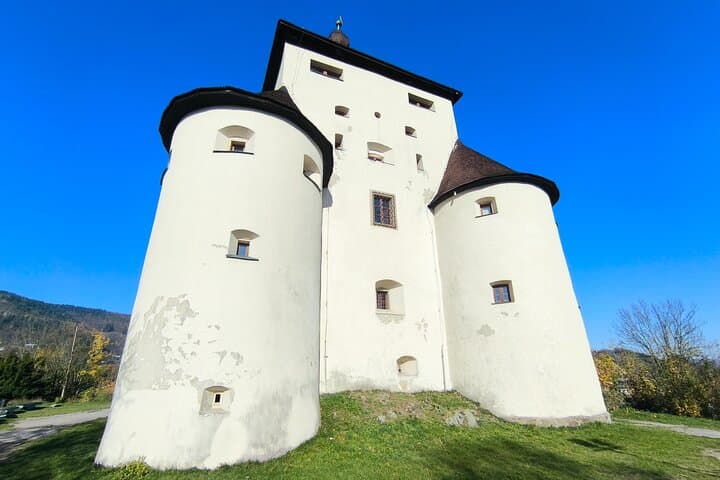
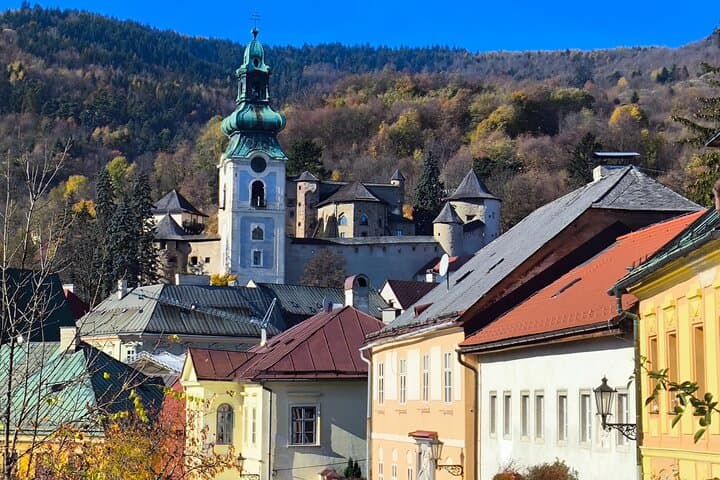
You step out of an air-conditioned 4x4 into Trinity Square and the town seems to hold its breath: pastel facades, the Holy Trinity Column, and roofs that tumble toward a bowl of volcanic hills. The air smells faintly of wood smoke and coffee from a nearby café as old stone streets lead you toward ramparts and a baroque climb that rewards patience with a wide, quiet view.
You step out of an air-conditioned 4x4 into Trinity Square and the town seems to hold its breath: pastel facades, the Holy Trinity Column, and roofs that tumble toward a bowl of volcanic hills. The air smells faintly of wood smoke and coffee from a nearby café as old stone streets lead you toward ramparts and a baroque climb that rewards patience with a wide, quiet view.
Banská Štiavnica grew wealthy on silver and technical innovation; its medieval chambers and Renaissance fortifications once defended the Hungarian Kingdom’s mineral heart. The surrounding hills are not gentle knolls but the eroded remnants of ancient volcanism that concentrated ore into veins miners followed for centuries. That geology shaped a local culture of engineers and craftsmen—watch for workshops tucked behind market facades and the network of tajchy reservoirs that channelled water for ore processing.
Practicalities are straightforward: this private day tour runs roughly 9–12 hours from Budapest and includes guided walking through the Old and New Castles, an optional descent into the 17th‑century Bartolomej mine (roughly 1.2 km underground route), and the ascent of the baroque Calvary. Museums and some sites close Monday and Tuesday, so plan accordingly.
Bring sturdy shoes for cobbled streets and castle steps, a layered jacket for hilltop wind, and a small headlamp or torch if you join the underground tour. Hydrate between viewpoints and allow extra time for photos; the town’s compact scale rewards slow exploration rather than a hurried pass-through.