THE ADVENTURE COLLECTIVE® · Independent discovery and booking for outdoor travel

Stand beneath the Erawan Museum’s three‑headed elephant and move from underworld to sky through galleries of Thai antiquities. This short guide explains what to expect, how the collection reflects local culture, and simple tips for timing your visit.
Stand beneath the Erawan Museum’s three‑headed elephant and move from underworld to sky through galleries of Thai antiquities. This short guide explains what to expect, how the collection reflects local culture, and simple tips for timing your visit.
You arrive under the shadow of a colossal three‑headed elephant whose bronze skin catches the Bangkok light like weathered armor. Paths of manicured grass lead you toward the ornate pedestal, and the museum’s scale—part sculpture, part shrine—reorganizes the suburbs into something deliberately theatrical.
Verified experiences and guided adventures in the surrounding area.
Operated by Way to Bangkok · Samut Prakan, Samut Prakan Province
You arrive under the shadow of a colossal three‑headed elephant whose bronze skin catches the Bangkok light like weathered armor. Paths of manicured grass lead you toward the ornate pedestal, and the museum’s scale—part sculpture, part shrine—reorganizes the suburbs into something deliberately theatrical.
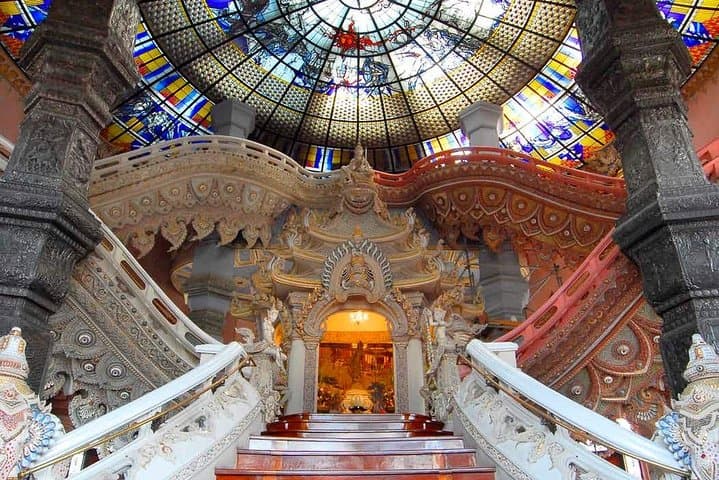
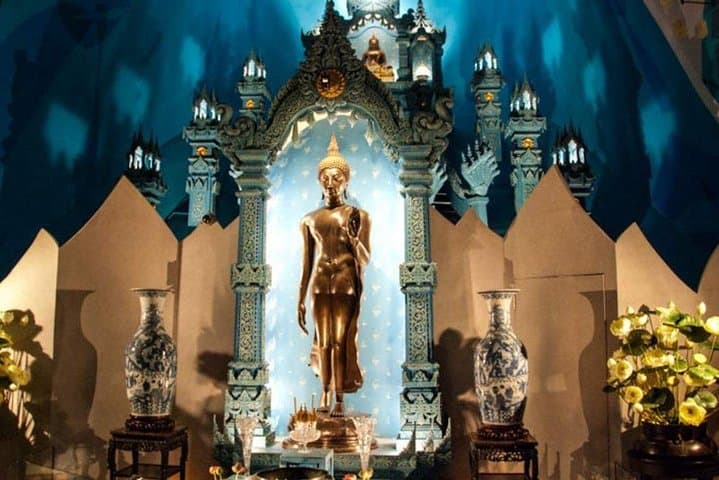
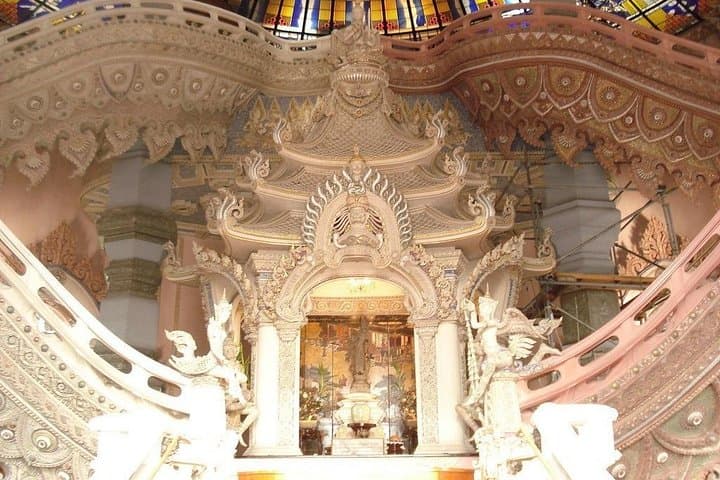
Built by collector and patron Khun Lek Viriyapant, the Erawan Museum houses Thai and Asian antiquities arranged across three interior levels that symbolize the underworld, earth, and heaven. The building itself is a study in symbolism: mosaic tiles, lacquered ceilings, and gilded iconography reflect mid‑20th‑century revivalist craft more than modernist restraint. The grounds—small groves, lotus ponds and sculpture gardens—offer a quieter way to read local aesthetics outside the galleries.
Culturally, the site blends Hindu and Buddhist motifs common in Central Thai art; items on display illuminate religious practice, funerary craftsmanship and household trinkets that reveal everyday life in earlier Thailand. Geologically nothing dramatic happens here—the site rests on low, alluvial plains of greater Bangkok—but the museum’s visual gravity makes the flat landscape feel intentional.
Practical guidance: plan 1.5–2 hours total, allow extra time for photos and the outdoor grounds. Join‑transfer options remove the hassle of urban traffic and curb parking concerns. The site is stroller and wheelchair accessible in most public areas; a modest admission fee and English signage make self‑guided visits straightforward. Visit in the morning or late afternoon for cooler light and fewer tour groups; bring sun protection for the outdoor sections.
easy.
1.5–2 hours.
Suitable for most fitness levels; mostly flat walking with short steps and ramps
Yes—the advertised product includes museum admission and a join transfer, so you won’t need to buy entry separately.
Most visitors spend about 1.5–2 hours to see the three levels and stroll the grounds; allow extra time for photos.
Public areas and outdoor grounds are generally accessible; some interior spaces have steps—staff can advise on specific routes.
Basic English signage and guided information from staff or your driver are commonly available; audio guides may not be standard.
Commissioned by Khun Lek Viriyapant in the late 20th century, the museum reflects his larger program of cultural conservation that includes the Ancient City and Sanctuary of Truth projects.
The site maintains landscaped gardens and limits large‑scale events to protect fragile mosaics; visitors are asked to avoid touching artifacts and to use marked paths to reduce erosion.
Way to Bangkok operates guided outdoor trips and adventures with an emphasis on safety, stewardship, and memorable experiences.
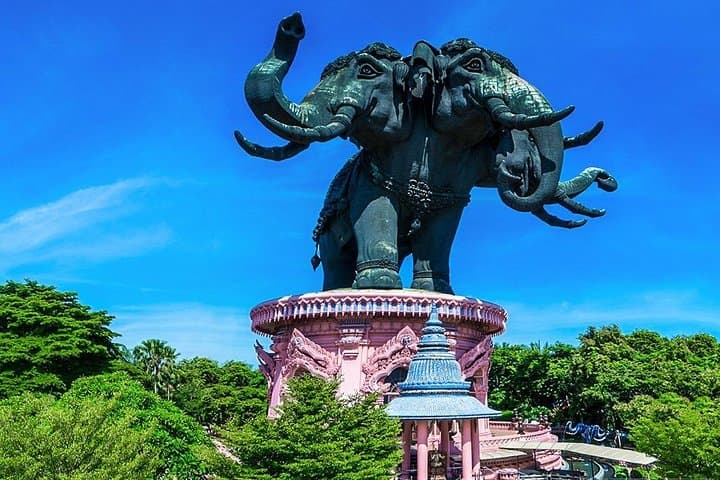
You arrive under the shadow of a colossal three‑headed elephant whose bronze skin catches the Bangkok light like weathered armor. Paths of manicured grass lead you toward the ornate pedestal, and the museum’s scale—part sculpture, part shrine—reorganizes the suburbs into something deliberately theatrical.
You arrive under the shadow of a colossal three‑headed elephant whose bronze skin catches the Bangkok light like weathered armor. Paths of manicured grass lead you toward the ornate pedestal, and the museum’s scale—part sculpture, part shrine—reorganizes the suburbs into something deliberately theatrical.
Built by collector and patron Khun Lek Viriyapant, the Erawan Museum houses Thai and Asian antiquities arranged across three interior levels that symbolize the underworld, earth, and heaven. The building itself is a study in symbolism: mosaic tiles, lacquered ceilings, and gilded iconography reflect mid‑20th‑century revivalist craft more than modernist restraint. The grounds—small groves, lotus ponds and sculpture gardens—offer a quieter way to read local aesthetics outside the galleries.
Culturally, the site blends Hindu and Buddhist motifs common in Central Thai art; items on display illuminate religious practice, funerary craftsmanship and household trinkets that reveal everyday life in earlier Thailand. Geologically nothing dramatic happens here—the site rests on low, alluvial plains of greater Bangkok—but the museum’s visual gravity makes the flat landscape feel intentional.
Practical guidance: plan 1.5–2 hours total, allow extra time for photos and the outdoor grounds. Join‑transfer options remove the hassle of urban traffic and curb parking concerns. The site is stroller and wheelchair accessible in most public areas; a modest admission fee and English signage make self‑guided visits straightforward. Visit in the morning or late afternoon for cooler light and fewer tour groups; bring sun protection for the outdoor sections.