THE ADVENTURE COLLECTIVE® · Independent discovery and booking for outdoor travel

A colossal three‑headed elephant marks the entrance to Erawan Museum, where Thai cosmology, carved artifacts and a radiant glass dome meet in a compact cultural estate. This private‑transfer admission turns a museum visit into an easy half‑day escape from Bangkok.
A colossal three‑headed elephant marks the entrance to Erawan Museum, where Thai cosmology, carved artifacts and a radiant glass dome meet in a compact cultural estate. This private‑transfer admission turns a museum visit into an easy half‑day escape from Bangkok.
You pull up to a vast gleaming elephant and the scale of the place recalibrates; the three-headed Erawan rises from manicured lawns like a myth made architecture. Inside the hollow bronze body, light pours through a mosaic dome and colors the carved altars and display cases — a theatrical, slightly hallucinatory setting for Thai iconography and collected antiquities.
Verified experiences and guided adventures in the surrounding area.
Operated by Sightseeingbangkok.com · Samut Prakan, Samut Prakan
You pull up to a vast gleaming elephant and the scale of the place recalibrates; the three-headed Erawan rises from manicured lawns like a myth made architecture. Inside the hollow bronze body, light pours through a mosaic dome and colors the carved altars and display cases — a theatrical, slightly hallucinatory setting for Thai iconography and collected antiquities.
The Erawan Museum was assembled by Khun Lek Viriyapant as a repository for Thai and Asian artworks and sits on roughly 12 acres adjacent to industrial lands along Bangkok’s southern approaches. Its layered interior intentionally maps cosmology: subterranean gallery spaces, a mid-level of worldly artifacts, and a soaring glass-domed upper chamber that frames the sky. Craftsmanship and devotional objects trace regional religious practice and material culture across centuries.
Culturally, visiting is part museum tour, part shrine etiquette — expect to remove hats and speak quietly in worshipful corners. The outdoor grounds reward a slow walk: mature trees shade sculptures, and the elephant’s base offers unexpected angles for photography.
Practical guidance: this private-transfer option makes the museum a half- to full-day outing from central Bangkok; plan 4–6 hours including travel and time to browse exhibits. Wear comfortable shoes for stone steps and gravel paths, bring sun protection for the gardens, and carry a refillable bottle. Infants may ride in strollers but must sit on laps during transport. Check signage for restricted areas and be mindful not to touch delicate artifacts. Morning visits avoid peak heat and the busiest tour groups, letting the place’s quieter details — lacquer work, gilding, stained glass — reveal themselves.
easy.
4–10 hours.
Suitable for most travelers; minimal walking on mixed surfaces and interior stairs.
Yes — this option includes private, air‑conditioned transportation and an English‑speaking driver as listed in the inclusions.
Mobile or paper tickets are accepted; have the booking confirmation ready for entry.
The grounds are stroller‑friendly in many areas, but some interior galleries have stairs; infants must sit on laps during vehicle transport.
For a full refund cancel at least 24 hours before the scheduled departure time; within 24 hours bookings are non‑refundable per the policy.
Built by collector Khun Lek Viriyapant to house and preserve Thai and Asian artifacts, the museum occupies land originally tied to local industry and was intended as a cultural conservancy.
Visitors are asked to respect exhibits and gardens; staying on paths and avoiding flash photography in sensitive areas helps preserve delicate materials.
Sightseeingbangkok.com operates guided outdoor trips and adventures with an emphasis on safety, stewardship, and memorable experiences.
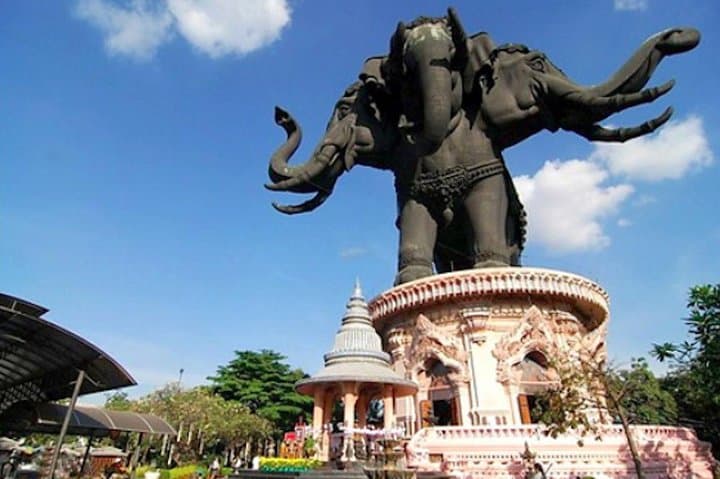
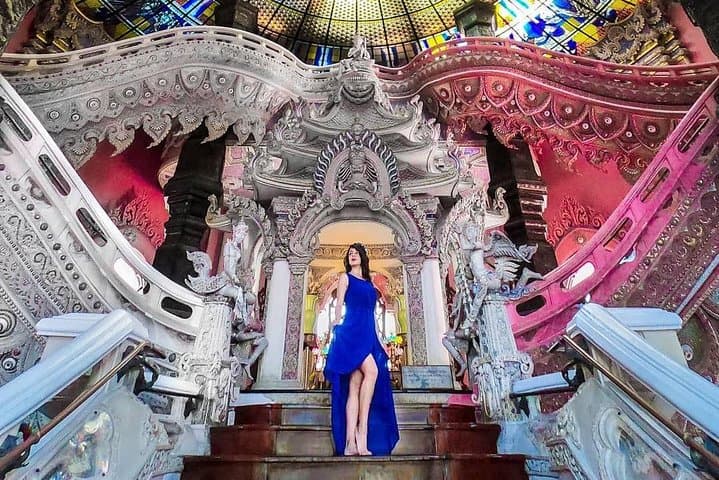
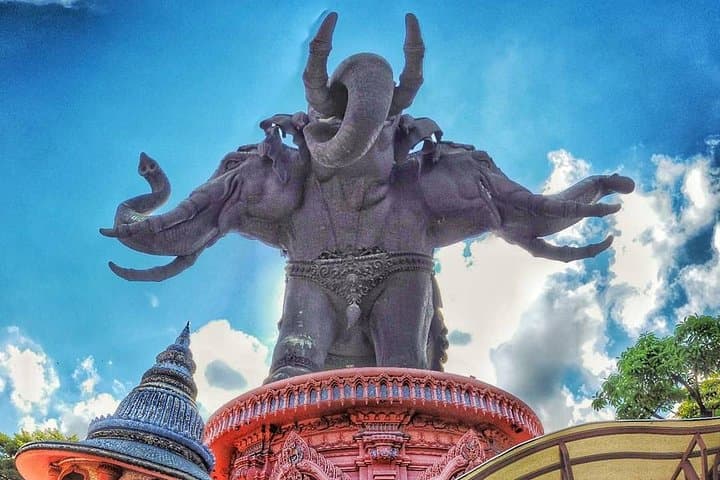
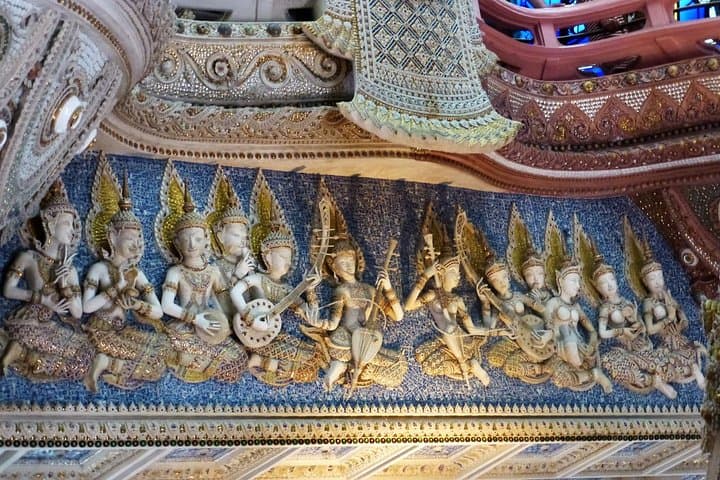
You pull up to a vast gleaming elephant and the scale of the place recalibrates; the three-headed Erawan rises from manicured lawns like a myth made architecture. Inside the hollow bronze body, light pours through a mosaic dome and colors the carved altars and display cases — a theatrical, slightly hallucinatory setting for Thai iconography and collected antiquities.
You pull up to a vast gleaming elephant and the scale of the place recalibrates; the three-headed Erawan rises from manicured lawns like a myth made architecture. Inside the hollow bronze body, light pours through a mosaic dome and colors the carved altars and display cases — a theatrical, slightly hallucinatory setting for Thai iconography and collected antiquities.
The Erawan Museum was assembled by Khun Lek Viriyapant as a repository for Thai and Asian artworks and sits on roughly 12 acres adjacent to industrial lands along Bangkok’s southern approaches. Its layered interior intentionally maps cosmology: subterranean gallery spaces, a mid-level of worldly artifacts, and a soaring glass-domed upper chamber that frames the sky. Craftsmanship and devotional objects trace regional religious practice and material culture across centuries.
Culturally, visiting is part museum tour, part shrine etiquette — expect to remove hats and speak quietly in worshipful corners. The outdoor grounds reward a slow walk: mature trees shade sculptures, and the elephant’s base offers unexpected angles for photography.
Practical guidance: this private-transfer option makes the museum a half- to full-day outing from central Bangkok; plan 4–6 hours including travel and time to browse exhibits. Wear comfortable shoes for stone steps and gravel paths, bring sun protection for the gardens, and carry a refillable bottle. Infants may ride in strollers but must sit on laps during transport. Check signage for restricted areas and be mindful not to touch delicate artifacts. Morning visits avoid peak heat and the busiest tour groups, letting the place’s quieter details — lacquer work, gilding, stained glass — reveal themselves.