THE ADVENTURE COLLECTIVE® · Independent discovery and booking for outdoor travel

Head into the Leitahraun lava field for a small-group, geologist-led trip through Arnarker — a 516 m lava tunnel near Reykjavik. Expect basalt chambers, winter ice formations, and hands-on lessons about Icelandic volcanism.
Head into the Leitahraun lava field for a small-group, geologist-led trip through Arnarker — a 516 m lava tunnel near Reykjavik. Expect basalt chambers, winter ice formations, and hands-on lessons about Icelandic volcanism.
You step from the van into a broad, wind-cut plain and the ground seems older than the sky — black pahoehoe and jagged ʻaʻā stretching toward low ridges where smoke once rose. The Arnarker lava tunnel waits, its mouth a simple notch in the Leitahraun field; inside, rock curves into passages that remember fire.
Verified experiences and guided adventures in the surrounding area.
Operated by Geoadventures Iceland · Reykjavik, Capital Region
You step from the van into a broad, wind-cut plain and the ground seems older than the sky — black pahoehoe and jagged ʻaʻā stretching toward low ridges where smoke once rose. The Arnarker lava tunnel waits, its mouth a simple notch in the Leitahraun field; inside, rock curves into passages that remember fire.
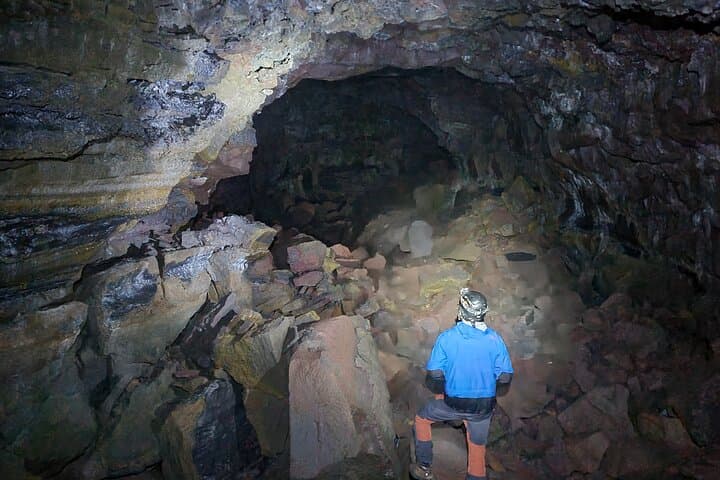
The tunnel is part of the Brennisteinsfjöll volcanic system and runs roughly 516 meters through lava formed during an eruption about 5,200 years ago. Guided by a geologist, the group of up to six moves deliberately: helmets clack, headlamps paint the ceiling, and in winter curtains of ice sculpt the flow lines into fragile crystal ribs.
This is practical geology — learn how lava moves, why tubes form, and how Iceland’s young landscape keeps reshaping itself under a cold sky. Culturally, the area sits within centuries of shepherd routes and modern road cuts; the trip highlights how people read and use volcanic ground for travel and tourism.
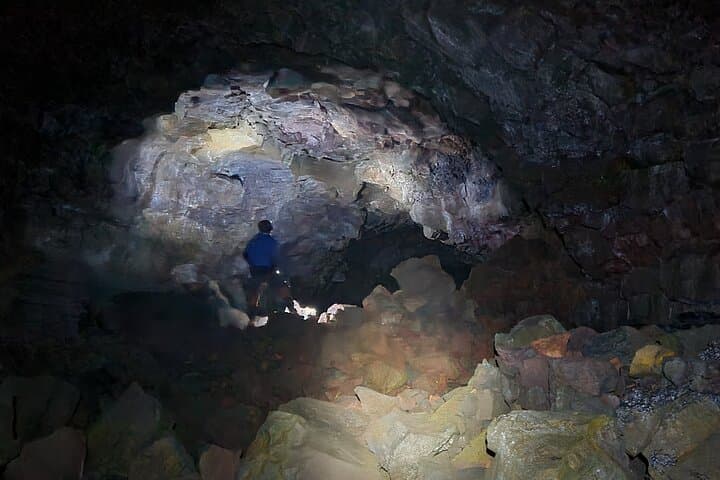
Expect uneven basalt floors, occasional low squeezes, and broad chambers that echo. The guide supplies helmets, headlamps, and gloves; travel time from Reykjavik is included in the five-hour tour. The route is suitable for moderately fit visitors aged 15–65; it isn’t recommended for those with serious heart, back, or pregnancy restrictions.
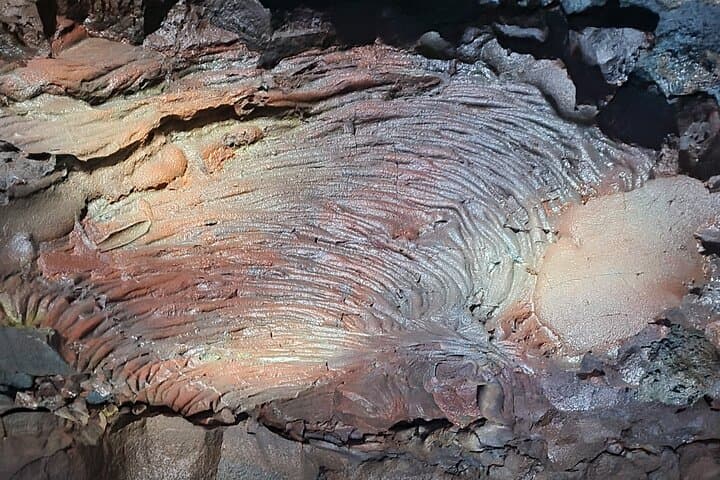
Practical tips: dress in warm, waterproof layers and sturdy boots with good tread, bring a charged phone in a dry pack, and pace yourself on wet or icy steps. The cave rewards attention — look for lava flow lines, collapsed skylights, and, in winter, delicate ice formations that speak of water meeting cold stone.
moderate.
5 hours.
Moderate — able to walk over uneven rocky ground for several hours and manage brief low crawls.
The full tour is about 5 hours including transport from Reykjavik; expect roughly 2–3 hours in and around the cave (itinerary lists ~180 minutes inside/outside the tunnel).
Age limits are typically 15–65; the route involves uneven terrain and some low passages, so it’s not suitable for those with significant mobility limitations or small children.
Yes — tours run year-round. Winter brings ice formations that change footing; guides provide safety gear and adjust the route as needed for conditions.
Yes. Helmets, headlamps, and gloves are supplied by the operator, but bringing a personal backup light is recommended.
Leitahraun formed about 5,200 years ago as part of the Brennisteinsfjöll volcanic activity; human use of the area has shifted from pastoral routes to modern geological tourism.
Stick to marked approaches and avoid moving fragile ice or rock features; the volcanic surface is slow to regenerate and trampling damages lichens and microhabitats.
Geoadventures Iceland operates guided outdoor trips and adventures with an emphasis on safety, stewardship, and memorable experiences.
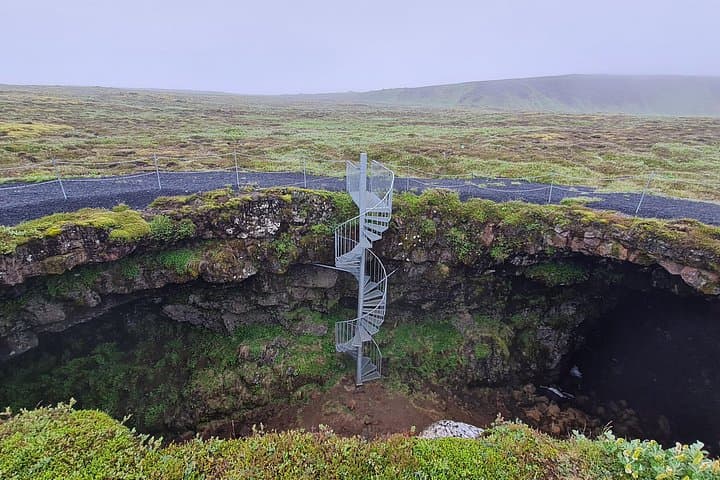
You step from the van into a broad, wind-cut plain and the ground seems older than the sky — black pahoehoe and jagged ʻaʻā stretching toward low ridges where smoke once rose. The Arnarker lava tunnel waits, its mouth a simple notch in the Leitahraun field; inside, rock curves into passages that remember fire.
You step from the van into a broad, wind-cut plain and the ground seems older than the sky — black pahoehoe and jagged ʻaʻā stretching toward low ridges where smoke once rose. The Arnarker lava tunnel waits, its mouth a simple notch in the Leitahraun field; inside, rock curves into passages that remember fire.
The tunnel is part of the Brennisteinsfjöll volcanic system and runs roughly 516 meters through lava formed during an eruption about 5,200 years ago. Guided by a geologist, the group of up to six moves deliberately: helmets clack, headlamps paint the ceiling, and in winter curtains of ice sculpt the flow lines into fragile crystal ribs.
This is practical geology — learn how lava moves, why tubes form, and how Iceland’s young landscape keeps reshaping itself under a cold sky. Culturally, the area sits within centuries of shepherd routes and modern road cuts; the trip highlights how people read and use volcanic ground for travel and tourism.
Expect uneven basalt floors, occasional low squeezes, and broad chambers that echo. The guide supplies helmets, headlamps, and gloves; travel time from Reykjavik is included in the five-hour tour. The route is suitable for moderately fit visitors aged 15–65; it isn’t recommended for those with serious heart, back, or pregnancy restrictions.
Practical tips: dress in warm, waterproof layers and sturdy boots with good tread, bring a charged phone in a dry pack, and pace yourself on wet or icy steps. The cave rewards attention — look for lava flow lines, collapsed skylights, and, in winter, delicate ice formations that speak of water meeting cold stone.