THE ADVENTURE COLLECTIVE® · Independent discovery and booking for outdoor travel

Spend a full day exploring Angkor Wat, Bayon, Ta Prohm, Angkor Thom and Bakheng Hill with hotel pickup and a small-group minivan. This practical guide outlines what to expect — history, logistics, and must-have gear for a long day in the park.
Spend a full day exploring Angkor Wat, Bayon, Ta Prohm, Angkor Thom and Bakheng Hill with hotel pickup and a small-group minivan. This practical guide outlines what to expect — history, logistics, and must-have gear for a long day in the park.
You step into an air-conditioned minivan as morning light slides over rice paddies, and the road ahead narrows toward craggy stone silhouettes rising from the jungle.
Verified experiences and guided adventures in the surrounding area.
Operated by Trippest Travel · Siem Reap, Siem Reap Province
You step into an air-conditioned minivan as morning light slides over rice paddies, and the road ahead narrows toward craggy stone silhouettes rising from the jungle.
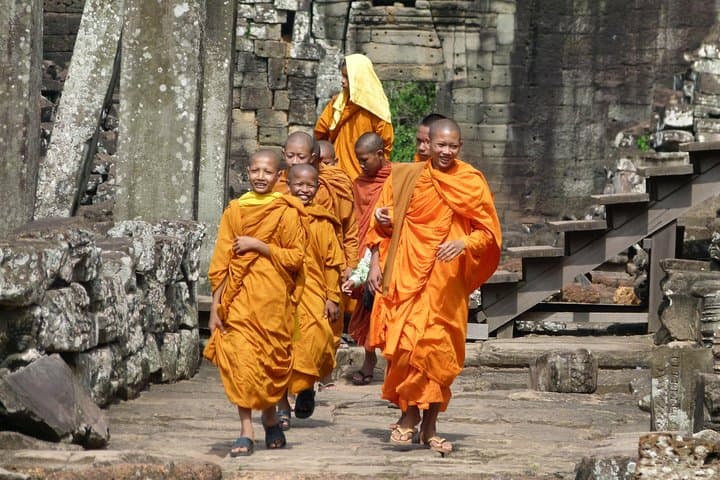
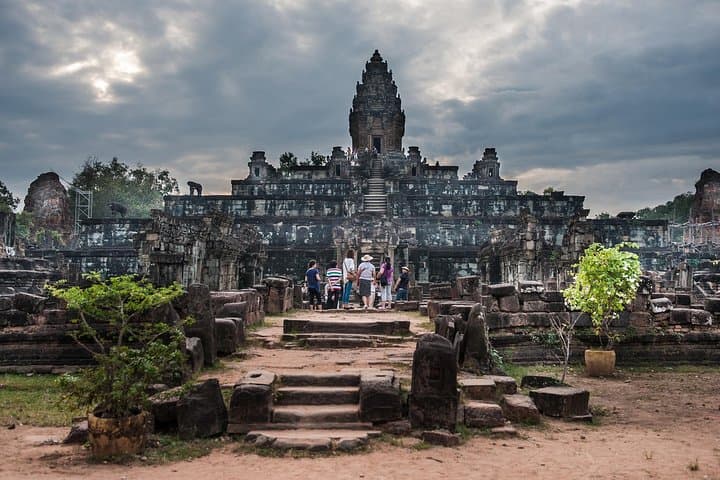
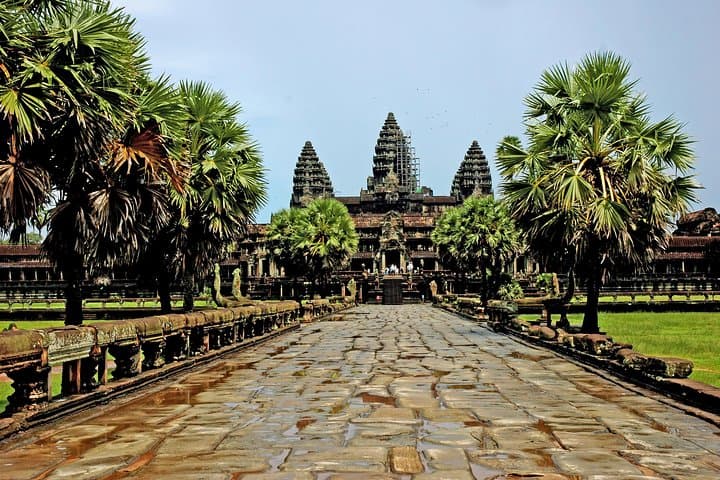
By late morning you’re standing before Angkor Wat’s sprawling galleries — cool stone corridors that still hold the weight of centuries — and then wandering where tree roots have become architecture at Ta Prohm. Bayon’s carved faces look out in many directions like quiet sentries, while Angkor Thom’s causeways and the Victory Gate remind you this was once a functioning capital, not just a monument.
The temples are built mainly of sandstone and laterite, hewn and stacked by the Khmer Empire between the 9th and 13th centuries; successive kings layered Hindu and Buddhist iconography into the architecture, so religious history reads in the reliefs.
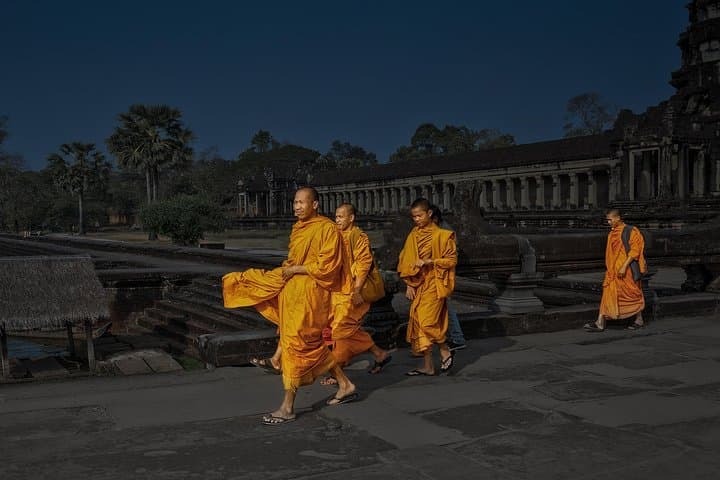
Local rhythms shape the visit: vendors clustered near the main sites, flow-control at Bakheng Hill at peak season, and a steady need for cash for food or small purchases. Cultural etiquette is practical — cover shoulders and knees, and treat carvings as fragile.
Practical guidance: the tour is a full 10–11 hour day with hotel pickup around 7:40–8:10, maximum 10 people, and stops to purchase the Angkor Park pass (1-day USD 37; 3-day USD 62; 7-day USD 72). Bring a hat, sunscreen, sturdy walking shoes, and water (the tour supplies cold water and towels). Expect uneven stone, humid heat, and short climbs — plan for steady pacing and early starts to beat the crowds and midday sun.
moderate.
10–11 hours.
Able to walk on uneven stone and stand for several hours in hot, humid conditions; basic endurance required for repeated short climbs.
Yes — the guide/driver will stop at the ticket booth so you can purchase a 1-day (USD37), 3-day (USD62) or 7-day (USD72) pass before entering the park.
Pickup is arranged with your hotel between roughly 7:40AM and 8:10AM; be ready 30 minutes before your scheduled pickup window.
Meals are not included unless specified; the tour provides cold water and towels, and there are local food stalls or cafés near major temples for lunch.
The tour is labeled physical easy and suitable for most fitness levels, but expect uneven stone and many steps; infants must sit on laps and children may require a passport for free entry.
Angkor was the seat of the Khmer Empire (9th–15th centuries); Angkor Wat was constructed by Suryavarman II in the early 12th century and Angkor Thom was expanded by Jayavarman VII in the late 12th century.
Heavy visitor traffic and humidity accelerate stone erosion; stick to marked paths, avoid touching bas-reliefs, and use local guides and businesses that support conservation efforts.
Trippest Travel operates guided outdoor trips and adventures with an emphasis on safety, stewardship, and memorable experiences.
You step into an air-conditioned minivan as morning light slides over rice paddies, and the road ahead narrows toward craggy stone silhouettes rising from the jungle.
You step into an air-conditioned minivan as morning light slides over rice paddies, and the road ahead narrows toward craggy stone silhouettes rising from the jungle.
By late morning you’re standing before Angkor Wat’s sprawling galleries — cool stone corridors that still hold the weight of centuries — and then wandering where tree roots have become architecture at Ta Prohm. Bayon’s carved faces look out in many directions like quiet sentries, while Angkor Thom’s causeways and the Victory Gate remind you this was once a functioning capital, not just a monument.
The temples are built mainly of sandstone and laterite, hewn and stacked by the Khmer Empire between the 9th and 13th centuries; successive kings layered Hindu and Buddhist iconography into the architecture, so religious history reads in the reliefs.
Local rhythms shape the visit: vendors clustered near the main sites, flow-control at Bakheng Hill at peak season, and a steady need for cash for food or small purchases. Cultural etiquette is practical — cover shoulders and knees, and treat carvings as fragile.
Practical guidance: the tour is a full 10–11 hour day with hotel pickup around 7:40–8:10, maximum 10 people, and stops to purchase the Angkor Park pass (1-day USD 37; 3-day USD 62; 7-day USD 72). Bring a hat, sunscreen, sturdy walking shoes, and water (the tour supplies cold water and towels). Expect uneven stone, humid heat, and short climbs — plan for steady pacing and early starts to beat the crowds and midday sun.