THE ADVENTURE COLLECTIVE® · Independent discovery and booking for outdoor travel

Trace gods and civic life on a private, four-hour guided walk of the Acropolis and Acropolis Museum. This intimate tour pairs on-site myth-telling with curated museum context—perfect for travelers who want focused history and flexible pacing.
Trace gods and civic life on a private, four-hour guided walk of the Acropolis and Acropolis Museum. This intimate tour pairs on-site myth-telling with curated museum context—perfect for travelers who want focused history and flexible pacing.
You begin at the base of the Acropolis, city noise folding away as the hill's pale limestone and marble rise like a city within a city. The guide leads upward past the Theater of Dionysus, where ancient plays once tested democracy, and through the Propylaea’s columns into the Parthenon’s light-streaked enclosure.
Verified experiences and guided adventures in the surrounding area.
Operated by Greeking.me · Athens, Attica
You begin at the base of the Acropolis, city noise folding away as the hill's pale limestone and marble rise like a city within a city. The guide leads upward past the Theater of Dionysus, where ancient plays once tested democracy, and through the Propylaea’s columns into the Parthenon’s light-streaked enclosure.
This compact, four-hour itinerary pairs on-site storytelling with visits to the Acropolis Museum, framing objects and architecture within the myths that shaped Athens. Geologically the site sits on a compact limestone outcrop—hard, exposed and subject to weathering—so surfaces are uneven and reflective in sunlight. Culturally the hill served as sacred ground from the Bronze Age through classical antiquity; the Parthenon (mid-5th century BCE) and the Erechtheion anchor stories about Athena, Poseidon and civic identity.
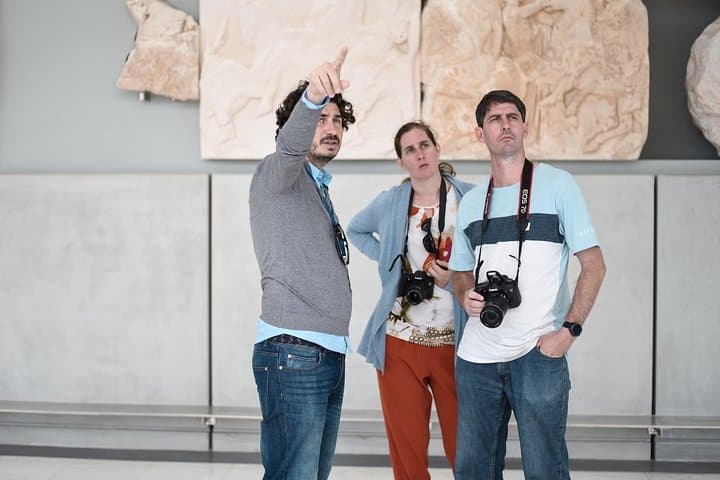
Expect close readings of sculpted friezes, accounts of Periclean Athens, and narratives about healing at the Asklepieion and drama at the Theater of Dionysus. The modern museum reframes fragmented sculptures in climate-controlled galleries, helping visitors trace provenance and conservation choices.
Practical guidance: admission is not included—book Acropolis and museum tickets separately and aim for early morning to avoid crowds and heat. Wear sturdy shoes for steep marble steps, carry water and sun protection, and allow time for short walks between sites and security lines. Public transport reaches the area but plan extra time for entry procedures. The private format lets you tune the sequence and linger on the stories that interest you most.
easy.
4 hours.
Suitable for most fitness levels; requires walking uphill on uneven stone and standing for extended interpretation periods.
No; the Acropolis and Acropolis Museum admissions are typically not included. Book tickets online in advance to secure preferred entry times.
Yes; the tour is described as physically easy, but participants should be able to manage uphill walks and uneven surfaces.
Yes; this private tour lets you choose the order and emphasis—your licensed guide can focus on specific myths, archaeology, or architecture.
Accessibility is limited on the Acropolis summit because of steep and uneven ancient stone; the Acropolis Museum is accessible and offers exhibits that complement the hill visit.
The Acropolis reached its classical form during Pericles’ building program in the mid-5th century BCE, with the Parthenon completed around 432 BCE.
Ongoing conservation balances public access with preservation—stay on marked paths, avoid touching sculptures, and follow on-site guidance to minimize wear on ancient stone.
Greeking.me operates guided outdoor trips and adventures with an emphasis on safety, stewardship, and memorable experiences.
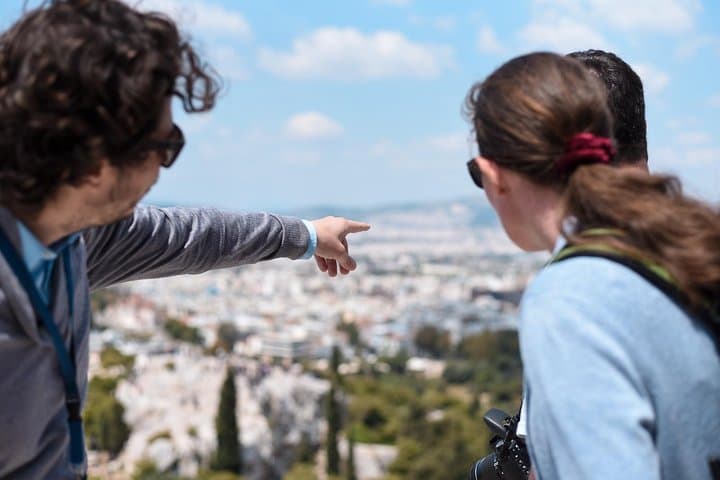
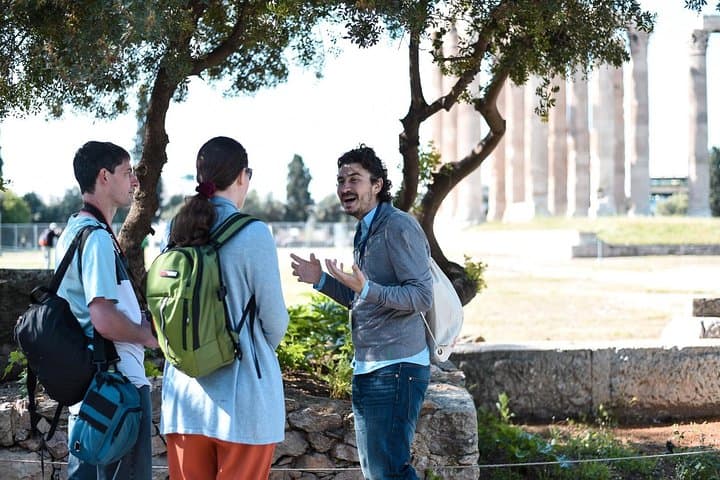

You begin at the base of the Acropolis, city noise folding away as the hill's pale limestone and marble rise like a city within a city. The guide leads upward past the Theater of Dionysus, where ancient plays once tested democracy, and through the Propylaea’s columns into the Parthenon’s light-streaked enclosure.
You begin at the base of the Acropolis, city noise folding away as the hill's pale limestone and marble rise like a city within a city. The guide leads upward past the Theater of Dionysus, where ancient plays once tested democracy, and through the Propylaea’s columns into the Parthenon’s light-streaked enclosure.
This compact, four-hour itinerary pairs on-site storytelling with visits to the Acropolis Museum, framing objects and architecture within the myths that shaped Athens. Geologically the site sits on a compact limestone outcrop—hard, exposed and subject to weathering—so surfaces are uneven and reflective in sunlight. Culturally the hill served as sacred ground from the Bronze Age through classical antiquity; the Parthenon (mid-5th century BCE) and the Erechtheion anchor stories about Athena, Poseidon and civic identity.
Expect close readings of sculpted friezes, accounts of Periclean Athens, and narratives about healing at the Asklepieion and drama at the Theater of Dionysus. The modern museum reframes fragmented sculptures in climate-controlled galleries, helping visitors trace provenance and conservation choices.
Practical guidance: admission is not included—book Acropolis and museum tickets separately and aim for early morning to avoid crowds and heat. Wear sturdy shoes for steep marble steps, carry water and sun protection, and allow time for short walks between sites and security lines. Public transport reaches the area but plan extra time for entry procedures. The private format lets you tune the sequence and linger on the stories that interest you most.