THE ADVENTURE COLLECTIVE® · Independent discovery and booking for outdoor travel

Step directly from your Alghero accommodation to two of Sardinia’s most compelling prehistoric sites with a private guide and transfer. This focused half-day tour illuminates the Nuragic village of Palmavera and the ancient chamber tombs at Anghelu Ruju, with admissions included.
Step directly from your Alghero accommodation to two of Sardinia’s most compelling prehistoric sites with a private guide and transfer. This focused half-day tour illuminates the Nuragic village of Palmavera and the ancient chamber tombs at Anghelu Ruju, with admissions included.
A low sun slants across limestone as the van drops visitors beside a squat Bronze Age tower; wind from the nearby Gulf of Asinara carries the salt of the sea and the dust of a landscape people have shaped for millennia. This private archaeological tour from Alghero puts two of Sardinia’s most evocative prehistoric sites—Nuraghe Palmavera and the Anghelu Ruju necropolis—within a single half-day itinerary, with door-to-door transfer and a bilingual local guide.
Verified experiences and guided adventures in the surrounding area.
Operated by Guida Turistica Kevin Sunch · Alghero, Sardinia
A low sun slants across limestone as the van drops visitors beside a squat Bronze Age tower; wind from the nearby Gulf of Asinara carries the salt of the sea and the dust of a landscape people have shaped for millennia. This private archaeological tour from Alghero puts two of Sardinia’s most evocative prehistoric sites—Nuraghe Palmavera and the Anghelu Ruju necropolis—within a single half-day itinerary, with door-to-door transfer and a bilingual local guide.
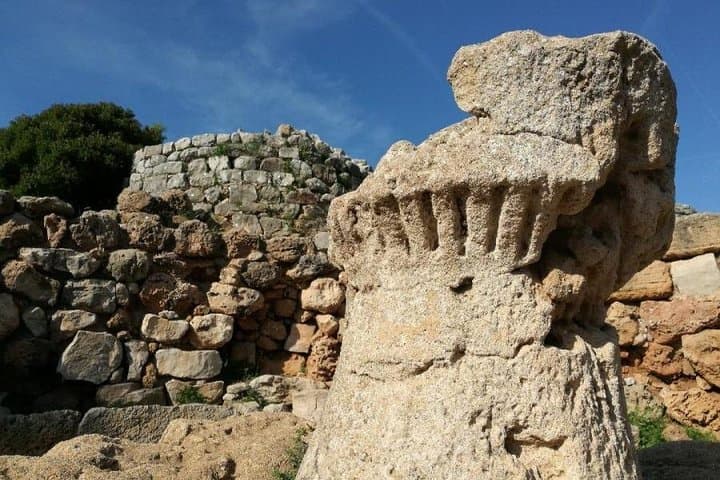
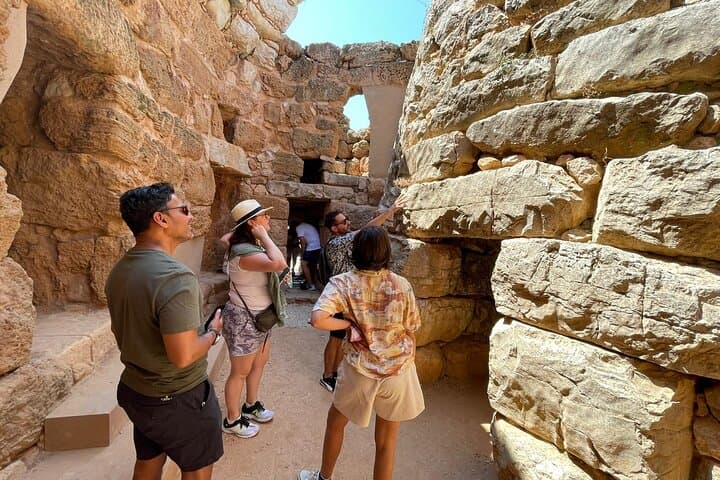
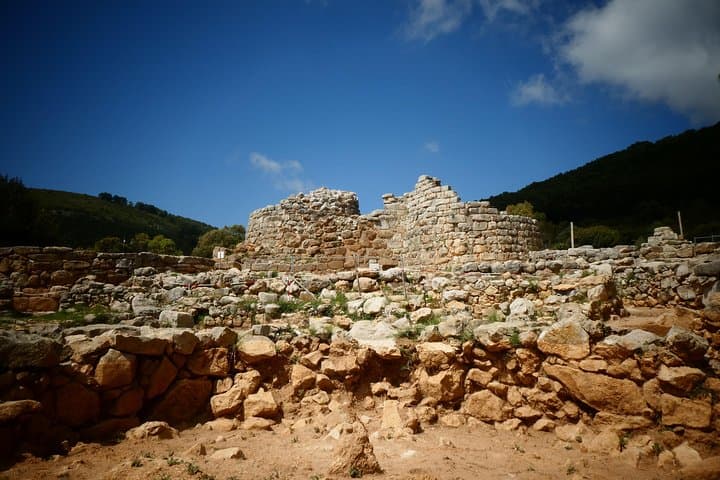
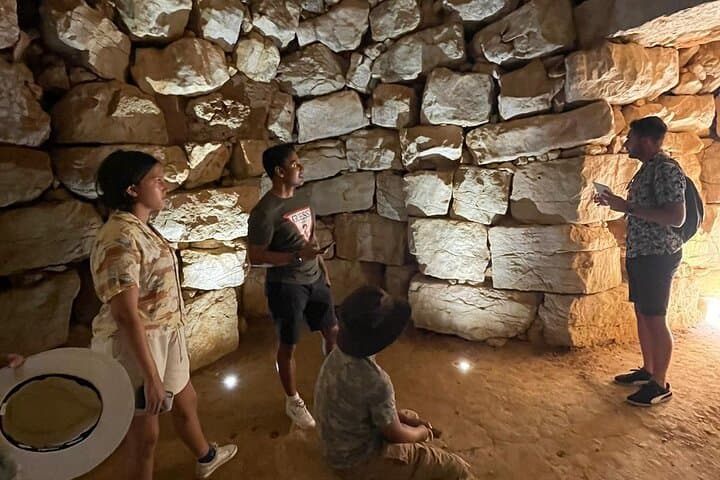
Palmavera offers a tangible touchpoint with the Nuragic civilization: visitors walk among the remains of a 50-hut village and climb inside a twin-towered central structure built of limestone and local sandstone. Anghelu Ruju, older still, is a spread of chambered tombs and menhirs dating back to the late Neolithic, where burial chambers create a rhythm across the field.
Geology here is straightforward—limestone bedrock weathered by wind and Mediterranean rains—yet cultural layers run deep: pre-Roman Sardinia, later Catalan influence in nearby Alghero town, and centuries of coastal trade. A local guide not only explains the sites’ archaeology but points out practical local knowledge—best cafés, quiet viewpoints, and how to read site signage.
Practical guidance: expect uneven ground and short climbs; wear sturdy shoes, sun protection, and bring water. The tour lasts roughly 2.5 hours including transfers; admission is included. Morning slots are cooler and quieter. Because sites are protected, follow your guide’s instructions, stay on designated paths, and avoid touching fragile stonework. This curated, accessible visit suits travelers seeking a compact yet rich window into Sardinia’s distant past without the need for long hikes or special equipment.
easy.
2–3 hours.
Suitable for most fitness levels; involves short walks over uneven terrain and low steps.
Yes—private transfer from your accommodation in the Alghero area is included in the tour price; specify your pickup point when booking.
Yes; tickets for both Nuraghe Palmavera and Anghelu Ruju are included in the tour price as noted in the itinerary.
Yes—the guide can adapt the route to skip one archaeological site and instead offer a short visit to Alghero’s Catalan-style old town at no extra charge if requested in advance.
Children are welcome and the tour is rated easy, but both sites have uneven ground and low steps; visitors with limited mobility should contact the operator to discuss pickup/drop-off accessibility and onsite terrain.
Nuraghe Palmavera dates to the Bronze Age (15th century BCE) and reflects the organization of Nuragic village life; Anghelu Ruju is a Neolithic necropolis with chamber tombs dating back to around 4200 BCE.
Both sites are protected; visitors are asked to stay on marked routes and avoid touching fragile masonry to limit erosion and preserve archaeological contexts.
Guida Turistica Kevin Sunch operates guided outdoor trips and adventures with an emphasis on safety, stewardship, and memorable experiences.
A low sun slants across limestone as the van drops visitors beside a squat Bronze Age tower; wind from the nearby Gulf of Asinara carries the salt of the sea and the dust of a landscape people have shaped for millennia. This private archaeological tour from Alghero puts two of Sardinia’s most evocative prehistoric sites—Nuraghe Palmavera and the Anghelu Ruju necropolis—within a single half-day itinerary, with door-to-door transfer and a bilingual local guide.
A low sun slants across limestone as the van drops visitors beside a squat Bronze Age tower; wind from the nearby Gulf of Asinara carries the salt of the sea and the dust of a landscape people have shaped for millennia. This private archaeological tour from Alghero puts two of Sardinia’s most evocative prehistoric sites—Nuraghe Palmavera and the Anghelu Ruju necropolis—within a single half-day itinerary, with door-to-door transfer and a bilingual local guide.
Palmavera offers a tangible touchpoint with the Nuragic civilization: visitors walk among the remains of a 50-hut village and climb inside a twin-towered central structure built of limestone and local sandstone. Anghelu Ruju, older still, is a spread of chambered tombs and menhirs dating back to the late Neolithic, where burial chambers create a rhythm across the field.
Geology here is straightforward—limestone bedrock weathered by wind and Mediterranean rains—yet cultural layers run deep: pre-Roman Sardinia, later Catalan influence in nearby Alghero town, and centuries of coastal trade. A local guide not only explains the sites’ archaeology but points out practical local knowledge—best cafés, quiet viewpoints, and how to read site signage.
Practical guidance: expect uneven ground and short climbs; wear sturdy shoes, sun protection, and bring water. The tour lasts roughly 2.5 hours including transfers; admission is included. Morning slots are cooler and quieter. Because sites are protected, follow your guide’s instructions, stay on designated paths, and avoid touching fragile stonework. This curated, accessible visit suits travelers seeking a compact yet rich window into Sardinia’s distant past without the need for long hikes or special equipment.