THE ADVENTURE COLLECTIVE® · Independent discovery and booking for outdoor travel

Fly from Anchorage into the Chugach Range and step into winter ice caves carved at the toe of Knik Glacier. This helicopter landing offers extended flight time, glacier views, and a guided, low-impact ice cave exploration.
Fly from Anchorage into the Chugach Range and step into winter ice caves carved at the toe of Knik Glacier. This helicopter landing offers extended flight time, glacier views, and a guided, low-impact ice cave exploration.
Snow-quiet air presses against the helicopter’s doors as you descend into the Knik River Valley, mountains sliding into view like folded paper. The rotors throw up a fan of powder; below, a scar of blue ice and carved caverns waits. You step from the skids onto ancient glacial ice and move into a world of glassy tunnels and teal light—cold that feels sharp and clean, sound swallowed by the cave’s vault.
Verified experiences and guided adventures in the surrounding area.
Operated by Outbound Heli Adventures, LLC · Anchorage, Alaska
Snow-quiet air presses against the helicopter’s doors as you descend into the Knik River Valley, mountains sliding into view like folded paper. The rotors throw up a fan of powder; below, a scar of blue ice and carved caverns waits. You step from the skids onto ancient glacial ice and move into a world of glassy tunnels and teal light—cold that feels sharp and clean, sound swallowed by the cave’s vault.
The Knik Glacier is one of Southcentral Alaska’s largest valley glaciers, shaped over millennia by accumulation, flow, and seasonal melt. The Chugach Range reflects a rugged geologic history: uplifted bedrock cut by alpine glaciers and braided rivers. Indigenous Dena'ina people have long traversed the region; later, prospectors and pilots opened access to remote ice for scientific study and adventure tourism.
Culturally, the valley balances outdoor industry with small-town Alaskan life—Pilots at local hubs are as important as the weather forecasts that guide them. Expect to see braided river channels from the air and dramatic crevasse fields underfoot; light in winter brings out intense blues inside the caves.
Practical guidance: dress in insulated, waterproof layers; wear sturdy winter boots with good traction; protect eyes from reflective glare. Flights run only in stable winter months when ice caves are accessible; landings depend on weather and glacier conditions. Bring a small daypack, camera with extra batteries (cold drains power), and follow all safety briefings. Arrive 30 minutes early for check-in and be prepared for a short, guided walk on uneven ice. This is an immersive, low-impact way to experience Alaska’s glacial interior with professional pilots and guides.
easy.
2–3 hours.
Minimal fitness required—able to climb in/out of helicopter, stand and walk short distances on uneven icy surfaces.
Total trip time is about 2.5 hours; roughly 50 minutes of flight time with the remainder spent on the glacier and in the ice caves, depending on conditions.
Infants are allowed but must sit on an adult’s lap; operators note the experience is physically easy but not recommended for very young children who may be sensitive to cold.
There is a per-seat weight limit (typically 300 lb) and maximum aircraft weight restrictions—check with the operator for exact limits; the activity is wheelchair accessible for check-in, but boarding requires mobility to step into the helicopter.
Yes—flights and landings are weather-dependent; operators cancel or reschedule for unsafe winds, whiteout conditions, or unstable glacier surfaces and offer refunds if canceled within policy.
Knik Glacier and the Knik River corridor have long been part of Dena'ina territory; 20th-century aviation opened remote access and tourism around mid-century.
Operators follow strict safety and low-impact guidelines to protect fragile glacial features; visitors should avoid touching cave walls and obey guide instructions to limit erosion and disturbance.
Outbound Heli Adventures, LLC operates guided outdoor trips and adventures with an emphasis on safety, stewardship, and memorable experiences.
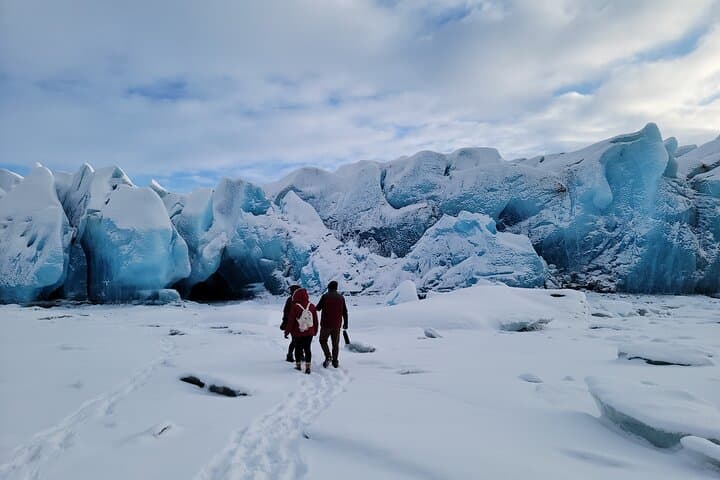
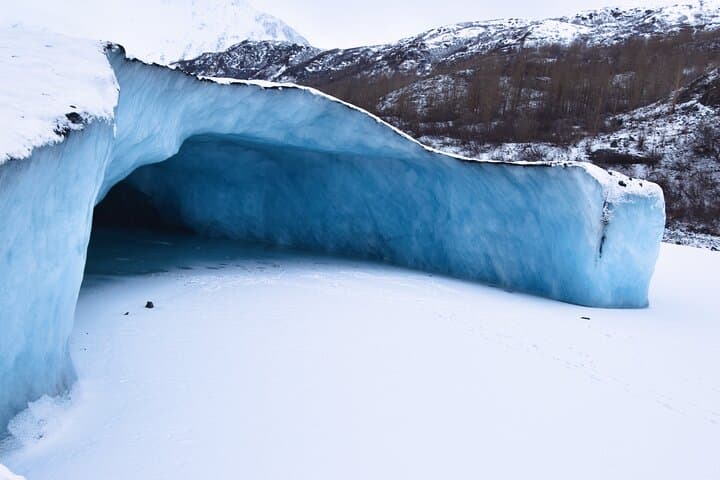
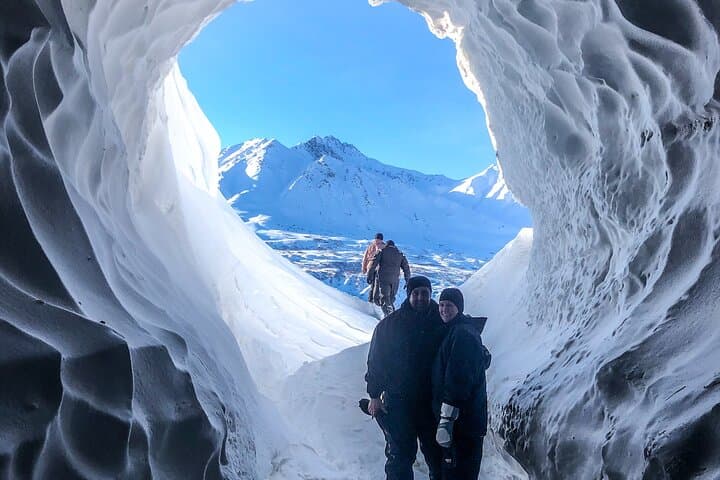
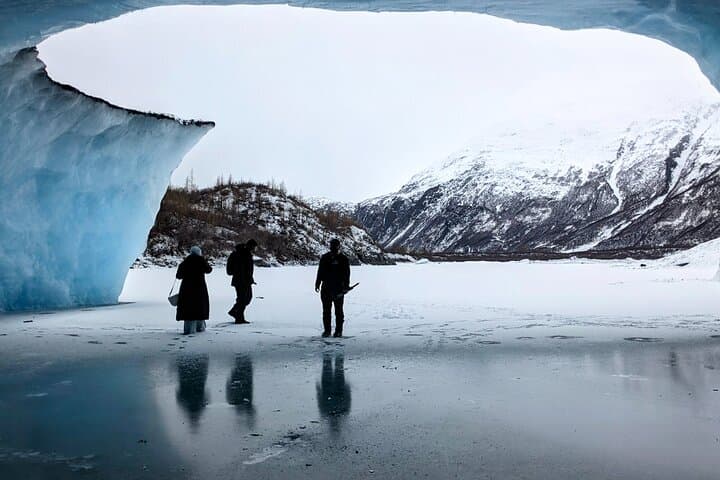
Snow-quiet air presses against the helicopter’s doors as you descend into the Knik River Valley, mountains sliding into view like folded paper. The rotors throw up a fan of powder; below, a scar of blue ice and carved caverns waits. You step from the skids onto ancient glacial ice and move into a world of glassy tunnels and teal light—cold that feels sharp and clean, sound swallowed by the cave’s vault.
Snow-quiet air presses against the helicopter’s doors as you descend into the Knik River Valley, mountains sliding into view like folded paper. The rotors throw up a fan of powder; below, a scar of blue ice and carved caverns waits. You step from the skids onto ancient glacial ice and move into a world of glassy tunnels and teal light—cold that feels sharp and clean, sound swallowed by the cave’s vault.
The Knik Glacier is one of Southcentral Alaska’s largest valley glaciers, shaped over millennia by accumulation, flow, and seasonal melt. The Chugach Range reflects a rugged geologic history: uplifted bedrock cut by alpine glaciers and braided rivers. Indigenous Dena'ina people have long traversed the region; later, prospectors and pilots opened access to remote ice for scientific study and adventure tourism.
Culturally, the valley balances outdoor industry with small-town Alaskan life—Pilots at local hubs are as important as the weather forecasts that guide them. Expect to see braided river channels from the air and dramatic crevasse fields underfoot; light in winter brings out intense blues inside the caves.
Practical guidance: dress in insulated, waterproof layers; wear sturdy winter boots with good traction; protect eyes from reflective glare. Flights run only in stable winter months when ice caves are accessible; landings depend on weather and glacier conditions. Bring a small daypack, camera with extra batteries (cold drains power), and follow all safety briefings. Arrive 30 minutes early for check-in and be prepared for a short, guided walk on uneven ice. This is an immersive, low-impact way to experience Alaska’s glacial interior with professional pilots and guides.