THE ADVENTURE COLLECTIVE® · Independent discovery and booking for outdoor travel

A volunteer-led walking tour of Abidjan’s Plateau that prioritizes encounters with merchants and artisans over sightseeing from the curb. Learn where to find local crafts, sample street food, and navigate the business district’s human side.
A volunteer-led walking tour of Abidjan’s Plateau that prioritizes encounters with merchants and artisans over sightseeing from the curb. Learn where to find local crafts, sample street food, and navigate the business district’s human side.
Step off the broad avenues of Abidjan’s business district and into a Plateau that speaks in the voices of shopkeepers and street vendors. The concrete towers watch over narrow alleys where artisans hammer, dye, and barter; the Ébrié Lagoon presses close, sending a humid breeze that teases open-air stalls and lifts the scent of fried plantain.
Verified experiences and guided adventures in the surrounding area.
Operated by Train & Travel · Abidjan, Abidjan Autonomous District
Step off the broad avenues of Abidjan’s business district and into a Plateau that speaks in the voices of shopkeepers and street vendors. The concrete towers watch over narrow alleys where artisans hammer, dye, and barter; the Ébrié Lagoon presses close, sending a humid breeze that teases open-air stalls and lifts the scent of fried plantain.
Plateau grew as Abidjan’s administrative core under French colonial planning and quickened during post-independence expansion; its modern skyline sits on reclaimed tidal flats and lagoon-edge alluvium rather than hard rock. That geology explains why the city pushes upward instead of outward, and why shady courtyards and small markets remain tucked between bank facades. Culturally, Plateau is both corporate pulse and neighborhood—mosques, colonial-era buildings, and artisan workshops sharing the same block.
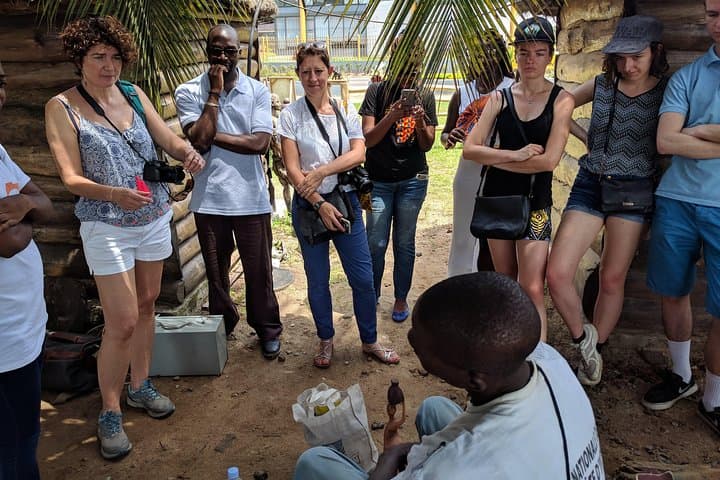
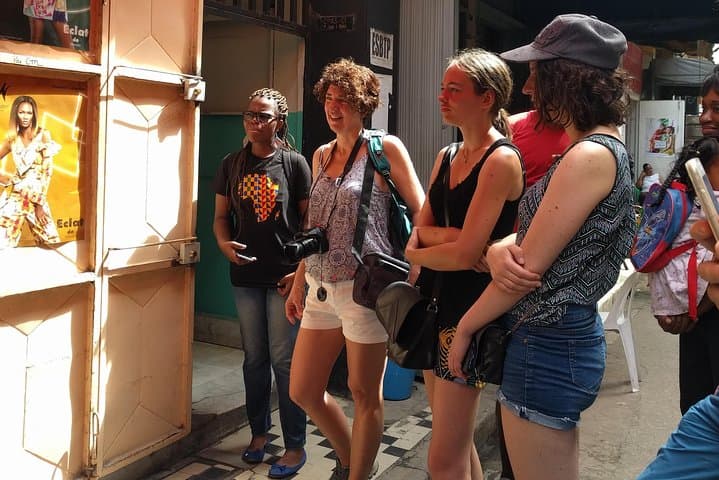
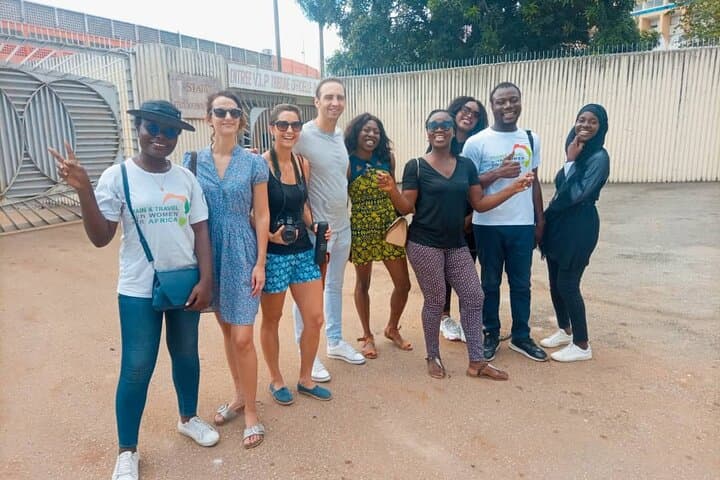
On this volunteer-led walking tour, expect a human-scale itinerary: meeting merchants, visiting small studios, and pausing at the mosque whose 65-meter minaret punctuates the skyline. Guides emphasize local stories—how traders source materials, which streets host evening markets, and where to find authentic crafts without inflated tourist markup.
Practical guidance: bring cash in small denominations for purchases, wear comfortable closed-toe shoes for uneven sidewalks, and plan visits in the morning or late afternoon to avoid the heat of midday. Photograph politely and ask before entering private workshops. The route is easy walking—ready for travelers who want close-up encounters with Abidjan’s working heart rather than just its skyline.
easy.
1–2 hours.
Basic walking fitness; suitable for most travelers who can be on their feet for up to two hours
The tour runs about 60–120 minutes depending on group pace and stops at artisan shops.
Yes—the route is stroller-accessible, though some sidewalks are narrow; plan for occasional lifts over curbs.
Yes—guides usually point out authentic workshops and small vendors where purchases directly support local artisans.
Plateau is Abidjan’s administrative and financial heart—planned during the colonial era and expanded rapidly after independence, earning the nickname "Ivorian Manhattan."
Urban development pressures the lagoon edge and local public spaces—supporting small businesses and minimizing litter helps maintain neighborhood character.
Train & Travel operates guided outdoor trips and adventures with an emphasis on safety, stewardship, and memorable experiences.
Step off the broad avenues of Abidjan’s business district and into a Plateau that speaks in the voices of shopkeepers and street vendors. The concrete towers watch over narrow alleys where artisans hammer, dye, and barter; the Ébrié Lagoon presses close, sending a humid breeze that teases open-air stalls and lifts the scent of fried plantain.
Step off the broad avenues of Abidjan’s business district and into a Plateau that speaks in the voices of shopkeepers and street vendors. The concrete towers watch over narrow alleys where artisans hammer, dye, and barter; the Ébrié Lagoon presses close, sending a humid breeze that teases open-air stalls and lifts the scent of fried plantain.
Plateau grew as Abidjan’s administrative core under French colonial planning and quickened during post-independence expansion; its modern skyline sits on reclaimed tidal flats and lagoon-edge alluvium rather than hard rock. That geology explains why the city pushes upward instead of outward, and why shady courtyards and small markets remain tucked between bank facades. Culturally, Plateau is both corporate pulse and neighborhood—mosques, colonial-era buildings, and artisan workshops sharing the same block.
On this volunteer-led walking tour, expect a human-scale itinerary: meeting merchants, visiting small studios, and pausing at the mosque whose 65-meter minaret punctuates the skyline. Guides emphasize local stories—how traders source materials, which streets host evening markets, and where to find authentic crafts without inflated tourist markup.
Practical guidance: bring cash in small denominations for purchases, wear comfortable closed-toe shoes for uneven sidewalks, and plan visits in the morning or late afternoon to avoid the heat of midday. Photograph politely and ask before entering private workshops. The route is easy walking—ready for travelers who want close-up encounters with Abidjan’s working heart rather than just its skyline.