THE ADVENTURE COLLECTIVE® · Independent discovery and booking for outdoor travel

Feel the roar of Arrowhead as you enter the stadium and join a tailgate culture that rivals the game itself. This guide covers history, what to expect on game day, and practical tips — from parking and bag rules to weather-ready gear.
Feel the roar of Arrowhead as you enter the stadium and join a tailgate culture that rivals the game itself. This guide covers history, what to expect on game day, and practical tips — from parking and bag rules to weather-ready gear.
Walk up the ramps and the stadium breathes — a wall of sound, chants, and the smell of grilling drifting from hundreds of tailgates. Arrowhead Stadium on game day is kinetic: fans funnel across lots, flags snap in the wind, and the scoreboard becomes a focal point for collective attention.
Verified experiences and guided adventures in the surrounding area.
Walk up the ramps and the stadium breathes — a wall of sound, chants, and the smell of grilling drifting from hundreds of tailgates. Arrowhead Stadium on game day is kinetic: fans funnel across lots, flags snap in the wind, and the scoreboard becomes a focal point for collective attention.
Built in 1972 as part of the Truman Sports Complex, Arrowhead sits on the broad Missouri River plain east of downtown Kansas City. The stadium’s low, cantilevered bowl and open concourses amplify noise, which is why Arrowhead regularly ranks among the loudest venues in sports history. The surrounding area is quintessential Midwestern — flat to gently rolling terrain shaped by glacial and river deposits, with industrial corridors and barbecue smoke marking the approach routes.
Kansas City’s football culture is as much about community as it is about the game. Tailgating here is ritual: grills, games, and a hospitality that pulls visitors into a tight-knit fan base. After kickoff, the city’s barbecue, jazz clubs, and craft breweries provide postgame options if you’re staying in town.
Practicalities matter: arrive early for the best lots, follow the clear-bag policy, and expect stairs and crowds inside the bowl. Weather can swing — hot, humid summer afternoons or unpredictable fall rain — so layer and plan for sun or sudden showers. Bring ear protection: the stadium’s reputation for volume is earned. Transit and off-site shuttles can save time on parking and navigation, and packing out trash or using recycling bins helps keep the lots clean for future games.
Whether you come for Patrick Mahomes’s highlight passes or the communal roar, a Chiefs game at Arrowhead is an organized, loud, and distinctly local American sporting experience.
easy.
3–4 hours.
Basic mobility required: walking in lots, climbing stadium stairs, and standing during sections of the game.
Arrowhead enforces a clear-bag policy with specific size limits; small clutch bags are typically permitted — check the Chiefs' official site for the current policy before you go.
Plan to arrive 2–3 hours before kickoff to claim a good tailgate spot and allow time for parking lot traffic and security lines.
Yes — regional buses and event shuttles run on game days from Downtown Kansas City and park-and-ride lots; check local transit schedules for service times.
The stadium has ADA seating, elevators, and accessible restrooms; contact the ticket office in advance to arrange accessible seating and assistance.
Arrowhead Stadium opened in 1972 as part of the Truman Sports Complex; its design and vocal fan base have made it a landmark in NFL history.
Game-day events generate significant waste — use recycling stations, consider public transit or ride-shares, and pack out refuse to reduce your footprint.
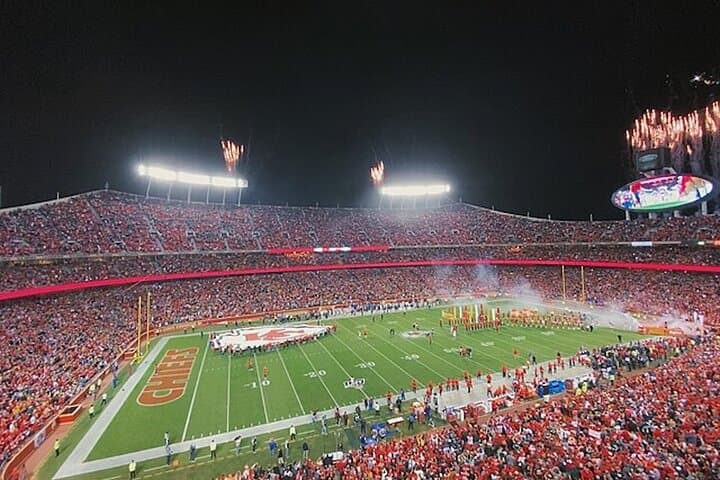
Walk up the ramps and the stadium breathes — a wall of sound, chants, and the smell of grilling drifting from hundreds of tailgates. Arrowhead Stadium on game day is kinetic: fans funnel across lots, flags snap in the wind, and the scoreboard becomes a focal point for collective attention.
Walk up the ramps and the stadium breathes — a wall of sound, chants, and the smell of grilling drifting from hundreds of tailgates. Arrowhead Stadium on game day is kinetic: fans funnel across lots, flags snap in the wind, and the scoreboard becomes a focal point for collective attention.
Built in 1972 as part of the Truman Sports Complex, Arrowhead sits on the broad Missouri River plain east of downtown Kansas City. The stadium’s low, cantilevered bowl and open concourses amplify noise, which is why Arrowhead regularly ranks among the loudest venues in sports history. The surrounding area is quintessential Midwestern — flat to gently rolling terrain shaped by glacial and river deposits, with industrial corridors and barbecue smoke marking the approach routes.
Kansas City’s football culture is as much about community as it is about the game. Tailgating here is ritual: grills, games, and a hospitality that pulls visitors into a tight-knit fan base. After kickoff, the city’s barbecue, jazz clubs, and craft breweries provide postgame options if you’re staying in town.
Practicalities matter: arrive early for the best lots, follow the clear-bag policy, and expect stairs and crowds inside the bowl. Weather can swing — hot, humid summer afternoons or unpredictable fall rain — so layer and plan for sun or sudden showers. Bring ear protection: the stadium’s reputation for volume is earned. Transit and off-site shuttles can save time on parking and navigation, and packing out trash or using recycling bins helps keep the lots clean for future games.
Whether you come for Patrick Mahomes’s highlight passes or the communal roar, a Chiefs game at Arrowhead is an organized, loud, and distinctly local American sporting experience.