THE ADVENTURE COLLECTIVE® · Independent discovery and booking for outdoor travel

Step into the sound and color of a live match at Maracanã, where history and local passion meet. This guided meetup plus ticket package gets you into the heart of Rio’s football culture with a welcome drink and seating among the locals.
Step into the sound and color of a live match at Maracanã, where history and local passion meet. This guided meetup plus ticket package gets you into the heart of Rio’s football culture with a welcome drink and seating among the locals.
You arrive in a plaza a short walk from Maracanã, the air already thick with drums, jerseys and the smell of grilled street food. Fans cluster at bars, voices rising and falling like tides, and a friendly guide hands you a welcome drink before the walk to the turnstiles. The stadium hums from blocks away—expect chanting, flags and a crowd that makes even a simple route feel like a procession.
Verified experiences and guided adventures in the surrounding area.
Operated by Rio As A Local · Rio de Janeiro, Rio de Janeiro
You arrive in a plaza a short walk from Maracanã, the air already thick with drums, jerseys and the smell of grilled street food. Fans cluster at bars, voices rising and falling like tides, and a friendly guide hands you a welcome drink before the walk to the turnstiles. The stadium hums from blocks away—expect chanting, flags and a crowd that makes even a simple route feel like a procession.
Maracanã is one of football’s most storied stages: the 1950 Maracanazo that stunned Brazil, Pelé’s 1000th goal, and the 2014 World Cup final are woven into the concrete and the folklore. The structure sits in a low coastal plain carved from tidal marshes, and the neighborhood carries the layered culture of Rio—samba schools rehearse nearby, vendors sell pastel and sugarcane juice, and decades of sports history press against modern fan culture.
Practically, this experience is about atmosphere. Expect about 3–4 hours total: a pre-match meetup, a guided walk to the stadium, and roughly 2–2.5 hours inside depending on match length. Public transport is the most reliable approach; taxis and ride-shares drop close by but traffic can spike. Security screening is standard—small bags only and metal detectors in use.
Wear comfortable shoes, bring ear protection if you’re sensitive to loud crowds, carry a small reusable water bottle to refill before entering, and arrive early to absorb the pre-game energy. For first-time visitors, sit with local supporters if you want an immersive, vocal experience—be prepared to stand and cheer for long stretches.
moderate.
3–4 hours.
Light to moderate walking ability; you should be able to stand and climb stairs for extended periods.
Mobile tickets are accepted but you can print them; have one format ready as the provider allows either.
Yes—infants must sit on an adult’s lap per event policy; no separate ticket is usually provided for a lap infant.
The operator arranges seating to place you with local supporters when possible; specific seat locations are typically provided at the venue.
All sales are final—tickets are non-refundable, so confirm plans before booking.
Maracanã hosted the 1950 World Cup match known as the Maracanazo and decades of national and international finals, making it central to Brazil’s football lore.
Large-match days generate significant waste—use bin stations when available and prefer refillable bottles; respect local signage to protect the stadium and neighborhood.
Rio As A Local operates guided outdoor trips and adventures with an emphasis on safety, stewardship, and memorable experiences.
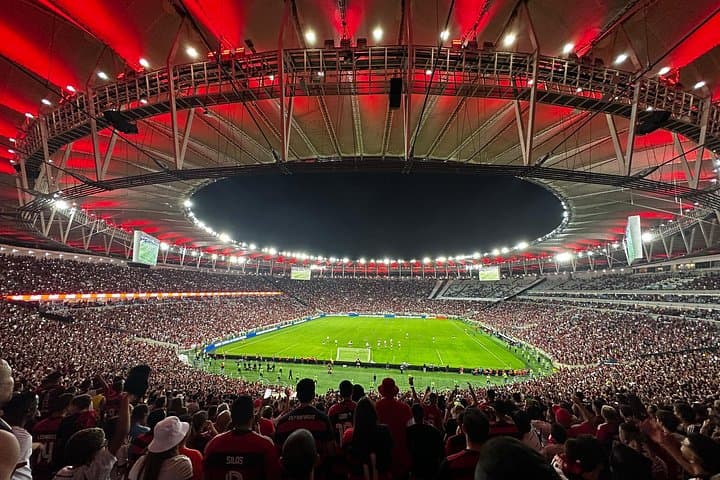
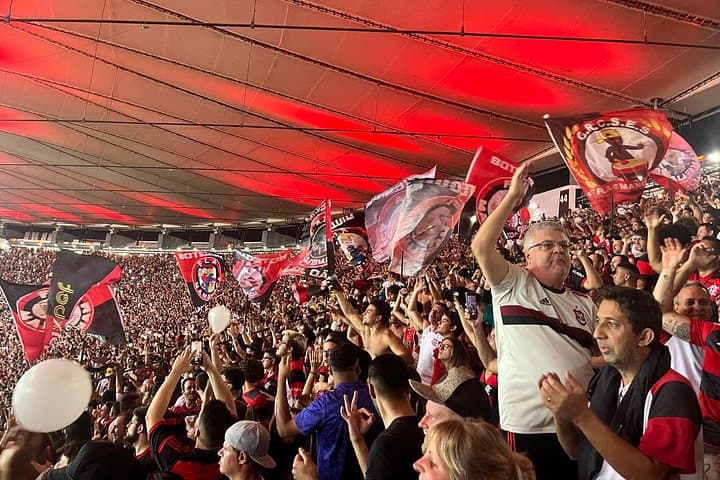
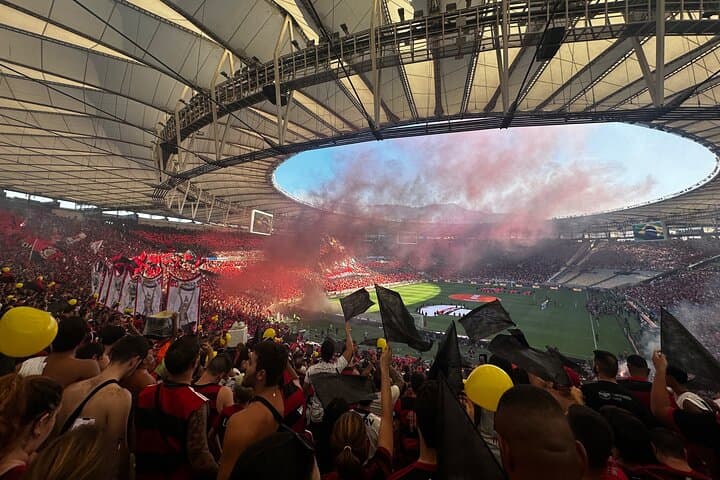
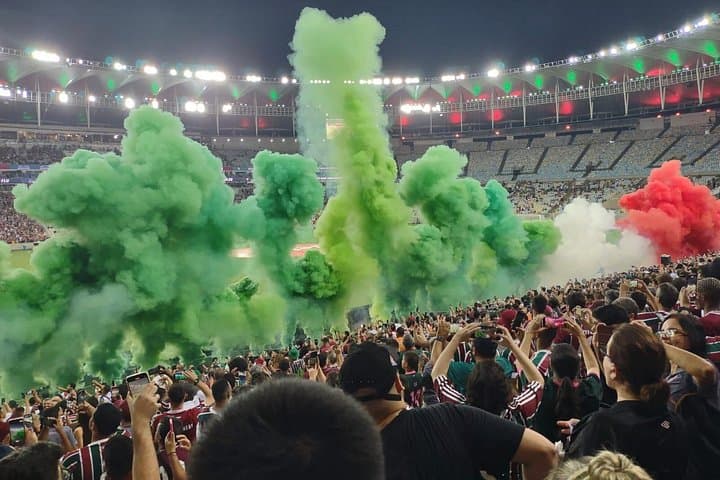
You arrive in a plaza a short walk from Maracanã, the air already thick with drums, jerseys and the smell of grilled street food. Fans cluster at bars, voices rising and falling like tides, and a friendly guide hands you a welcome drink before the walk to the turnstiles. The stadium hums from blocks away—expect chanting, flags and a crowd that makes even a simple route feel like a procession.
You arrive in a plaza a short walk from Maracanã, the air already thick with drums, jerseys and the smell of grilled street food. Fans cluster at bars, voices rising and falling like tides, and a friendly guide hands you a welcome drink before the walk to the turnstiles. The stadium hums from blocks away—expect chanting, flags and a crowd that makes even a simple route feel like a procession.
Maracanã is one of football’s most storied stages: the 1950 Maracanazo that stunned Brazil, Pelé’s 1000th goal, and the 2014 World Cup final are woven into the concrete and the folklore. The structure sits in a low coastal plain carved from tidal marshes, and the neighborhood carries the layered culture of Rio—samba schools rehearse nearby, vendors sell pastel and sugarcane juice, and decades of sports history press against modern fan culture.
Practically, this experience is about atmosphere. Expect about 3–4 hours total: a pre-match meetup, a guided walk to the stadium, and roughly 2–2.5 hours inside depending on match length. Public transport is the most reliable approach; taxis and ride-shares drop close by but traffic can spike. Security screening is standard—small bags only and metal detectors in use.
Wear comfortable shoes, bring ear protection if you’re sensitive to loud crowds, carry a small reusable water bottle to refill before entering, and arrive early to absorb the pre-game energy. For first-time visitors, sit with local supporters if you want an immersive, vocal experience—be prepared to stand and cheer for long stretches.