THE ADVENTURE COLLECTIVE® · Independent discovery and booking for outdoor travel

Climb into the visible toe of the Harding Icefield on an eight-hour guided glacier hike from Seward. This full-day adventure combines forest approaches, moraine travel and on-ice navigation—perfect for experienced hikers who want a close-up lesson in glacial geology and high-latitude wilderness.
Climb into the visible toe of the Harding Icefield on an eight-hour guided glacier hike from Seward. This full-day adventure combines forest approaches, moraine travel and on-ice navigation—perfect for experienced hikers who want a close-up lesson in glacial geology and high-latitude wilderness.
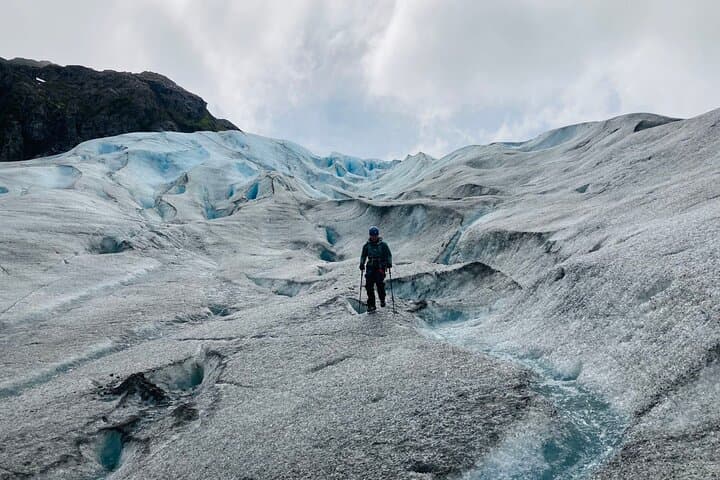
You step out of the van and the air feels different: colder, thinner, with a sharp mineral tang that settles under your tongue. Alder and spruce line the trail, but the forest seems to be holding its breath; ahead, an arm of the Harding Icefield unspools down the valley like a living, moving river of blue-white. A guide clips your harness on, fits your crampons, and for the next eight hours you trade the textbook idea of a hike for the clack and grind of ice boots on ancient glacier.
Verified experiences and guided adventures in the surrounding area.
Operated by Kenai Backcountry Adventures · Seward, Alaska
You step out of the van and the air feels different: colder, thinner, with a sharp mineral tang that settles under your tongue. Alder and spruce line the trail, but the forest seems to be holding its breath; ahead, an arm of the Harding Icefield unspools down the valley like a living, moving river of blue-white. A guide clips your harness on, fits your crampons, and for the next eight hours you trade the textbook idea of a hike for the clack and grind of ice boots on ancient glacier.
Exit Glacier sits on the northwest flank of Kenai Fjords National Park, the visible toe of a much larger ice system—the Harding Icefield—that feeds nearly 40 named glaciers. This is young geology in human terms: glaciers carve U-shaped valleys, expose bedrock, and leave moraines that mark their ebb and flow. The Alutiiq people lived for millennia around these coasts and inlets, reading tides and animal runs to survive; today small communities in the Kenai Peninsula still carry that knowledge forward.
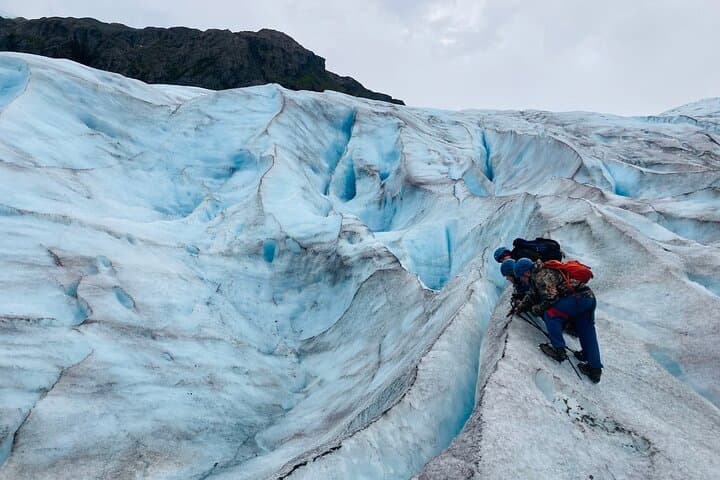
The guided itinerary gives you time to move beyond the parking-lot viewpoints. Expect about 6–8 miles of moving time across mixed terrain—forest approach trails, rocky moraines, and glacier ice—with cumulative elevation gain that can be 1,200–1,500 feet depending on the route the guides choose that day. Terrain shifts rapidly: firm packed trail gives way to talus and then to ice riddled with crevasses and moulins that demand attention and team movement. Guides coach rope techniques, crampon placement, and how to read the ice so you don’t only follow tracks but understand them.
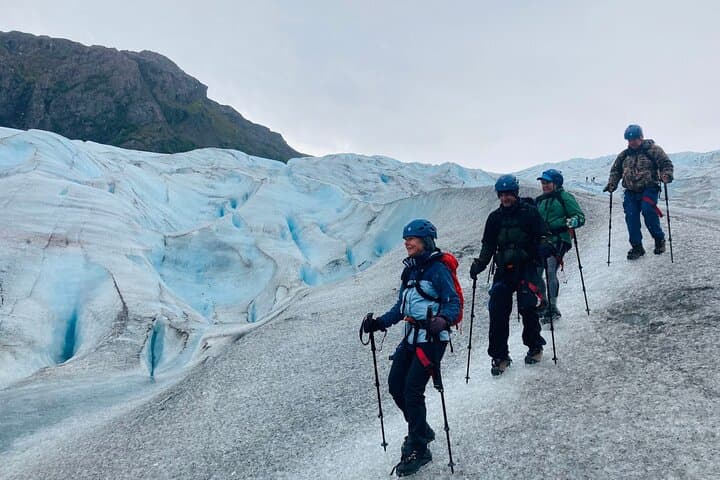
Practical notes: the tour is eight hours and includes round-trip transport from Seward, a deli lunch, and glacier travel gear—helmet, harness, crampons, and trekking poles—so you don’t need to bring technical equipment yourself. Fitness matters: guides advise a high level of cardiovascular condition and no spinal or serious heart issues. Weather changes fast here; layers, waterproof shells, and warm gloves are non-negotiable. Wildlife encounters are possible near the trailhead and along the valley—keep distance and follow guide instructions.
Timing and etiquette matter. Morning pickups from Seward maximize stable weather and calmer ice; late-season (summer) trips offer longer light and fewer snow bridges, while spring can bring deeper snow and colder conditions. Practice Leave No Trace: pack out all waste, stay on guide-designated routes, and avoid stepping on fragile plant life near moraine edges. By the end of the day—after hunching over a crevasse rim, feeling the glacier’s hush, and looking up at the white bowl of the Harding Icefield—you’ll understand why people travel here: the landscape teaches you to move slowly and pay attention.
challenging.
8 hours.
Recommended for hikers with strong cardiovascular fitness and prior day-hike experience; not advised for those with serious back or heart conditions.
High fitness is required—expect sustained walking and climbing over uneven terrain for up to eight hours; participants should be comfortable with multi-mile day hikes and some elevation gain.
No—guides provide instruction in crampon use, rope travel and basic glacier safety, but you must be able to follow directions and handle strenuous activity.
Round-trip ground transport from Seward, glacier hiking equipment (backpack, helmet, harness, crampons, trekking poles), a deli lunch, and professional glacier guides are included.
Minors under 18 must be accompanied by an adult; operators may set age or weight limits—check when booking.
Trips operate in a range of weather, but extreme conditions may force modifications; cancellation/refund policy requires 24+ hours for a full refund.
Yes—hotel and port pick-up options are available; confirm your pickup time with the operator prior to departure.
Exit Glacier and the Harding Icefield were major features for Alutiiq subsistence and later for early 20th-century explorers mapping Alaska’s ice systems; the glacier’s retreat over the last century is well-documented.
Kenai Fjords NP monitors glacial retreat and encourages low-impact visitation—stay on routed trails, follow guide instructions, and pack out waste to minimize footprint.
Kenai Backcountry Adventures operates guided outdoor trips and adventures with an emphasis on safety, stewardship, and memorable experiences.
You step out of the van and the air feels different: colder, thinner, with a sharp mineral tang that settles under your tongue. Alder and spruce line the trail, but the forest seems to be holding its breath; ahead, an arm of the Harding Icefield unspools down the valley like a living, moving river of blue-white. A guide clips your harness on, fits your crampons, and for the next eight hours you trade the textbook idea of a hike for the clack and grind of ice boots on ancient glacier.
You step out of the van and the air feels different: colder, thinner, with a sharp mineral tang that settles under your tongue. Alder and spruce line the trail, but the forest seems to be holding its breath; ahead, an arm of the Harding Icefield unspools down the valley like a living, moving river of blue-white. A guide clips your harness on, fits your crampons, and for the next eight hours you trade the textbook idea of a hike for the clack and grind of ice boots on ancient glacier.
Exit Glacier sits on the northwest flank of Kenai Fjords National Park, the visible toe of a much larger ice system—the Harding Icefield—that feeds nearly 40 named glaciers. This is young geology in human terms: glaciers carve U-shaped valleys, expose bedrock, and leave moraines that mark their ebb and flow. The Alutiiq people lived for millennia around these coasts and inlets, reading tides and animal runs to survive; today small communities in the Kenai Peninsula still carry that knowledge forward.
The guided itinerary gives you time to move beyond the parking-lot viewpoints. Expect about 6–8 miles of moving time across mixed terrain—forest approach trails, rocky moraines, and glacier ice—with cumulative elevation gain that can be 1,200–1,500 feet depending on the route the guides choose that day. Terrain shifts rapidly: firm packed trail gives way to talus and then to ice riddled with crevasses and moulins that demand attention and team movement. Guides coach rope techniques, crampon placement, and how to read the ice so you don’t only follow tracks but understand them.
Practical notes: the tour is eight hours and includes round-trip transport from Seward, a deli lunch, and glacier travel gear—helmet, harness, crampons, and trekking poles—so you don’t need to bring technical equipment yourself. Fitness matters: guides advise a high level of cardiovascular condition and no spinal or serious heart issues. Weather changes fast here; layers, waterproof shells, and warm gloves are non-negotiable. Wildlife encounters are possible near the trailhead and along the valley—keep distance and follow guide instructions.
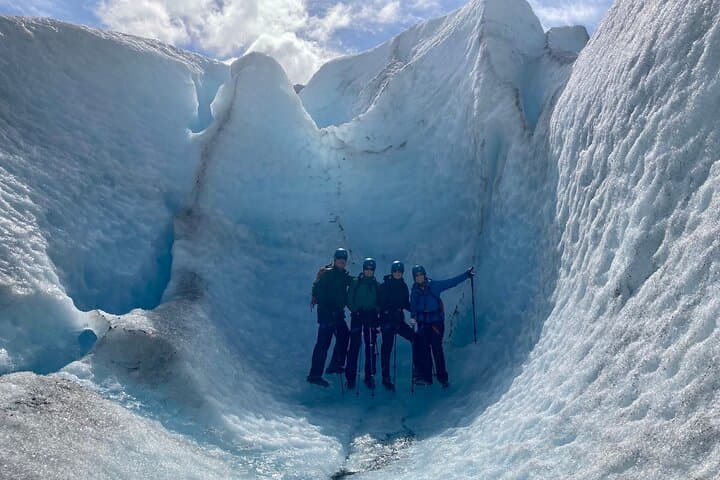
Timing and etiquette matter. Morning pickups from Seward maximize stable weather and calmer ice; late-season (summer) trips offer longer light and fewer snow bridges, while spring can bring deeper snow and colder conditions. Practice Leave No Trace: pack out all waste, stay on guide-designated routes, and avoid stepping on fragile plant life near moraine edges. By the end of the day—after hunching over a crevasse rim, feeling the glacier’s hush, and looking up at the white bowl of the Harding Icefield—you’ll understand why people travel here: the landscape teaches you to move slowly and pay attention.