THE ADVENTURE COLLECTIVE® · Independent discovery and booking for outdoor travel

Walk Exeter at your own pace on a 75–105 minute self-guided route that connects Roman walls, a Gothic cathedral, and the atmospheric Quay. Download offline maps, start at Exeter Central, and expect mostly paved streets with minimal elevation.
Walk Exeter at your own pace on a 75–105 minute self-guided route that connects Roman walls, a Gothic cathedral, and the atmospheric Quay. Download offline maps, start at Exeter Central, and expect mostly paved streets with minimal elevation.
Stand on the steps of Exeter Central Station and the city opens like a living map: narrow lanes braid toward a cathedral spire, the River Exe threads past quay walls daring you to follow its course, and fragments of Roman masonry crouch beside Georgian shopfronts.
Verified experiences and guided adventures in the surrounding area.
Operated by VoiceMap Audio Tours · Exeter, Devon
Stand on the steps of Exeter Central Station and the city opens like a living map: narrow lanes braid toward a cathedral spire, the River Exe threads past quay walls daring you to follow its course, and fragments of Roman masonry crouch beside Georgian shopfronts.
This self-guided walk threads two millennia of history. What began as a Roman fortress grew into a wealthy medieval cloth-exporting hub; the Roman wall and ancient gateways still define the downtown grid. The cathedral’s Gothic silhouette and the Guildhall mark Exeter’s civic power, while the Quay and Custom House recall the tides of trade that ran the city’s economy. The landscape is shaped by the river valley and local sandstone — streets sit low beside riparian banks that once powered mills and workshops.
Expect a compact, mostly paved route of roughly 3–4 km with minimal elevation change, designed for lingering at facades and plaques rather than strenuous hiking. Highlights include walking beside preserved Roman wall sections, passing St Stephen’s and the guildhall, and finishing at the atmospheric quay where limewashed warehouses meet the water.
Practical guidance: start at Exeter Central Station, download the tour app for offline maps, and allow 75–105 minutes for a steady pace with stops. Museum entrances and cathedral admission are separate; check opening hours. Wear comfortable shoes and bring a rain shell—southern English weather turns quickly. The route is suitable for most fitness levels and navigable with a stroller or light mobility aid if you stick to main streets.
easy.
75–105 minutes.
Suitable for most people comfortable with 2–3 miles of walking on paved surfaces; minimal elevation.
Plan 75–105 minutes at a steady pace; allow extra time for museum visits or lunch at the quay.
No—admissions are not included; you’ll pass these sites and can choose to enter separately.
Most of the route is on paved streets and is accessible, though some historic areas have cobbles—expect limited gradients and check specific paths on the app.
The tour starts at Exeter Central Station and finishes around Exeter Quay, with multiple points to pause or return by public transport.
Exeter grew from a Roman garrison into a medieval cloth-exporting powerhouse; its surviving Roman wall and medieval gates reflect continuous urban occupation for nearly 2,000 years.
Many historic stone facades and the river corridor are protected — stick to marked paths, avoid climbing on masonry, and follow local waste disposal rules to protect fragile urban and riparian habitats.
VoiceMap Audio Tours operates guided outdoor trips and adventures with an emphasis on safety, stewardship, and memorable experiences.
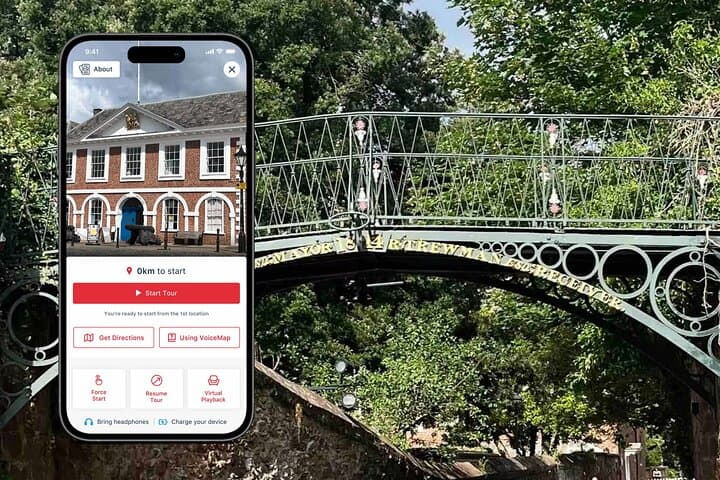
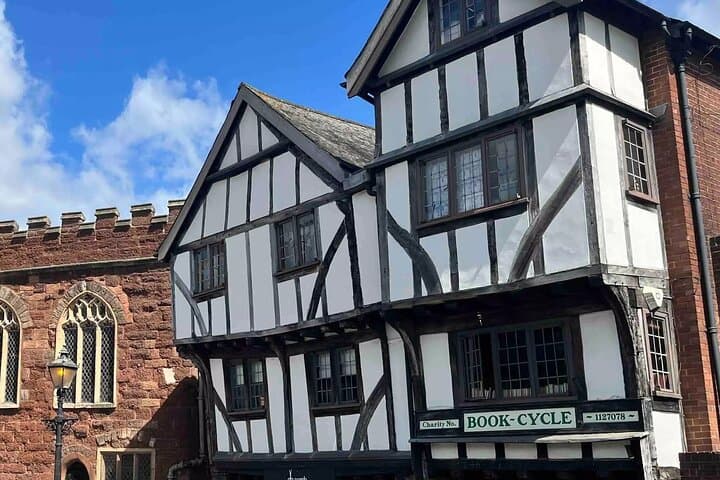


Stand on the steps of Exeter Central Station and the city opens like a living map: narrow lanes braid toward a cathedral spire, the River Exe threads past quay walls daring you to follow its course, and fragments of Roman masonry crouch beside Georgian shopfronts.
Stand on the steps of Exeter Central Station and the city opens like a living map: narrow lanes braid toward a cathedral spire, the River Exe threads past quay walls daring you to follow its course, and fragments of Roman masonry crouch beside Georgian shopfronts.
This self-guided walk threads two millennia of history. What began as a Roman fortress grew into a wealthy medieval cloth-exporting hub; the Roman wall and ancient gateways still define the downtown grid. The cathedral’s Gothic silhouette and the Guildhall mark Exeter’s civic power, while the Quay and Custom House recall the tides of trade that ran the city’s economy. The landscape is shaped by the river valley and local sandstone — streets sit low beside riparian banks that once powered mills and workshops.
Expect a compact, mostly paved route of roughly 3–4 km with minimal elevation change, designed for lingering at facades and plaques rather than strenuous hiking. Highlights include walking beside preserved Roman wall sections, passing St Stephen’s and the guildhall, and finishing at the atmospheric quay where limewashed warehouses meet the water.
Practical guidance: start at Exeter Central Station, download the tour app for offline maps, and allow 75–105 minutes for a steady pace with stops. Museum entrances and cathedral admission are separate; check opening hours. Wear comfortable shoes and bring a rain shell—southern English weather turns quickly. The route is suitable for most fitness levels and navigable with a stroller or light mobility aid if you stick to main streets.