THE ADVENTURE COLLECTIVE® · Independent discovery and booking for outdoor travel

A focused 90-minute private walking tour that pinpoints Évora’s Roman, medieval, and Renaissance highlights with a local guide. Ideal for travelers who want a concentrated introduction to the city’s monuments, crafts, and cultural context.
A focused 90-minute private walking tour that pinpoints Évora’s Roman, medieval, and Renaissance highlights with a local guide. Ideal for travelers who want a concentrated introduction to the city’s monuments, crafts, and cultural context.
The narrow streets of Évora open like pages of a weathered book: limestone alleys, the Roman temple's stone columns catching afternoon light, and white storks perched atop church towers watching the square below.
Verified experiences and guided adventures in the surrounding area.
Operated by Évora Cultural Experience · Évora, Évora District
The narrow streets of Évora open like pages of a weathered book: limestone alleys, the Roman temple's stone columns catching afternoon light, and white storks perched atop church towers watching the square below.
A 90-minute private walking tour led by a local guide moves at a steady, conversational pace—enough to feel the city’s scale without losing the details: carved Manueline lintels, azulejo workshops, and the town’s medieval street plan that survives on a plateau in the Alentejo plain. Évora’s heart is built on Roman foundations; the Temple of Diana and the layout of the cathedral trace a continuity from antiquity through Moorish occupation to Portugal’s Renaissance and Mannerist flourishes.
Geologically the region sits on ancient granitic outcrops and marble veins, carved into civic monuments and cloistered corners. Culturally, Évora is UNESCO-listed; the guide will interpret local crafts, the role of agriculture in Alentejo life, and landmarks like King Manuel’s palace and the evocative Capela dos Ossos (Chapel of Bones).
Practical guidance follows the narrative: wear firm walking shoes for cobbles and occasional steps, carry water and sun protection for exposed squares, and plan cathedral entry separately—interior visits often require a small fee and timed access. The tour is private and adaptable: bring questions about architecture, handicrafts, or regional cuisine. For a concise historic introduction with focused local insight and minimal walking fatigue, this guided loop through Évora delivers a compact, high-value immersion into one of Portugal’s best-preserved historic cities.
easy.
1.5 hours.
Should be comfortable walking on uneven surfaces for up to 90 minutes; a moderate level of mobility is useful.
Meeting and end points are arranged with your guide—commonly in Giraldo Square or near the forum; confirmation comes after booking.
Yes; the tour notes that infants and small children can use a pram, but cobbles may make pushing difficult in places.
Interior visits are typically not included; the guide will point out entry times and fees so you can return afterward if desired.
Guides are local professionals—confirm language availability when booking so the guide matches your language preference.
Évora’s historic center is UNESCO World Heritage; its Roman temple, medieval walls, and Manueline-era buildings reflect continuous occupation from antiquity through Portugal’s Age of Discovery.
Visitors should stay on paved routes and follow signage at fragile sites; support local conservation by avoiding flash photography in sensitive interiors and choosing licensed guides.
Évora Cultural Experience operates guided outdoor trips and adventures with an emphasis on safety, stewardship, and memorable experiences.
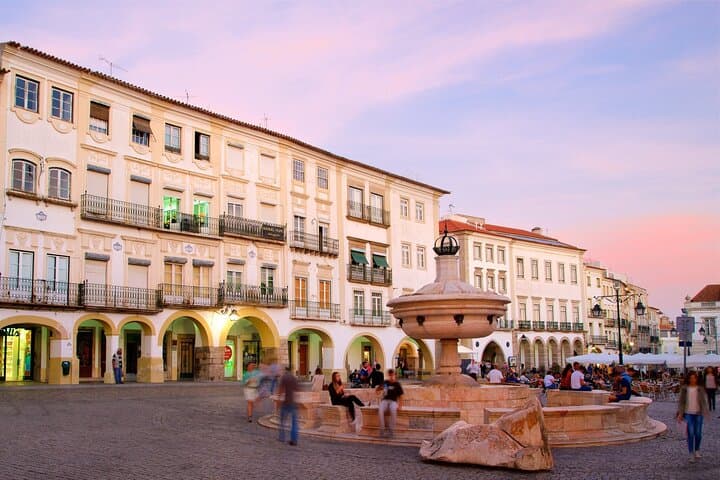
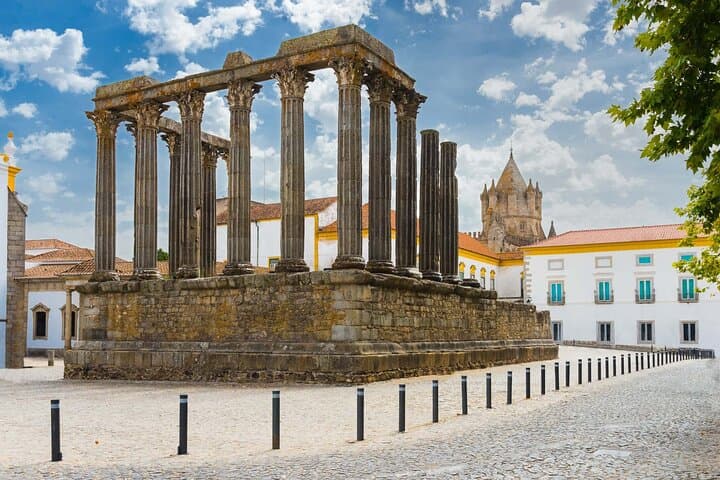
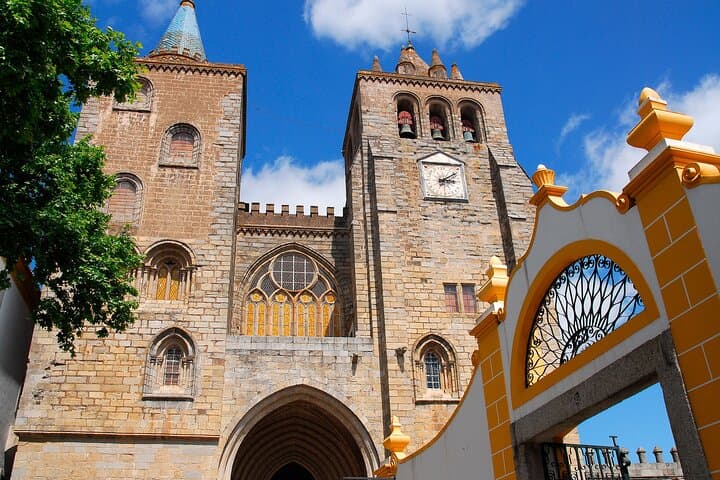
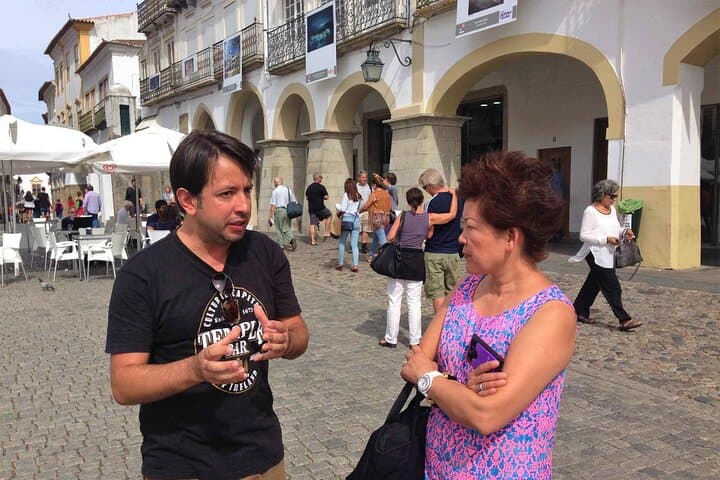
The narrow streets of Évora open like pages of a weathered book: limestone alleys, the Roman temple's stone columns catching afternoon light, and white storks perched atop church towers watching the square below.
The narrow streets of Évora open like pages of a weathered book: limestone alleys, the Roman temple's stone columns catching afternoon light, and white storks perched atop church towers watching the square below.
A 90-minute private walking tour led by a local guide moves at a steady, conversational pace—enough to feel the city’s scale without losing the details: carved Manueline lintels, azulejo workshops, and the town’s medieval street plan that survives on a plateau in the Alentejo plain. Évora’s heart is built on Roman foundations; the Temple of Diana and the layout of the cathedral trace a continuity from antiquity through Moorish occupation to Portugal’s Renaissance and Mannerist flourishes.
Geologically the region sits on ancient granitic outcrops and marble veins, carved into civic monuments and cloistered corners. Culturally, Évora is UNESCO-listed; the guide will interpret local crafts, the role of agriculture in Alentejo life, and landmarks like King Manuel’s palace and the evocative Capela dos Ossos (Chapel of Bones).
Practical guidance follows the narrative: wear firm walking shoes for cobbles and occasional steps, carry water and sun protection for exposed squares, and plan cathedral entry separately—interior visits often require a small fee and timed access. The tour is private and adaptable: bring questions about architecture, handicrafts, or regional cuisine. For a concise historic introduction with focused local insight and minimal walking fatigue, this guided loop through Évora delivers a compact, high-value immersion into one of Portugal’s best-preserved historic cities.