THE ADVENTURE COLLECTIVE® · Independent discovery and booking for outdoor travel

Trace 7,000 years of human presence outside Évora on a private half-day tour that links Paleolithic cave art with Neolithic dolmens and the Almendres Cromlech. Ideal for archaeology fans who want concise, guided access to Portugal’s oldest standing stones.
Trace 7,000 years of human presence outside Évora on a private half-day tour that links Paleolithic cave art with Neolithic dolmens and the Almendres Cromlech. Ideal for archaeology fans who want concise, guided access to Portugal’s oldest standing stones.
Step out of Évora’s baroque streets and into a landscape that carries 7,000 years of human decisions in stone and earth. The driver rolls down a country lane; cork and olive trees lean in like onlookers while low-standing menhirs punctuate golden fields. You approach cromlechs and dolmens that have kept watch through millennia, and caves whose painted hands still seem to reach for light.
Verified experiences and guided adventures in the surrounding area.
Operated by Évora Cultural Experience · Évora, Évora District
Step out of Évora’s baroque streets and into a landscape that carries 7,000 years of human decisions in stone and earth. The driver rolls down a country lane; cork and olive trees lean in like onlookers while low-standing menhirs punctuate golden fields. You approach cromlechs and dolmens that have kept watch through millennia, and caves whose painted hands still seem to reach for light.
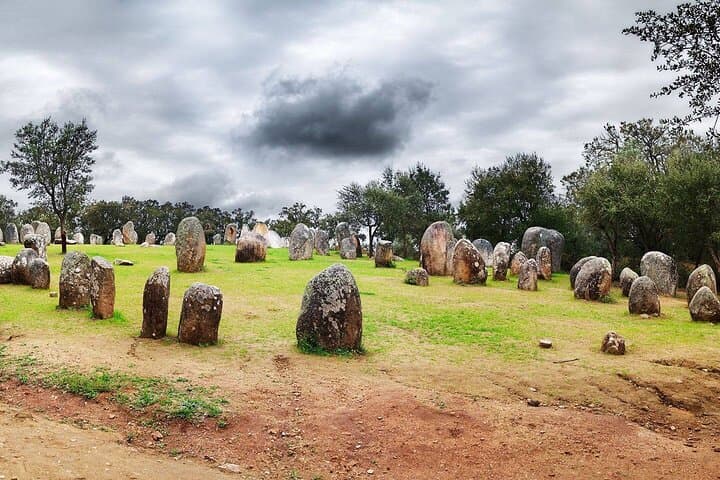
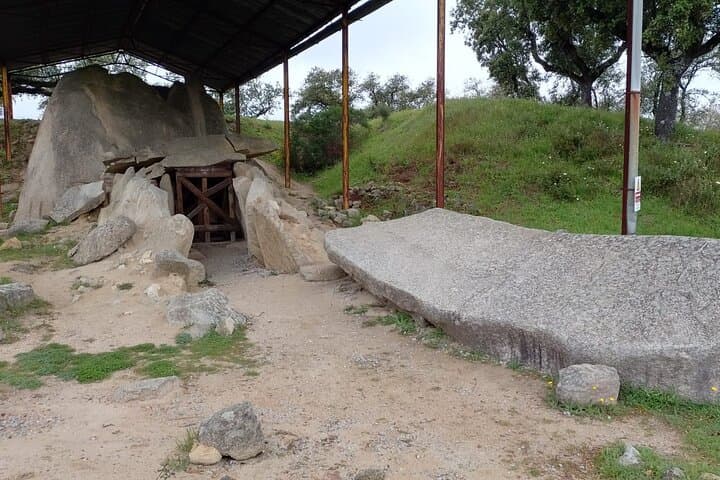
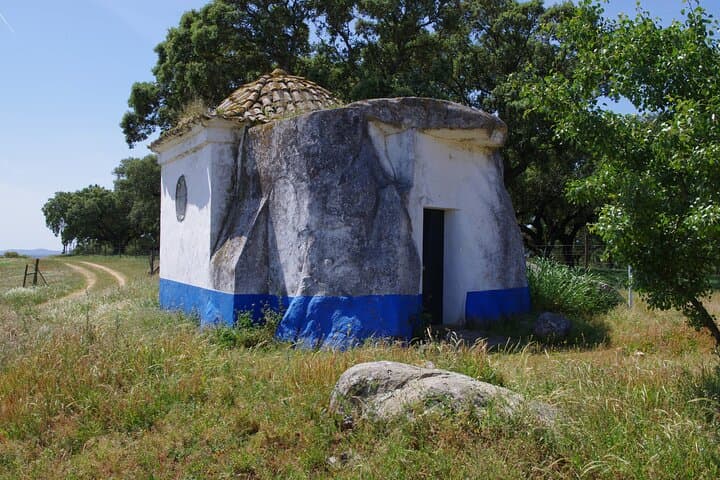
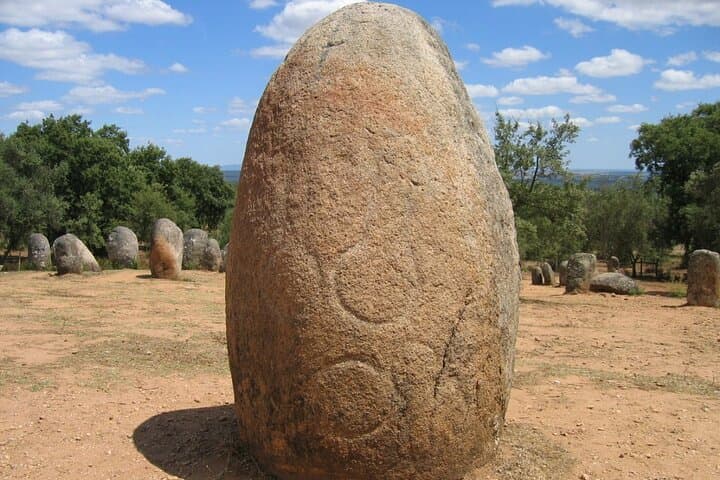
This short private tour threads together key prehistoric sites around Évora: Paleolithic cave paintings (some dated at roughly 37,000 years), Neolithic dolmens and menhirs, and large megalithic circles such as the Almendres Cromlech. Geologically, the region is on the Alentejo plain, where Cenozoic sediments and granite outcrops allowed early communities to quarry and position massive stones. Local culture later repurposed some tombs—Christian altars and hermitage markers show continuity between ritual landscapes.
Expect mostly short walks on dirt tracks and low scrub; one dolmen requires about a 25-minute roundtrip on flat terrain to reach from the vehicle. Guides explain excavation finds, alignments and the practicalities of prehistoric agriculture, and point out how seasonal light changes the feel of each monument. Practical notes: bring sun protection and 1–2 liters of water, wear sturdy walking shoes for uneven ground, and plan this in the morning or late afternoon to avoid summer heat. Vehicles are air-conditioned and private, so the tour suits travelers who want contextual archaeology without long hikes. Respect fenced areas and stay on marked paths—these stones are fragile witnesses, not props.
moderate.
3 hours.
Suitable for travelers with moderate fitness; involves short walks up to 25 minutes each on flat to gently uneven terrain.
Each monument visit includes short on-foot sections; the longest is about a 25-minute walk from the vehicle to a major dolmen and back.
This tour visits outdoor prehistoric monuments where general admission is typically not required; any specific paid sites will be noted by the guide.
The tour is private with a driver; accessibility varies by site—flat dirt tracks are common but some monuments have uneven approaches not suitable for wheelchairs.
The operator may cancel for bad weather; in summer plan for early or late departures to avoid peak heat and bring sufficient water and sun protection.
The Évora region holds continuous human activity from Paleolithic cave occupations through major Neolithic megalith-building; many dolmens served as collective tombs before later cultural reuse.
Many prehistoric sites are legally protected; avoid touching engraved surfaces and follow guide instructions to limit erosion and disturbance.
Évora Cultural Experience operates guided outdoor trips and adventures with an emphasis on safety, stewardship, and memorable experiences.
Step out of Évora’s baroque streets and into a landscape that carries 7,000 years of human decisions in stone and earth. The driver rolls down a country lane; cork and olive trees lean in like onlookers while low-standing menhirs punctuate golden fields. You approach cromlechs and dolmens that have kept watch through millennia, and caves whose painted hands still seem to reach for light.
Step out of Évora’s baroque streets and into a landscape that carries 7,000 years of human decisions in stone and earth. The driver rolls down a country lane; cork and olive trees lean in like onlookers while low-standing menhirs punctuate golden fields. You approach cromlechs and dolmens that have kept watch through millennia, and caves whose painted hands still seem to reach for light.
This short private tour threads together key prehistoric sites around Évora: Paleolithic cave paintings (some dated at roughly 37,000 years), Neolithic dolmens and menhirs, and large megalithic circles such as the Almendres Cromlech. Geologically, the region is on the Alentejo plain, where Cenozoic sediments and granite outcrops allowed early communities to quarry and position massive stones. Local culture later repurposed some tombs—Christian altars and hermitage markers show continuity between ritual landscapes.
Expect mostly short walks on dirt tracks and low scrub; one dolmen requires about a 25-minute roundtrip on flat terrain to reach from the vehicle. Guides explain excavation finds, alignments and the practicalities of prehistoric agriculture, and point out how seasonal light changes the feel of each monument. Practical notes: bring sun protection and 1–2 liters of water, wear sturdy walking shoes for uneven ground, and plan this in the morning or late afternoon to avoid summer heat. Vehicles are air-conditioned and private, so the tour suits travelers who want contextual archaeology without long hikes. Respect fenced areas and stay on marked paths—these stones are fragile witnesses, not props.