THE ADVENTURE COLLECTIVE® · Independent discovery and booking for outdoor travel

Explore the Alentejo montado and Évora Monte castle on a private three-hour tour that pairs a cork factory visit with sweeping hilltop views. Learn how cork is harvested and processed while walking short trails through cork oak stands.
Explore the Alentejo montado and Évora Monte castle on a private three-hour tour that pairs a cork factory visit with sweeping hilltop views. Learn how cork is harvested and processed while walking short trails through cork oak stands.
The tour opens on a sunlit lane under low, gnarled cork oaks, the air dry and scented with resin and thyme. A private driver delivers you from Évora into the Alentejo montado — a working landscape of wide-open cork forests — and a guide with local knowledge points out bark-scars, harvest techniques and the seasonal rhythms that shape this economy.
Verified experiences and guided adventures in the surrounding area.
Operated by Évora Cultural Experience · Évora, Alentejo
The tour opens on a sunlit lane under low, gnarled cork oaks, the air dry and scented with resin and thyme. A private driver delivers you from Évora into the Alentejo montado — a working landscape of wide-open cork forests — and a guide with local knowledge points out bark-scars, harvest techniques and the seasonal rhythms that shape this economy.
Historically, cork has been woven into rural life here for centuries; Portugal supplies about half the world’s cork and Alentejo is its heartland. Geologically the region rests on Mesozoic limestones and rolling schist hills, producing broad panoramas and thin, warm soils that favor Quercus suber. Cultural rhythms follow the harvest: men and women skilled with axes, traditional methods, and small-scale processing that became industrial craft in local factories.
At Évora Monte castle the guide leads a short climb to ramparts where the countryside opens into a patchwork of cork stands and cereal fields—an excellent place to read the landscape and photograph the montado mosaic. The factory visit focuses on processing stages, from de-barking to finished objects, illuminating how sustainable harvesting can coexist with modern uses.
Practical guidance: this is a three-hour private tour with short walks and some uneven stone at the castle; wear sturdy shoes, bring sun protection and water, and plan for a morning or late-afternoon slot to avoid midday heat. Expect modest walking, clear interpretation from the guide, and a compact, culturally rich introduction to one of Portugal’s most distinctive rural industries.
moderate.
2–3 hours.
Light to moderate fitness; involves brief uphill walk and standing during the factory tour.
Expect short, guided walks totaling about 30–45 minutes plus standing time at the factory and castle viewpoints.
Yes—children can join, but some machinery areas are restricted and infants should sit on laps in vehicles.
Yes, private air-conditioned transport with a driver is included for door-to-door pickup within the tour’s operating area.
The tour involves uneven surfaces and some steps at the castle; guests with mobility concerns should contact the operator to discuss accessibility options.
Cork harvesting has shaped Alentejo for centuries; Évora Monte’s fortress dates to the Renaissance and preserves medieval tombstones and defensive walls.
The montado is a low-intensity agroforestry system; sustainable cork stripping supports biodiversity and carbon storage when managed appropriately.
Évora Cultural Experience operates guided outdoor trips and adventures with an emphasis on safety, stewardship, and memorable experiences.

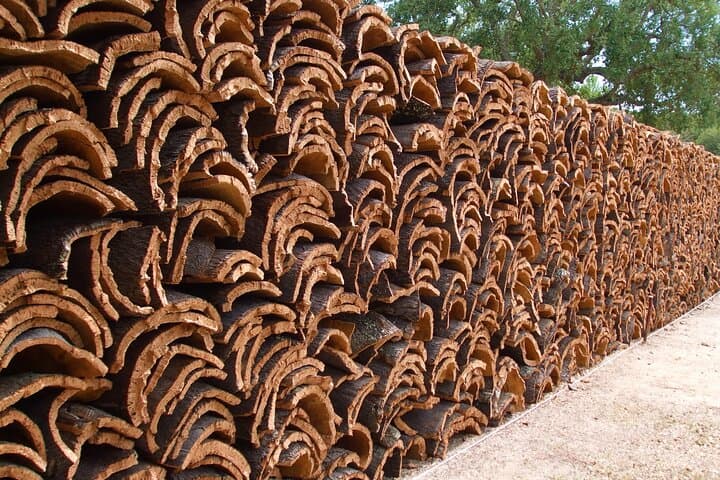
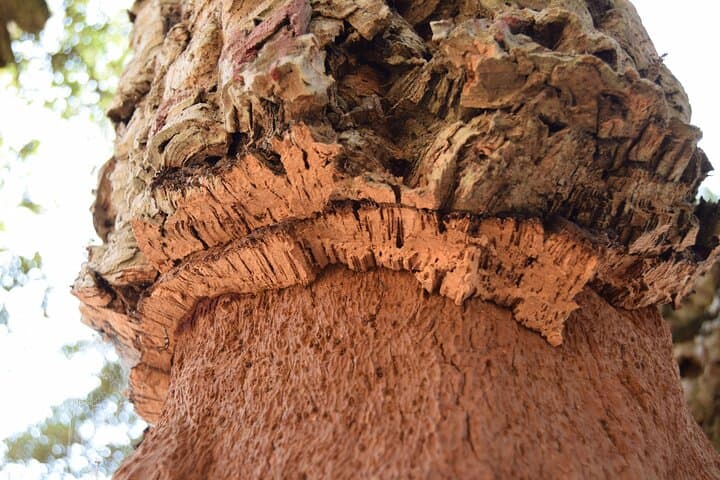
The tour opens on a sunlit lane under low, gnarled cork oaks, the air dry and scented with resin and thyme. A private driver delivers you from Évora into the Alentejo montado — a working landscape of wide-open cork forests — and a guide with local knowledge points out bark-scars, harvest techniques and the seasonal rhythms that shape this economy.
The tour opens on a sunlit lane under low, gnarled cork oaks, the air dry and scented with resin and thyme. A private driver delivers you from Évora into the Alentejo montado — a working landscape of wide-open cork forests — and a guide with local knowledge points out bark-scars, harvest techniques and the seasonal rhythms that shape this economy.
Historically, cork has been woven into rural life here for centuries; Portugal supplies about half the world’s cork and Alentejo is its heartland. Geologically the region rests on Mesozoic limestones and rolling schist hills, producing broad panoramas and thin, warm soils that favor Quercus suber. Cultural rhythms follow the harvest: men and women skilled with axes, traditional methods, and small-scale processing that became industrial craft in local factories.
At Évora Monte castle the guide leads a short climb to ramparts where the countryside opens into a patchwork of cork stands and cereal fields—an excellent place to read the landscape and photograph the montado mosaic. The factory visit focuses on processing stages, from de-barking to finished objects, illuminating how sustainable harvesting can coexist with modern uses.
Practical guidance: this is a three-hour private tour with short walks and some uneven stone at the castle; wear sturdy shoes, bring sun protection and water, and plan for a morning or late-afternoon slot to avoid midday heat. Expect modest walking, clear interpretation from the guide, and a compact, culturally rich introduction to one of Portugal’s most distinctive rural industries.