THE ADVENTURE COLLECTIVE® · Independent discovery and booking for outdoor travel

Spend three hours with a naturalist-guide wandering Yosemite Valley's meadows, granite walls, and waterfalls. This guided walk mixes geology, indigenous history, and practical park know-how—ideal for travelers who want context with their views.
Spend three hours with a naturalist-guide wandering Yosemite Valley's meadows, granite walls, and waterfalls. This guided walk mixes geology, indigenous history, and practical park know-how—ideal for travelers who want context with their views.
The day begins at Yosemite Village, where the air carries the sharp mineral tang of granite dust and the distant, steady thunder of Yosemite Falls. You meet your guide beside Shuttle Stop #1—an interpreter whose voice moves easily between geology and local lore—and step onto a valley floor that feels less like a landscape and more like a long, slow reveal. Meadows open up like pages; cliffs loom like old book jackets with their spines split by glaciers. For three hours, the park becomes a classroom and a cathedral.
Verified experiences and guided adventures in the surrounding area.
Operated by Yosemite Alpine Quest · Yosemite Valley, California
The day begins at Yosemite Village, where the air carries the sharp mineral tang of granite dust and the distant, steady thunder of Yosemite Falls. You meet your guide beside Shuttle Stop #1—an interpreter whose voice moves easily between geology and local lore—and step onto a valley floor that feels less like a landscape and more like a long, slow reveal. Meadows open up like pages; cliffs loom like old book jackets with their spines split by glaciers. For three hours, the park becomes a classroom and a cathedral.
Walks through Cook's Meadow place Half Dome and Sentinel Rock in a single, cinematic frame. The guide points out striations and polish on the exposed granite and explains how massive ice rivers gouged the valley into its present form during the last Ice Age. You learn that Half Dome is not a single act of violence but the result of exfoliation—sheets of rock peeling off over eons—and that El Capitan's brazen face is both a climber's proving ground and a geologic billboard.
Cultural threads run through the narrative as well. The Ahwahneechee people shaped valley life for generations; their place names and stories linger in the way the guides describe the landscape. Later chapters of Yosemite's history—settlers, the conservation battles spearheaded by figures like John Muir, and the establishment of the national park—are woven into stops at Yosemite Falls and the valley rim viewpoints. The guide balances hard science with human stories, including unexpected microhistories like the park's role in early mountaineering and the naturalists who cataloged Yosemite's flora and fauna.
Practical details matter on a short, information-dense tour. The terrain is mostly flat valley floor with well-maintained paths; expect light walking of roughly 2–3 miles and minimal elevation gain—this is accessible for most hikers. The tour supplies trekking poles and includes a vehicle reservation permit in the booking. Wear sturdy walking shoes and layers: valley mornings can be cool, afternoons warm, and shaded sections stay brisk. Hydrate: a liter of water is the minimum for the pace and elevation (about 4,000 feet). Park logistics are straightforward—meet at Yosemite Village and return there—but leave time for parking or shuttle delays, particularly in summer and on holiday weekends.
Beyond logistics, the walk gives you context that changes how you see the park: a waterfall's flow becomes a measure of seasonal snowpack, a meadow's wildflowers become a lesson in ecological succession. For anyone who wants Yosemite's icons explained, not just photographed, this naturalist-led walk is an efficient, resonant primer—short enough to fit in a busy itinerary, rich enough to make you want to stay longer.
easy.
3 hours.
Suitable for most fitness levels; light walking ability and steady balance recommended
Expect roughly 2–3 miles of mostly level walking across paved and packed dirt paths through Cook's Meadow and to viewpoints near Yosemite Falls and Half Dome.
Yes—it's rated easy and family-friendly, though it's not wheelchair-accessible and participants should be steady on their feet for several hours.
You still need the park's vehicle reservation/entrance permit during reservation-required periods; the tour includes a vehicle reservation permit per booking as listed in inclusions.
Restrooms are available at Yosemite Village before and after the tour; potable water stations are limited—bring your own water.
Common sightings include mule deer and various birds; black bear sightings are possible but rare—maintain distance and follow guide instructions.
Tipping is customary for excellent guiding; 10–20% of the tour price is a typical guideline if the experience was valuable.
Yosemite Valley has been home to the Ahwahneechee people for centuries; the park later became a crucible for the U.S. conservation movement led in part by John Muir.
Yosemite enforces strict food storage and Leave No Trace practices; summer visitation pressures make timing and shuttle use important for reducing impact.
Yosemite Alpine Quest operates guided outdoor trips and adventures with an emphasis on safety, stewardship, and memorable experiences.


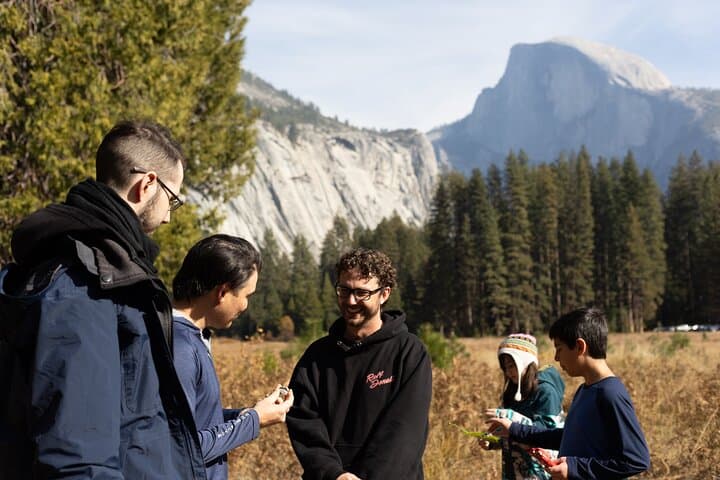

The day begins at Yosemite Village, where the air carries the sharp mineral tang of granite dust and the distant, steady thunder of Yosemite Falls. You meet your guide beside Shuttle Stop #1—an interpreter whose voice moves easily between geology and local lore—and step onto a valley floor that feels less like a landscape and more like a long, slow reveal. Meadows open up like pages; cliffs loom like old book jackets with their spines split by glaciers. For three hours, the park becomes a classroom and a cathedral.
The day begins at Yosemite Village, where the air carries the sharp mineral tang of granite dust and the distant, steady thunder of Yosemite Falls. You meet your guide beside Shuttle Stop #1—an interpreter whose voice moves easily between geology and local lore—and step onto a valley floor that feels less like a landscape and more like a long, slow reveal. Meadows open up like pages; cliffs loom like old book jackets with their spines split by glaciers. For three hours, the park becomes a classroom and a cathedral.
Walks through Cook's Meadow place Half Dome and Sentinel Rock in a single, cinematic frame. The guide points out striations and polish on the exposed granite and explains how massive ice rivers gouged the valley into its present form during the last Ice Age. You learn that Half Dome is not a single act of violence but the result of exfoliation—sheets of rock peeling off over eons—and that El Capitan's brazen face is both a climber's proving ground and a geologic billboard.
Cultural threads run through the narrative as well. The Ahwahneechee people shaped valley life for generations; their place names and stories linger in the way the guides describe the landscape. Later chapters of Yosemite's history—settlers, the conservation battles spearheaded by figures like John Muir, and the establishment of the national park—are woven into stops at Yosemite Falls and the valley rim viewpoints. The guide balances hard science with human stories, including unexpected microhistories like the park's role in early mountaineering and the naturalists who cataloged Yosemite's flora and fauna.
Practical details matter on a short, information-dense tour. The terrain is mostly flat valley floor with well-maintained paths; expect light walking of roughly 2–3 miles and minimal elevation gain—this is accessible for most hikers. The tour supplies trekking poles and includes a vehicle reservation permit in the booking. Wear sturdy walking shoes and layers: valley mornings can be cool, afternoons warm, and shaded sections stay brisk. Hydrate: a liter of water is the minimum for the pace and elevation (about 4,000 feet). Park logistics are straightforward—meet at Yosemite Village and return there—but leave time for parking or shuttle delays, particularly in summer and on holiday weekends.
Beyond logistics, the walk gives you context that changes how you see the park: a waterfall's flow becomes a measure of seasonal snowpack, a meadow's wildflowers become a lesson in ecological succession. For anyone who wants Yosemite's icons explained, not just photographed, this naturalist-led walk is an efficient, resonant primer—short enough to fit in a busy itinerary, rich enough to make you want to stay longer.