THE ADVENTURE COLLECTIVE® · Independent discovery and booking for outdoor travel

Visit one of Umbria’s oldest olive trees on a guided farm walk that explains cultivation and pressing, then taste three distinct extra-virgin oils. This short, accessible tour mixes sensory tasting with practical production insight—perfect for food-minded travelers.
Visit one of Umbria’s oldest olive trees on a guided farm walk that explains cultivation and pressing, then taste three distinct extra-virgin oils. This short, accessible tour mixes sensory tasting with practical production insight—perfect for food-minded travelers.
You step from a sun-warmed lane into the shade of a gnarled olive giant: the Olive Tree of Macciano. Its trunk bends like an old storyteller and the air carries green, bitter citrus notes that promise something handcrafted and precise. A guide leads you across terraced soil, palms brushing against rosemary and thyme, as the farm’s terraces open to distant Umbrian hills.
Verified experiences and guided adventures in the surrounding area.
Operated by Oro di Giano · Giano dell'Umbria, Umbria
You step from a sun-warmed lane into the shade of a gnarled olive giant: the Olive Tree of Macciano. Its trunk bends like an old storyteller and the air carries green, bitter citrus notes that promise something handcrafted and precise. A guide leads you across terraced soil, palms brushing against rosemary and thyme, as the farm’s terraces open to distant Umbrian hills.
This is central Umbria — limestone ridges smoothed by ancient seas, volcanic pockets that lend mineral depth to the soil, and a rural culture shaped by olive oil as currency of flavor and sustenance. The tour traces cultivation cycles: pruning in winter, the delicate spring bloom, and the autumn harvest when nets and clacking harvester sounds return. You’ll learn traditional and modern extraction methods, how acidity and polyphenols are measured, and why early pressing matters.
Tasting is direct and sensory: three oils presented room-temperature, bread or water for palate resets, and notes on mouthfeel, peppery finish, and pairing. The guide explains storage, label reading, and how local cuisine—pasta, grilled vegetables, bean stews—relies on robust extra-virgin oils.
Practical guidance: tours are short (around 60 minutes), accessible to most fitness levels, and wheelchair-friendly; bring sun protection and closed shoes for uneven paths. Plan visits in late morning for the best light and to combine with nearby wineries or market towns. This is an efficient, sensory introduction to Umbrian olive oil that connects geology, hands-on production, and tasting in a compact hour.
easy.
1 hour.
Suitable for most fitness levels; involves short, gentle walking on farm paths
The EVO Tour & Tasting is approximately 60 minutes and includes a short walk, a production explanation, and a tasting of three oils.
Yes — the farm reports wheelchair-accessible surfaces and accommodations for prams and service animals.
Yes — tours are private and limited; book ahead to secure your preferred time and to notify the farm of any dietary needs.
Yes — most visitors can purchase the farm’s oils after the tasting; staff can advise on shipping or local transport restrictions.
Olive cultivation in Umbria dates back to Roman times; ancient trees like Macciano’s are living links to centuries of small-scale farming and local foodways.
Many Umbrian producers manage groves with low-intervention practices and minimal chemical use; visitors are encouraged to respect soil and tree health by staying on paths and limiting waste.
Oro di Giano operates guided outdoor trips and adventures with an emphasis on safety, stewardship, and memorable experiences.


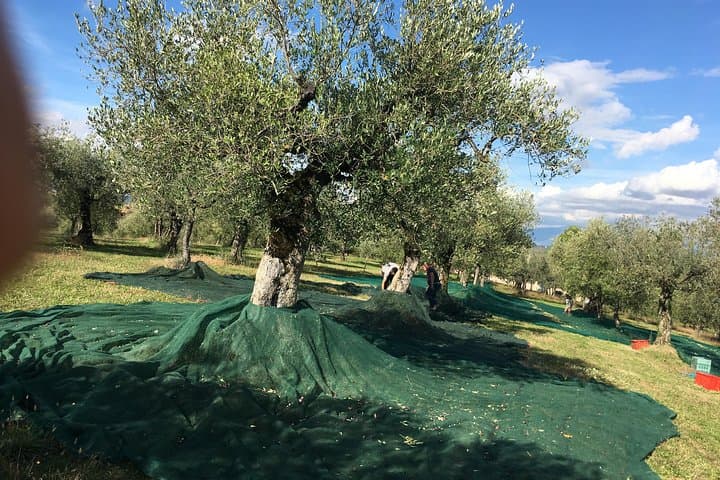
You step from a sun-warmed lane into the shade of a gnarled olive giant: the Olive Tree of Macciano. Its trunk bends like an old storyteller and the air carries green, bitter citrus notes that promise something handcrafted and precise. A guide leads you across terraced soil, palms brushing against rosemary and thyme, as the farm’s terraces open to distant Umbrian hills.
You step from a sun-warmed lane into the shade of a gnarled olive giant: the Olive Tree of Macciano. Its trunk bends like an old storyteller and the air carries green, bitter citrus notes that promise something handcrafted and precise. A guide leads you across terraced soil, palms brushing against rosemary and thyme, as the farm’s terraces open to distant Umbrian hills.
This is central Umbria — limestone ridges smoothed by ancient seas, volcanic pockets that lend mineral depth to the soil, and a rural culture shaped by olive oil as currency of flavor and sustenance. The tour traces cultivation cycles: pruning in winter, the delicate spring bloom, and the autumn harvest when nets and clacking harvester sounds return. You’ll learn traditional and modern extraction methods, how acidity and polyphenols are measured, and why early pressing matters.
Tasting is direct and sensory: three oils presented room-temperature, bread or water for palate resets, and notes on mouthfeel, peppery finish, and pairing. The guide explains storage, label reading, and how local cuisine—pasta, grilled vegetables, bean stews—relies on robust extra-virgin oils.
Practical guidance: tours are short (around 60 minutes), accessible to most fitness levels, and wheelchair-friendly; bring sun protection and closed shoes for uneven paths. Plan visits in late morning for the best light and to combine with nearby wineries or market towns. This is an efficient, sensory introduction to Umbrian olive oil that connects geology, hands-on production, and tasting in a compact hour.