THE ADVENTURE COLLECTIVE® · Independent discovery and booking for outdoor travel

A 20-day loop through the Khumbu that links Everest Base Camp with Gokyo and three 5,300–5,535 m passes. This guide covers what to expect on trail, acclimatization strategy, and practical gear and timing for a safer, more rewarding crossing.
A 20-day loop through the Khumbu that links Everest Base Camp with Gokyo and three 5,300–5,535 m passes. This guide covers what to expect on trail, acclimatization strategy, and practical gear and timing for a safer, more rewarding crossing.
Morning light slices across moraine and prayer flags as you lift off from Kathmandu toward Lukla — the Himalaya greets you with a bruise-blue skyline and a valley that seems to pull you in. Over the next 20 days the trail climbs, drops, and forces decisions: skirt the Khumbu Glacier, test a crevassed pass, then rise again to a saddle where the world narrows into stone and wind.
Verified experiences and guided adventures in the surrounding area.
Operated by Himalayan Adventure Treks and Tours Pvt Ltd · Namche Bazaar, Province No. 1
Morning light slices across moraine and prayer flags as you lift off from Kathmandu toward Lukla — the Himalaya greets you with a bruise-blue skyline and a valley that seems to pull you in. Over the next 20 days the trail climbs, drops, and forces decisions: skirt the Khumbu Glacier, test a crevassed pass, then rise again to a saddle where the world narrows into stone and wind.
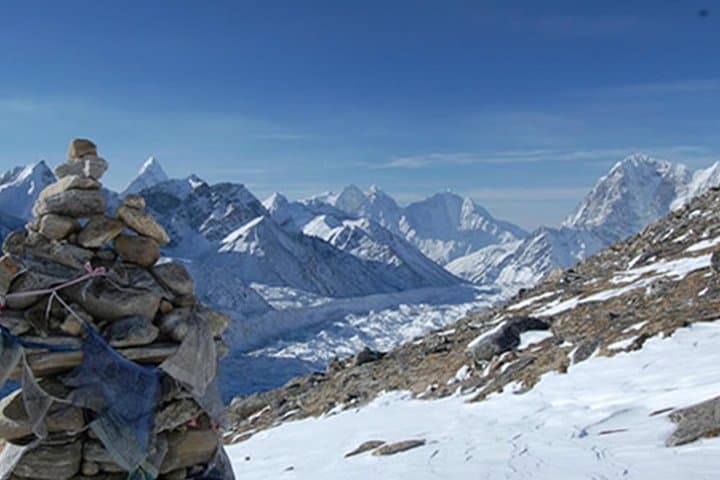
The route threads through the Khumbu Valley and Sagarmatha National Park, where Sherpa settlements, gompas, and the memory of early Everest expeditions shape the culture. Geologically, you’re walking across the rising flank of the Tibetan Plateau — towering peaks, glacial moraines, and proglacial lakes like the emerald Gokyo series carved by millennia of ice.
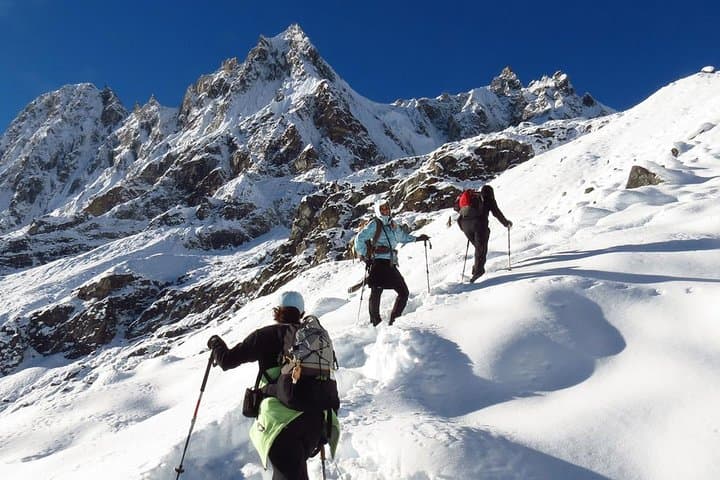
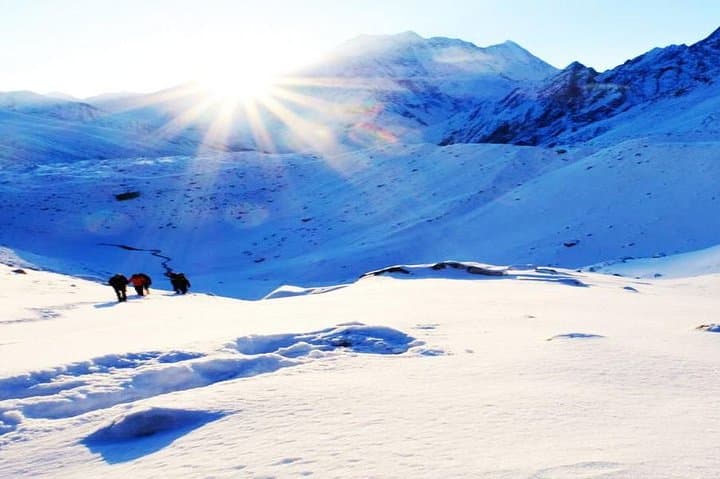
Expect varied terrain: river crossings and rhododendron forests low down, loose scree and compacted snow near Kongma La, Cho La, and Renjo La (5,360–5,535 m). Altitude, not distance, defines difficulty; acclimatization days in Namche and Dingboche are built into the itinerary for that reason.
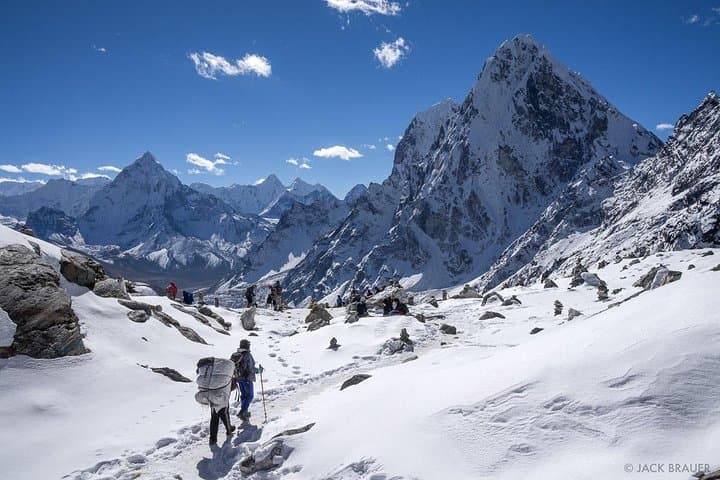
Practical guidance: carry layered clothing for rapid temperature swings, keep daily hydration and salty snacks to fend off altitude fatigue, and use trekking poles on steep descents. Book early-season flights to Lukla (weather-dependent) and allow contingency time for weather delays. The tea-house system provides basic meals and bunk-style accommodation, so go light on personal items and heavy on good boots. When the wind speaks, move deliberately — the passes demand respect, and crossing them rewards you with some of the most direct views of Everest and the Mahalangur range.
challenging.
20 days.
Requires very good aerobic fitness, experience with multi-day high-altitude trekking, and ability to carry a daypack for up to 8–9 hours.
Kongma La, Cho La and Renjo La are long, exposed crossings with loose scree and snow; they’re technically non-technical but physically demanding due to altitude and variable conditions.
Yes — prior multi-day trekking at altitude is strongly recommended; the itinerary includes multiple nights above 4,000 m and peaks near 5,500 m.
Tea houses provide simple twin rooms, shared bathrooms, and hot meals (Dal Bhat common); bring cash for extras and tip guides/porters at the end.
Pre- and post-monsoon windows (late Sept–Nov and Mar–May) offer the most stable conditions and clear mountain views, though winter crossings are possible for experienced groups.
The Khumbu has long been a transit corridor for Tibetan traders and the Sherpa culture evolved around high-altitude subsistence and mountaineering support; Sagarmatha National Park was designated in 1979.
Sagarmatha National Park limits impacts through permits (TIMS, national park fees) and community-based waste initiatives; pack out plastics when possible and respect local guidelines.
Himalayan Adventure Treks and Tours Pvt Ltd operates guided outdoor trips and adventures with an emphasis on safety, stewardship, and memorable experiences.
Morning light slices across moraine and prayer flags as you lift off from Kathmandu toward Lukla — the Himalaya greets you with a bruise-blue skyline and a valley that seems to pull you in. Over the next 20 days the trail climbs, drops, and forces decisions: skirt the Khumbu Glacier, test a crevassed pass, then rise again to a saddle where the world narrows into stone and wind.
Morning light slices across moraine and prayer flags as you lift off from Kathmandu toward Lukla — the Himalaya greets you with a bruise-blue skyline and a valley that seems to pull you in. Over the next 20 days the trail climbs, drops, and forces decisions: skirt the Khumbu Glacier, test a crevassed pass, then rise again to a saddle where the world narrows into stone and wind.
The route threads through the Khumbu Valley and Sagarmatha National Park, where Sherpa settlements, gompas, and the memory of early Everest expeditions shape the culture. Geologically, you’re walking across the rising flank of the Tibetan Plateau — towering peaks, glacial moraines, and proglacial lakes like the emerald Gokyo series carved by millennia of ice.
Expect varied terrain: river crossings and rhododendron forests low down, loose scree and compacted snow near Kongma La, Cho La, and Renjo La (5,360–5,535 m). Altitude, not distance, defines difficulty; acclimatization days in Namche and Dingboche are built into the itinerary for that reason.
Practical guidance: carry layered clothing for rapid temperature swings, keep daily hydration and salty snacks to fend off altitude fatigue, and use trekking poles on steep descents. Book early-season flights to Lukla (weather-dependent) and allow contingency time for weather delays. The tea-house system provides basic meals and bunk-style accommodation, so go light on personal items and heavy on good boots. When the wind speaks, move deliberately — the passes demand respect, and crossing them rewards you with some of the most direct views of Everest and the Mahalangur range.