THE ADVENTURE COLLECTIVE® · Independent discovery and booking for outdoor travel

Board a morning flight from Kathmandu for a guaranteed window seat over Everest, Lhotse, Makalu and Cho Oyu. This 60-minute scenic tour combines geological wonder, mountaineering history and pilot commentary for a compact, unforgettable view of the Himalaya.
Board a morning flight from Kathmandu for a guaranteed window seat over Everest, Lhotse, Makalu and Cho Oyu. This 60-minute scenic tour combines geological wonder, mountaineering history and pilot commentary for a compact, unforgettable view of the Himalaya.
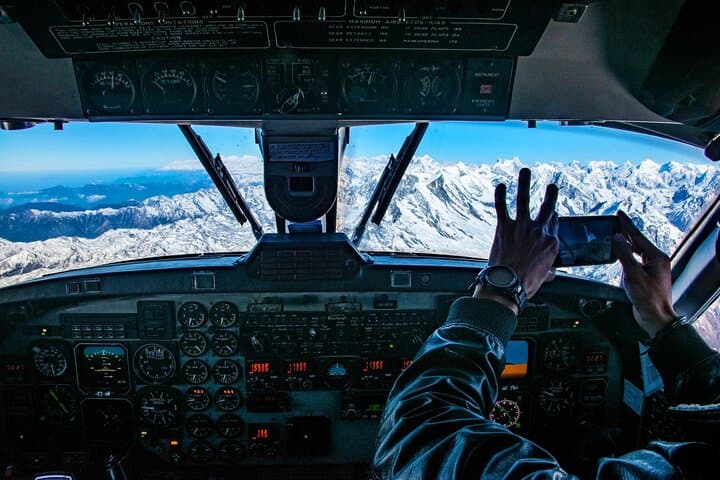
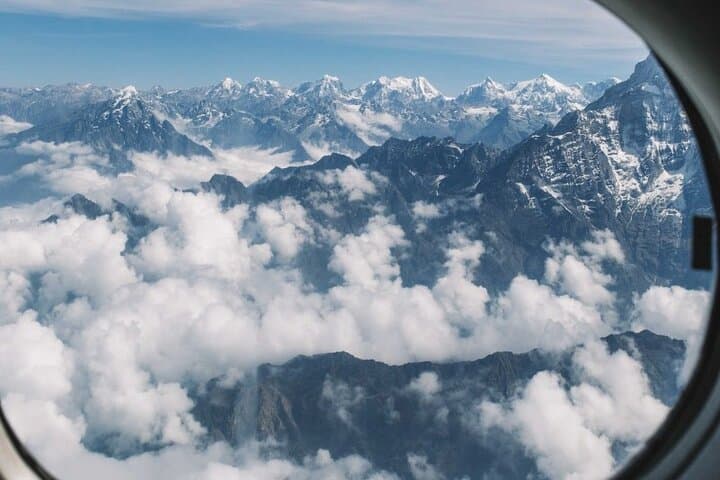
The plane lifts off as Kathmandu’s lights still blink on the valley floor and the cold morning air sharpens the windows. Through a guaranteed window seat you watch ridgelines sharpen into teeth of rock and ice, then the roof of the world—Mount Everest—rise above the horizon, halos of early sun painting ridges gold.
Verified experiences and guided adventures in the surrounding area.
Operated by Accessible Adventure Pvt. Ltd · Kathmandu, Bagmati Province
The plane lifts off as Kathmandu’s lights still blink on the valley floor and the cold morning air sharpens the windows. Through a guaranteed window seat you watch ridgelines sharpen into teeth of rock and ice, then the roof of the world—Mount Everest—rise above the horizon, halos of early sun painting ridges gold.
The flight follows the high spine of the Himalaya, passing Everest (8,848 m), Lhotse, Makalu and Cho Oyu. Geologically these peaks are young, rising where the Indian Plate thrusts beneath the Eurasian Plate, folding sediment into towering summits. Culturally the mountains loom large in local life: Sherpa communities, Buddhist stupas and centuries of mountaineering history converge here—Everest’s first recorded ascent was in 1953 by Sir Edmund Hillary and Tenzing Norgay.
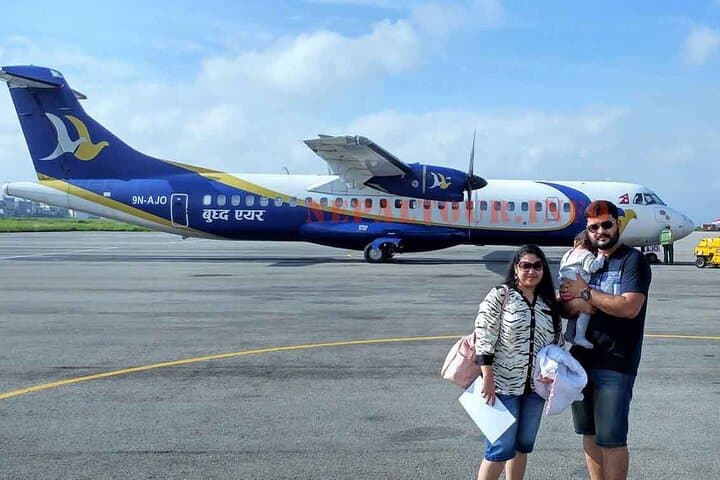
Expect a 60-minute roundtrip from Tribhuvan International Airport, an early-morning briefing with tea or coffee, and narration from experienced pilots who point out key summits and glacial features. Visibility is best at dawn; the flight is accessible to most travelers and includes hotel transfers and a keepsake flight certificate.
Practical notes: dress in layers—cabin air is thin and mornings are cold—bring a camera with extra batteries, and carry passport ID for airport check-in. Motion-sickness remedies help if you’re sensitive to turbulence. Photography through aircraft windows can glare; a polarizing filter and lean toward the glass help.
This is aerial sightseeing: minimal exertion, maximum perspective. Plan for an early start, clear skies, and a compact, unforgettable encounter with the Himalaya from above.
easy.
1 hour.
Suitable for all fitness levels; minimal physical exertion but early wake-up required
No—the tour is a scenic flight; planes circle and approach high peaks for views but do not land on Everest or at base camp.
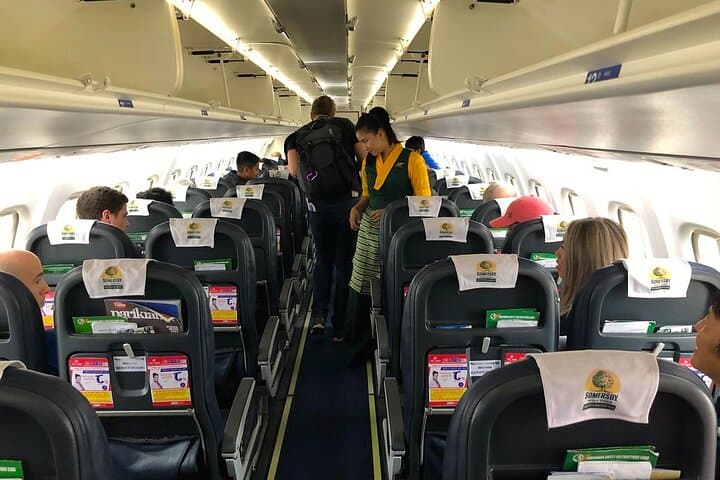
Yes—this operator guarantees a window seat for each passenger to maximize viewing and photography opportunities.
Pickup is typically around 5:00–5:30 AM for a briefing and timely arrival at the domestic terminal; confirm exact pickup time with your operator.
Yes—no special mountain permits are required for sightseeing flights, but you must carry valid passport/ID for airport checks.
The Himalayan massif rose from continental collision over millions of years; modern mountaineering history centers on Everest’s 1953 first ascent and the vital role of Sherpa climbers.
High-altitude ecosystems are fragile—choose operators that follow local regulations, avoid littering, and support community-based tourism to minimize impact.
Accessible Adventure Pvt. Ltd operates guided outdoor trips and adventures with an emphasis on safety, stewardship, and memorable experiences.
The plane lifts off as Kathmandu’s lights still blink on the valley floor and the cold morning air sharpens the windows. Through a guaranteed window seat you watch ridgelines sharpen into teeth of rock and ice, then the roof of the world—Mount Everest—rise above the horizon, halos of early sun painting ridges gold.
The plane lifts off as Kathmandu’s lights still blink on the valley floor and the cold morning air sharpens the windows. Through a guaranteed window seat you watch ridgelines sharpen into teeth of rock and ice, then the roof of the world—Mount Everest—rise above the horizon, halos of early sun painting ridges gold.
The flight follows the high spine of the Himalaya, passing Everest (8,848 m), Lhotse, Makalu and Cho Oyu. Geologically these peaks are young, rising where the Indian Plate thrusts beneath the Eurasian Plate, folding sediment into towering summits. Culturally the mountains loom large in local life: Sherpa communities, Buddhist stupas and centuries of mountaineering history converge here—Everest’s first recorded ascent was in 1953 by Sir Edmund Hillary and Tenzing Norgay.
Expect a 60-minute roundtrip from Tribhuvan International Airport, an early-morning briefing with tea or coffee, and narration from experienced pilots who point out key summits and glacial features. Visibility is best at dawn; the flight is accessible to most travelers and includes hotel transfers and a keepsake flight certificate.
Practical notes: dress in layers—cabin air is thin and mornings are cold—bring a camera with extra batteries, and carry passport ID for airport check-in. Motion-sickness remedies help if you’re sensitive to turbulence. Photography through aircraft windows can glare; a polarizing filter and lean toward the glass help.
This is aerial sightseeing: minimal exertion, maximum perspective. Plan for an early start, clear skies, and a compact, unforgettable encounter with the Himalaya from above.