THE ADVENTURE COLLECTIVE® · Independent discovery and booking for outdoor travel

Soar over the highest peaks on an early-morning mountain flight from Kathmandu. In about three hours door-to-door you'll get a concentrated, weather-dependent window into Everest, local culture, and Himalayan geology.
Soar over the highest peaks on an early-morning mountain flight from Kathmandu. In about three hours door-to-door you'll get a concentrated, weather-dependent window into Everest, local culture, and Himalayan geology.
You lift off from Kathmandu and the city thins beneath you; terraced fields and brick rooftops recede while the Himalaya looms forward like a line of steep teeth. Within an hour the plane climbs into thin, clear air and the ridge of Everest appears—white, hard-edged, and impossibly high—while surrounding giants like Lhotse, Nuptse and Makalu tilt sunward.
Verified experiences and guided adventures in the surrounding area.
Operated by Alpine Luxury Treks Pvt Ltd · Kathmandu, Bagmati Province
You lift off from Kathmandu and the city thins beneath you; terraced fields and brick rooftops recede while the Himalaya looms forward like a line of steep teeth. Within an hour the plane climbs into thin, clear air and the ridge of Everest appears—white, hard-edged, and impossibly high—while surrounding giants like Lhotse, Nuptse and Makalu tilt sunward.
The idea of viewing Everest from the air dates to early exploration flights in the 1930s; today’s scenic flights combine modern turboprops, guaranteed window seats, and strict weather checks. Geologically, you are seeing some of the youngest, fastest-lifting mountains on Earth—folded, uplifted rock capped by centuries of snow and glaciers that carve visible tongues and moraines from space.
Culturally the flight frames Kathmandu’s sacred sites—Pashupatinath’s ghats and stupas—against the peaks, a reminder that these mountains are both spiritual landmarks and working landscapes for Sherpa communities below.
Practical guidance: plan for a 3-hour total pickup-to-dropoff window with roughly 45–60 minutes of airborne mountain viewing; operations are weather-dependent and often run early to catch clearer skies. Bring a camera with a charged battery, wear warm layers (air at altitude is cold even when the sun is bright), and carry your passport for airport procedures. Expect minimal physical demand—air travel comfort and ear-pressure tips matter more than fitness. If conditions force a cancellation, reputable operators will offer rebooking; flights rarely land on mountain airstrips, so this is strictly a panoramic experience. With the right planning this is the fastest, most reliable way to see Everest without trekking—intense, immediate, and unforgettable.
easy.
3 hours.
Suitable for all fitness levels; minimal physical exertion beyond standard air travel
Airborne mountain viewing typically lasts about 45–60 minutes within a roughly 3-hour door-to-door itinerary that includes hotel pickup and airport procedures.
Scenic flights are weather-dependent; reputable operators usually offer rebooking on an alternative date rather than refunds—confirm their policy at booking.
This is a panoramic fly-by—no mountain landings. You’ll get close-up aerial views but remain on the aircraft for the entire flight.
No special fitness is required; the flight stays within pressurized/regulated cabin altitudes but you should bring layers for temperature comfort.
Early exploratory flights in the 1930s and the 1953 first ascent by Hillary and Tenzing made Everest a global icon; Kathmandu has long served as the gateway to these expeditions.
Climate change is rapidly altering Himalayan glaciers; choose operators who support low-impact tourism and follow local regulations to minimize disturbance.
Alpine Luxury Treks Pvt Ltd operates guided outdoor trips and adventures with an emphasis on safety, stewardship, and memorable experiences.
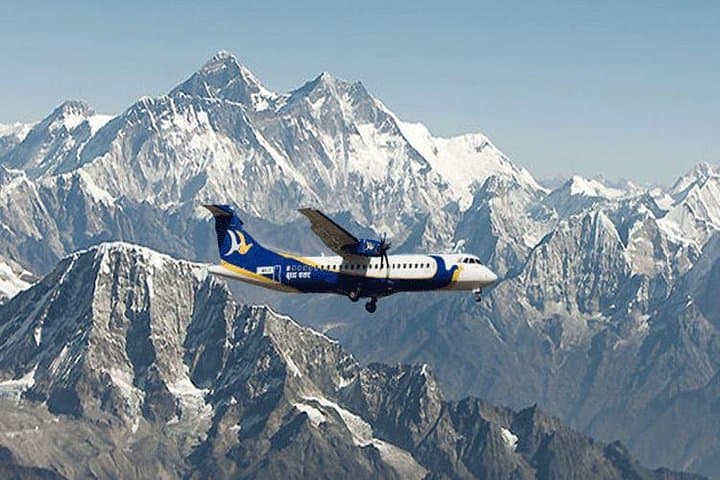
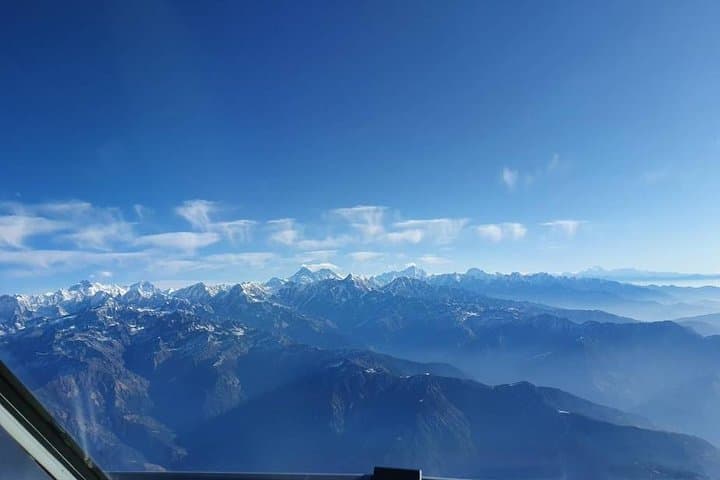
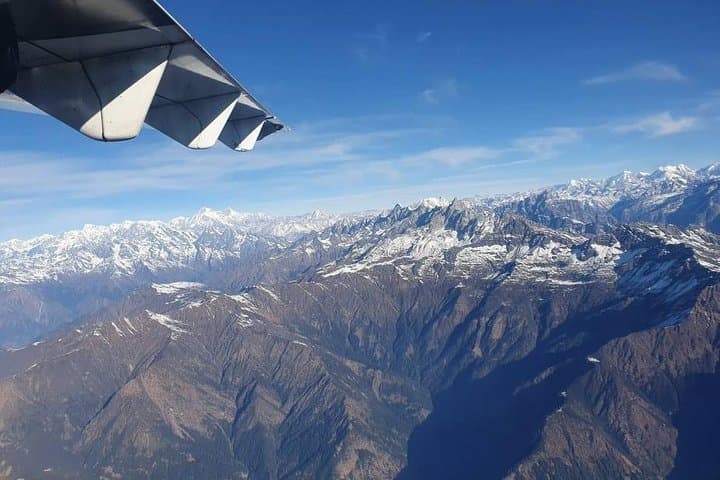
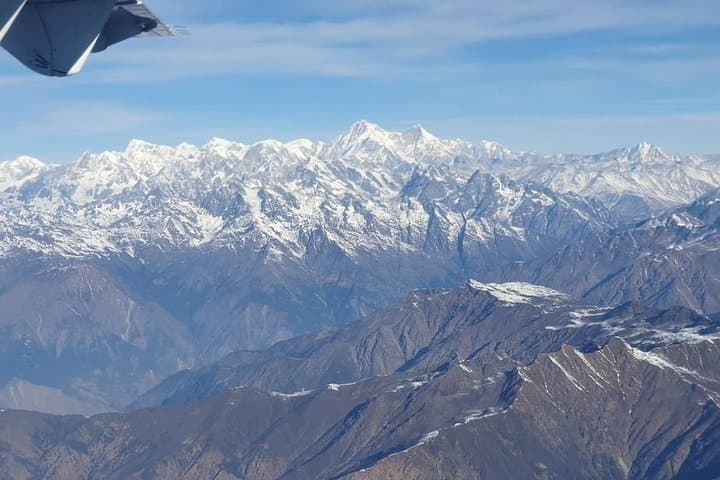
You lift off from Kathmandu and the city thins beneath you; terraced fields and brick rooftops recede while the Himalaya looms forward like a line of steep teeth. Within an hour the plane climbs into thin, clear air and the ridge of Everest appears—white, hard-edged, and impossibly high—while surrounding giants like Lhotse, Nuptse and Makalu tilt sunward.
You lift off from Kathmandu and the city thins beneath you; terraced fields and brick rooftops recede while the Himalaya looms forward like a line of steep teeth. Within an hour the plane climbs into thin, clear air and the ridge of Everest appears—white, hard-edged, and impossibly high—while surrounding giants like Lhotse, Nuptse and Makalu tilt sunward.
The idea of viewing Everest from the air dates to early exploration flights in the 1930s; today’s scenic flights combine modern turboprops, guaranteed window seats, and strict weather checks. Geologically, you are seeing some of the youngest, fastest-lifting mountains on Earth—folded, uplifted rock capped by centuries of snow and glaciers that carve visible tongues and moraines from space.
Culturally the flight frames Kathmandu’s sacred sites—Pashupatinath’s ghats and stupas—against the peaks, a reminder that these mountains are both spiritual landmarks and working landscapes for Sherpa communities below.
Practical guidance: plan for a 3-hour total pickup-to-dropoff window with roughly 45–60 minutes of airborne mountain viewing; operations are weather-dependent and often run early to catch clearer skies. Bring a camera with a charged battery, wear warm layers (air at altitude is cold even when the sun is bright), and carry your passport for airport procedures. Expect minimal physical demand—air travel comfort and ear-pressure tips matter more than fitness. If conditions force a cancellation, reputable operators will offer rebooking; flights rarely land on mountain airstrips, so this is strictly a panoramic experience. With the right planning this is the fastest, most reliable way to see Everest without trekking—intense, immediate, and unforgettable.