THE ADVENTURE COLLECTIVE® · Independent discovery and booking for outdoor travel

Take an early-morning scenic flight from Kathmandu to see Everest and its neighboring giants up close. This 3–4 hour tour includes hotel pickup, airport transfers, and a front-row view of the high Himalaya—weather permitting.
Take an early-morning scenic flight from Kathmandu to see Everest and its neighboring giants up close. This 3–4 hour tour includes hotel pickup, airport transfers, and a front-row view of the high Himalaya—weather permitting.
Dawn pours thin light across Kathmandu as the minivan eases toward Tribhuvan Airport; the city falls away and the Himalaya looms like a line drawing that fills the windshield. Within an hour the plane climbs above river valleys and terraces, and peaks—Everest, Lhotse, Nuptse, Ama Dablam, Kantega, Thamserku—assert themselves in sudden, bright relief. The mountains don’t wait; their ridgelines dare you to look closer.
Verified experiences and guided adventures in the surrounding area.
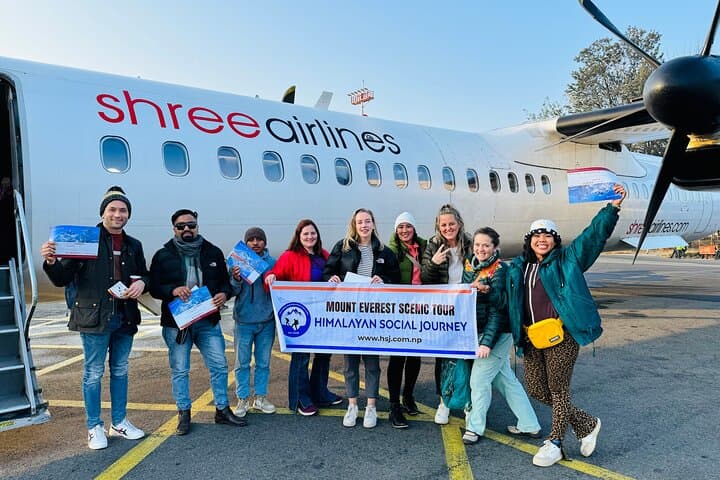
Operated by Himalayan Social Journey · Kathmandu, Bagmati Province
Dawn pours thin light across Kathmandu as the minivan eases toward Tribhuvan Airport; the city falls away and the Himalaya looms like a line drawing that fills the windshield. Within an hour the plane climbs above river valleys and terraces, and peaks—Everest, Lhotse, Nuptse, Ama Dablam, Kantega, Thamserku—assert themselves in sudden, bright relief. The mountains don’t wait; their ridgelines dare you to look closer.
The modern mountain flight grew from early Himalayan exploration and the era of mountaineering in the 20th century, offering non-climbers a chance to witness the highest summits. Geologically these peaks are young and rapidly rising—collision zones where the Indian Plate forces the Himalaya skyward—so expect sharp arêtes, hanging glaciers and deeply cut valleys visible from the air. Culturally, the flight skirts communities shaped by Sherpa traditions and Buddhist monasteries tucked into high valleys; prayer flags and stone chortens punctuate ridgelines when you pass low enough to see them.
Practical guidance: flights depart early when the air is calm and visibility is highest; total door-to-door time is 3–4 hours including hotel transfers and airport formalities. Bring layered clothing (it’s colder at altitude inside the small aircraft), a telephoto-capable camera, sunscreen and your passport for check-in. Flights can be canceled for weather or weight limits—book early morning slots and allow buffer days in your itinerary. The experience is sightseeing-focused—no landing on Everest—but it’s one of the most concentrated ways to read the scale of the high Himalaya without technical climbing skills.
easy.
3–4 hours.
Suitable for most fitness levels; primarily a seated sightseeing flight with short airport procedures.
The full experience—hotel pickup, airport procedures, flight and return transfer—typically takes 3–4 hours; the airborne portion is shorter depending on routing.
No; this is a sightseeing flight that approaches the high peaks from the air. There is no landing on Everest—views are from a safe distance, as close as about five nautical miles in some routings.
Flights are frequently weather-dependent; most operators offer a full refund or rebooking if canceled at least 24 hours in advance, but verify the provider’s specific policy and allow buffer days in your schedule.
Yes—infants must sit on an adult’s lap and all passengers must carry valid passport details at booking and check-in.
Mountain flights evolved as a way for non-climbers to witness peaks first surveyed during early 20th-century expeditions; they democratize access to Himalayan vistas without technical climbing.
Operators encourage minimal disruption by restricting low passes and following established corridors; flight cancellations due to weather also reduce unnecessary fuel use when views are poor.
Himalayan Social Journey operates guided outdoor trips and adventures with an emphasis on safety, stewardship, and memorable experiences.
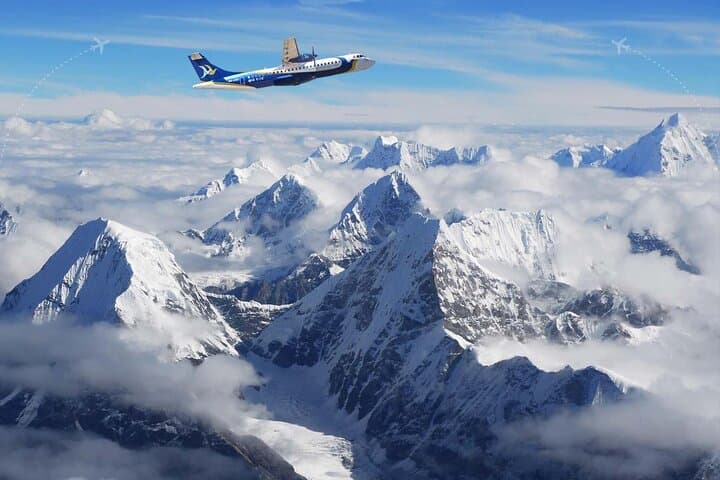
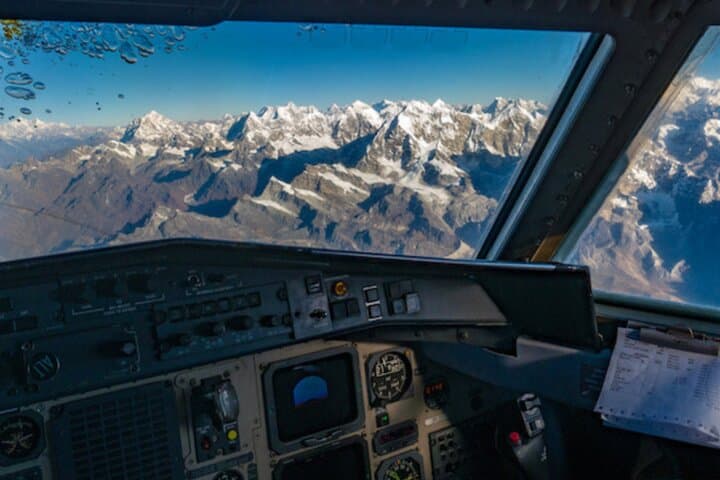
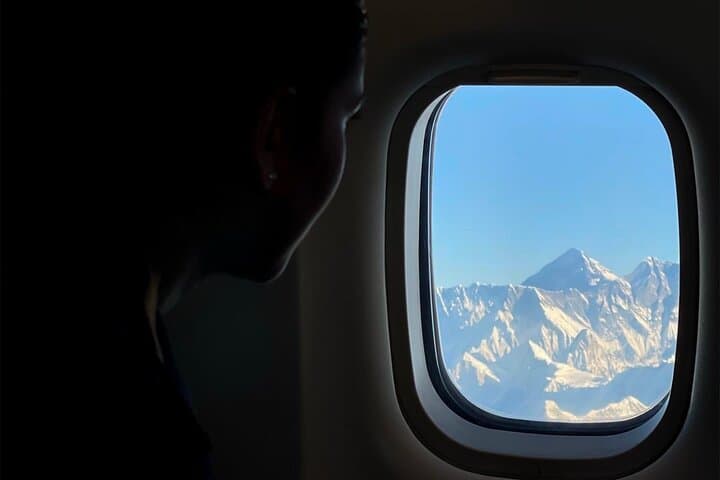
Dawn pours thin light across Kathmandu as the minivan eases toward Tribhuvan Airport; the city falls away and the Himalaya looms like a line drawing that fills the windshield. Within an hour the plane climbs above river valleys and terraces, and peaks—Everest, Lhotse, Nuptse, Ama Dablam, Kantega, Thamserku—assert themselves in sudden, bright relief. The mountains don’t wait; their ridgelines dare you to look closer.
Dawn pours thin light across Kathmandu as the minivan eases toward Tribhuvan Airport; the city falls away and the Himalaya looms like a line drawing that fills the windshield. Within an hour the plane climbs above river valleys and terraces, and peaks—Everest, Lhotse, Nuptse, Ama Dablam, Kantega, Thamserku—assert themselves in sudden, bright relief. The mountains don’t wait; their ridgelines dare you to look closer.
The modern mountain flight grew from early Himalayan exploration and the era of mountaineering in the 20th century, offering non-climbers a chance to witness the highest summits. Geologically these peaks are young and rapidly rising—collision zones where the Indian Plate forces the Himalaya skyward—so expect sharp arêtes, hanging glaciers and deeply cut valleys visible from the air. Culturally, the flight skirts communities shaped by Sherpa traditions and Buddhist monasteries tucked into high valleys; prayer flags and stone chortens punctuate ridgelines when you pass low enough to see them.
Practical guidance: flights depart early when the air is calm and visibility is highest; total door-to-door time is 3–4 hours including hotel transfers and airport formalities. Bring layered clothing (it’s colder at altitude inside the small aircraft), a telephoto-capable camera, sunscreen and your passport for check-in. Flights can be canceled for weather or weight limits—book early morning slots and allow buffer days in your itinerary. The experience is sightseeing-focused—no landing on Everest—but it’s one of the most concentrated ways to read the scale of the high Himalaya without technical climbing skills.