THE ADVENTURE COLLECTIVE® · Independent discovery and booking for outdoor travel

Swap long treks for a high-altitude aerial view on a morning mountain flight from Kathmandu. In roughly two hours you’ll cruise within camera range of Everest and neighboring giants—ideal for travelers seeking maximum impact with minimal exertion.
Swap long treks for a high-altitude aerial view on a morning mountain flight from Kathmandu. In roughly two hours you’ll cruise within camera range of Everest and neighboring giants—ideal for travelers seeking maximum impact with minimal exertion.
Before sunrise the city still sleeps and the runway light spills into a cold, clear sky. You board a small turboprop and the plane lifts, the valley falling away as the Himalaya begin to push themselves into view—jagged white ridges cutting across the morning. Peaks that day-to-day maps flatten into monuments: Everest, Lhotse, Makalu and, on exceptionally clear days, distant Kanchenjunga.
Verified experiences and guided adventures in the surrounding area.
Operated by Himalayan Wander Walkers · Kathmandu, Bagmati Province
Before sunrise the city still sleeps and the runway light spills into a cold, clear sky. You board a small turboprop and the plane lifts, the valley falling away as the Himalaya begin to push themselves into view—jagged white ridges cutting across the morning. Peaks that day-to-day maps flatten into monuments: Everest, Lhotse, Makalu and, on exceptionally clear days, distant Kanchenjunga.
Commercial mountain flights grew as a practical alternative for travelers who cannot trek to the high country. Geologically the Himalaya are young—Indian Plate colliding with Eurasia—so the range still rises and exposes serrated glaciers and deep cirques that the flight exposes in camera-ready detail. Culturally, the flight crosses territory inhabited by Sherpa and Tamang communities; from above you can spot clustered villages, terraced lower valleys and high gompas clinging to ridges.
Practically, expect a 60–90 minute airborne window for peak viewing within a two-hour tour, with early-morning departures dominating the schedule because stable air and clear light favor mountain visibility. Monsoon months (June–July) and poor weather can ground flights; operators often allow refunds or rescheduling for low visibility. Bring a camera with a fast shutter, a warm midlayer, and your passport for airline check-in. Window seats matter—request one when you book—and keep expectations realistic: clouds, haze, or wind can limit views even on otherwise fine days.
This flight is an efficient, low-effort way to meet the Himalaya up close—brief but unforgettable.
easy.
2 hours (approx.).
Suitable for all fitness levels; minimal physical exertion required
Total service time is about two hours door-to-door; airborne viewing is usually 60–90 minutes depending on the route and weather.
Early-morning flights outside the monsoon (October–May) offer the highest likelihood of clear visibility; monsoon months (June–July) are least reliable.
No special fitness or acclimatization is required—this is a sightseeing flight originating from Kathmandu at typical cabin pressures.
Most operators allow a refund or reschedule if visibility is poor; confirm the specific policy at booking and keep the airline’s ticket mark as proof.
Scenic mountain flights arose post-1950s as commercial airlines offered aerial access to peaks when overland travel was slow; they became a popular substitute for those who can't trek to high passes.
Mountain flights have a carbon footprint and contribute to tourism pressure; opt for operators that support local communities and consider offsetting emissions.
Himalayan Wander Walkers operates guided outdoor trips and adventures with an emphasis on safety, stewardship, and memorable experiences.
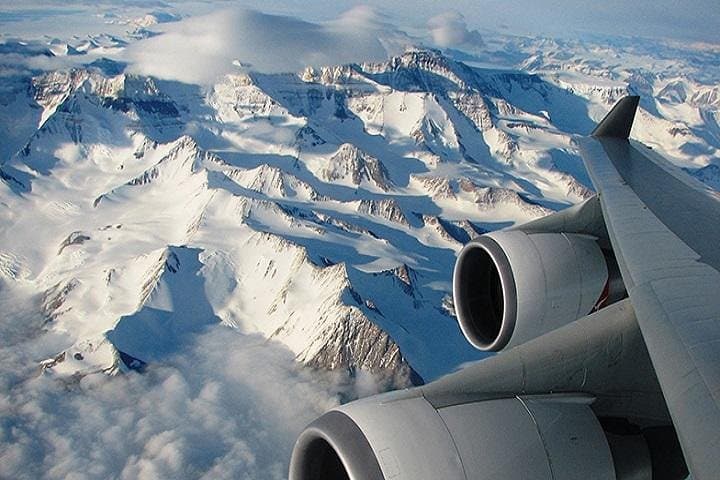
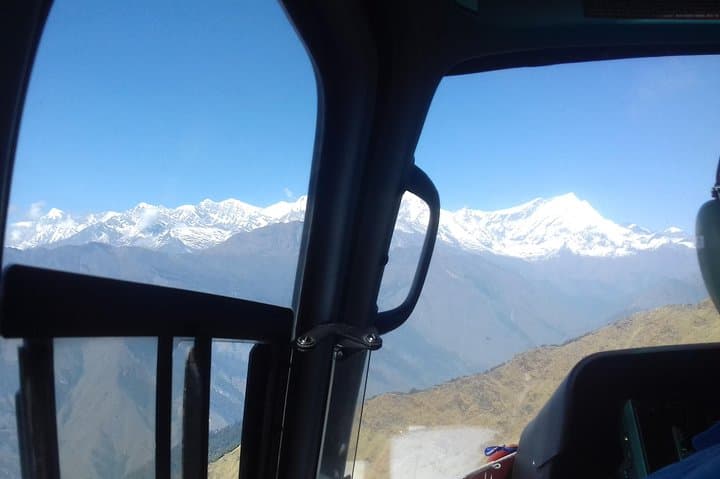
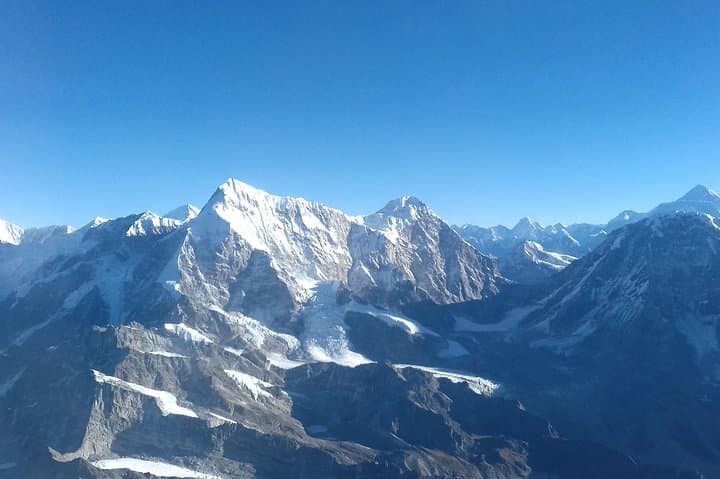
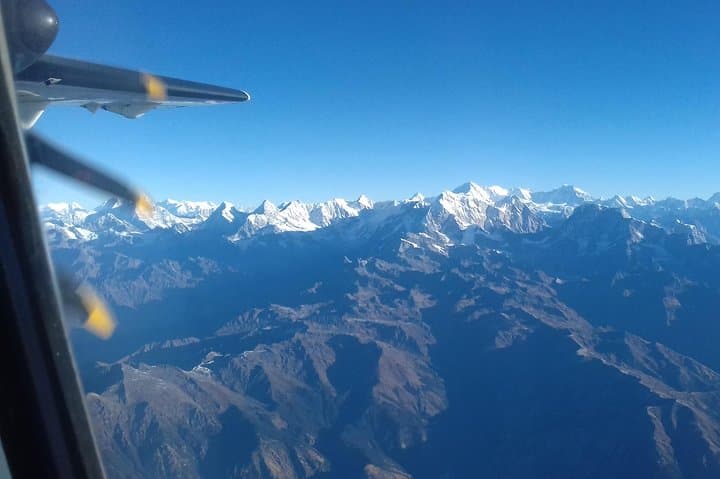
Before sunrise the city still sleeps and the runway light spills into a cold, clear sky. You board a small turboprop and the plane lifts, the valley falling away as the Himalaya begin to push themselves into view—jagged white ridges cutting across the morning. Peaks that day-to-day maps flatten into monuments: Everest, Lhotse, Makalu and, on exceptionally clear days, distant Kanchenjunga.
Before sunrise the city still sleeps and the runway light spills into a cold, clear sky. You board a small turboprop and the plane lifts, the valley falling away as the Himalaya begin to push themselves into view—jagged white ridges cutting across the morning. Peaks that day-to-day maps flatten into monuments: Everest, Lhotse, Makalu and, on exceptionally clear days, distant Kanchenjunga.
Commercial mountain flights grew as a practical alternative for travelers who cannot trek to the high country. Geologically the Himalaya are young—Indian Plate colliding with Eurasia—so the range still rises and exposes serrated glaciers and deep cirques that the flight exposes in camera-ready detail. Culturally, the flight crosses territory inhabited by Sherpa and Tamang communities; from above you can spot clustered villages, terraced lower valleys and high gompas clinging to ridges.
Practically, expect a 60–90 minute airborne window for peak viewing within a two-hour tour, with early-morning departures dominating the schedule because stable air and clear light favor mountain visibility. Monsoon months (June–July) and poor weather can ground flights; operators often allow refunds or rescheduling for low visibility. Bring a camera with a fast shutter, a warm midlayer, and your passport for airline check-in. Window seats matter—request one when you book—and keep expectations realistic: clouds, haze, or wind can limit views even on otherwise fine days.
This flight is an efficient, low-effort way to meet the Himalaya up close—brief but unforgettable.