THE ADVENTURE COLLECTIVE® · Independent discovery and booking for outdoor travel

A compact Himalayan trek that reaches Tengboche Monastery for sweeping, close-up views of Everest and neighboring giants. Ideal for travelers short on time who still want a genuine high-altitude experience with Sherpa culture and tea-house nights.
A compact Himalayan trek that reaches Tengboche Monastery for sweeping, close-up views of Everest and neighboring giants. Ideal for travelers short on time who still want a genuine high-altitude experience with Sherpa culture and tea-house nights.
You step out of a thin-air dawn—first in Kathmandu’s noise, then later from the tiny plane into Lukla’s high, wind-bitten apron—and the mountains begin to arrange themselves.
Verified experiences and guided adventures in the surrounding area.
You step out of a thin-air dawn—first in Kathmandu’s noise, then later from the tiny plane into Lukla’s high, wind-bitten apron—and the mountains begin to arrange themselves.
The Everest Panorama Trek pushes up through rhododendron and birch, over suspension bridges and switchbacks, to Tengboche Monastery at 3,860 m where Everest, Lhotse, Ama Dablam and Thamserku crowd the horizon. The trail moves from cultivated Sherpa villages into open alpine slopes; the air thins and the peaks seem to lean in, daring you to keep going.
Geology here is the recent business of continents colliding: folded rocks and sharp ridgelines carved by glaciers and the Himalayan uplift. Culturally, Tengboche is a focal point of Sherpa Buddhism—the monastery (re-established in the 20th century after a fire) anchors festivals, prayer flags and daily butter-lamp rhythms that hikers witness firsthand.
Practical guidance matters: the walk to Tengboche from Lukla is compact—roughly 30–50 km of trail round-trip depending on itinerary—with cumulative elevation gain near 1,000 m from Lukla and shorter climbs day-to-day. Expect uneven stone steps, stream crossings and tea-house nights; acclimatize with a rest day in Namche Bazaar and monitor for altitude signs.
Timing your visit in spring (March–May) or autumn (September–November) yields the clearest vistas; winter is cold and quiet, monsoon brings heavy cloud. Carry layers, a water-treatment method, and cash for teahouses; permits (TIMS and Sagarmatha National Park) are required. For a short high-altitude experience that still delivers Everest up-close, this trek balances accessibility with mountain immersion.
moderate.
9–11 days.
Moderate fitness with prior day-hiking experience and good cardiovascular conditioning; able to walk 5–7 hours on uneven terrain daily.
Typical itineraries run 9–11 days including Kathmandu and Lukla flights; the high-trek portion to Tengboche is compact—several days of walking with tea-house overnight stops.
Yes—TIMS and a Sagarmatha National Park permit are required for treks in the Everest region and are usually arranged before flying to Lukla.
Spring (March–May) and autumn (September–November) offer the most stable weather and clear mountain views; monsoon brings clouds and winter is cold with limited services.
The route is non-technical but reaches high altitude; proper acclimatization and awareness of altitude sickness symptoms are essential.
Tengboche Monastery (Thyangboche) was rebuilt in the early 20th century and serves as a regional spiritual center for Sherpa Buddhism and Mani Rimdu festivals.
The trail passes through Sagarmatha National Park; stick to marked trails, pack out waste where possible and support local teahouses to keep tourism benefits local.
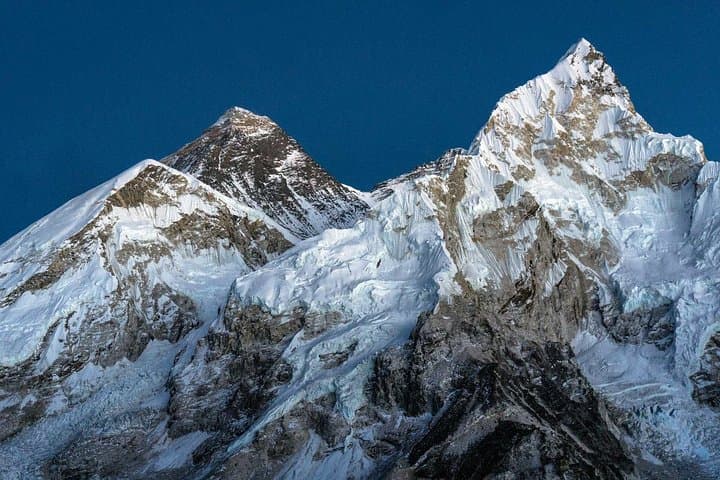
You step out of a thin-air dawn—first in Kathmandu’s noise, then later from the tiny plane into Lukla’s high, wind-bitten apron—and the mountains begin to arrange themselves.
You step out of a thin-air dawn—first in Kathmandu’s noise, then later from the tiny plane into Lukla’s high, wind-bitten apron—and the mountains begin to arrange themselves.
The Everest Panorama Trek pushes up through rhododendron and birch, over suspension bridges and switchbacks, to Tengboche Monastery at 3,860 m where Everest, Lhotse, Ama Dablam and Thamserku crowd the horizon. The trail moves from cultivated Sherpa villages into open alpine slopes; the air thins and the peaks seem to lean in, daring you to keep going.
Geology here is the recent business of continents colliding: folded rocks and sharp ridgelines carved by glaciers and the Himalayan uplift. Culturally, Tengboche is a focal point of Sherpa Buddhism—the monastery (re-established in the 20th century after a fire) anchors festivals, prayer flags and daily butter-lamp rhythms that hikers witness firsthand.
Practical guidance matters: the walk to Tengboche from Lukla is compact—roughly 30–50 km of trail round-trip depending on itinerary—with cumulative elevation gain near 1,000 m from Lukla and shorter climbs day-to-day. Expect uneven stone steps, stream crossings and tea-house nights; acclimatize with a rest day in Namche Bazaar and monitor for altitude signs.
Timing your visit in spring (March–May) or autumn (September–November) yields the clearest vistas; winter is cold and quiet, monsoon brings heavy cloud. Carry layers, a water-treatment method, and cash for teahouses; permits (TIMS and Sagarmatha National Park) are required. For a short high-altitude experience that still delivers Everest up-close, this trek balances accessibility with mountain immersion.