THE ADVENTURE COLLECTIVE® · Independent discovery and booking for outdoor travel

A concise 7-day route into the Khumbu that delivers high Himalayan views without the Base Camp slog. Fly to Lukla, trek to Namche and Syangboche, and return to Kathmandu with panoramic Everest sightings.
A concise 7-day route into the Khumbu that delivers high Himalayan views without the Base Camp slog. Fly to Lukla, trek to Namche and Syangboche, and return to Kathmandu with panoramic Everest sightings.
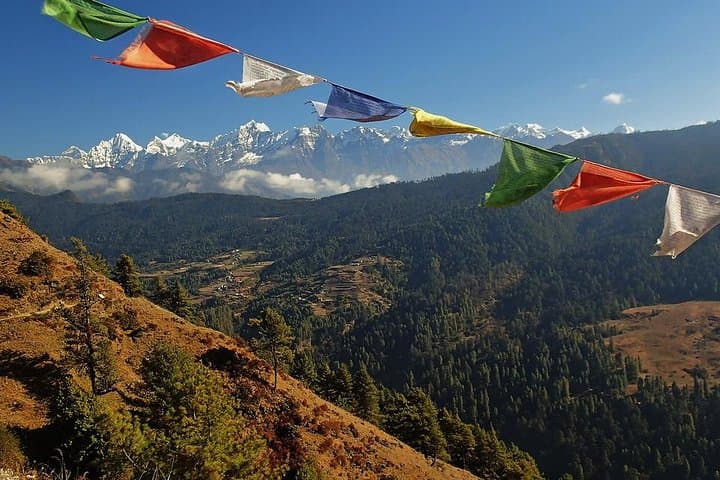
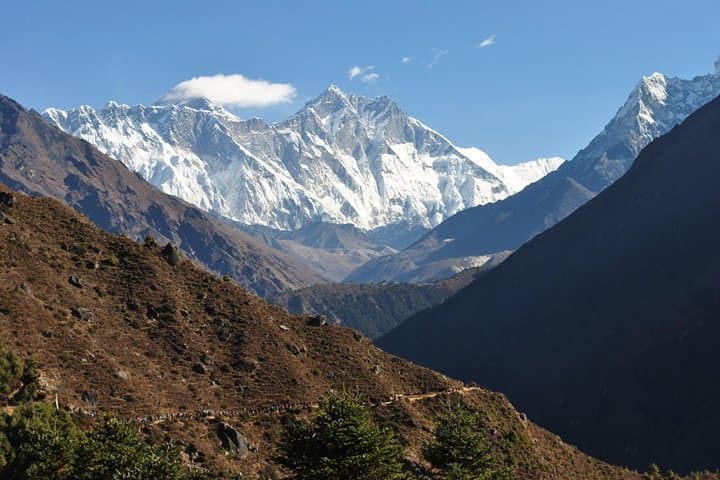
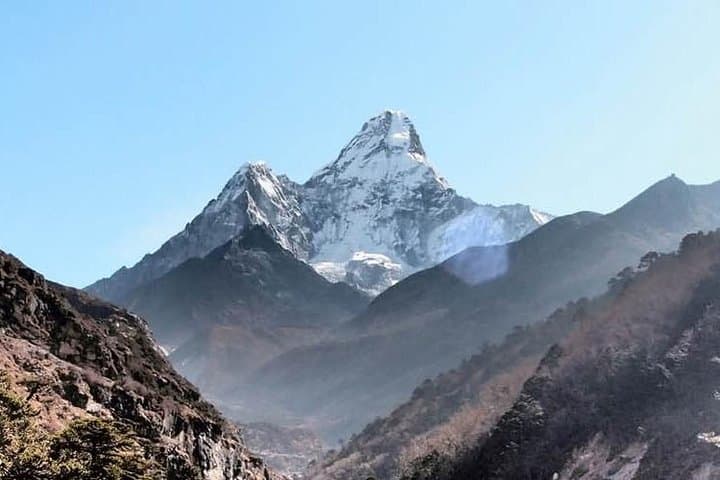
You step off the small plane at Lukla and the Himalayan air exhales—thin, cold, clear. The trail follows the Dudh Koshi, threading through pine and rhododendron, climbing to Sherpa villages where prayer flags snap like wind-driven punctuation. By the time you crest Syangboche, Everest herself fills the horizon, a white shoulder rising above the ridgelines.
Verified experiences and guided adventures in the surrounding area.
Operated by Adventure Vision Treks and Travels · Namche Bazaar, Province No. 1
You step off the small plane at Lukla and the Himalayan air exhales—thin, cold, clear. The trail follows the Dudh Koshi, threading through pine and rhododendron, climbing to Sherpa villages where prayer flags snap like wind-driven punctuation. By the time you crest Syangboche, Everest herself fills the horizon, a white shoulder rising above the ridgelines.
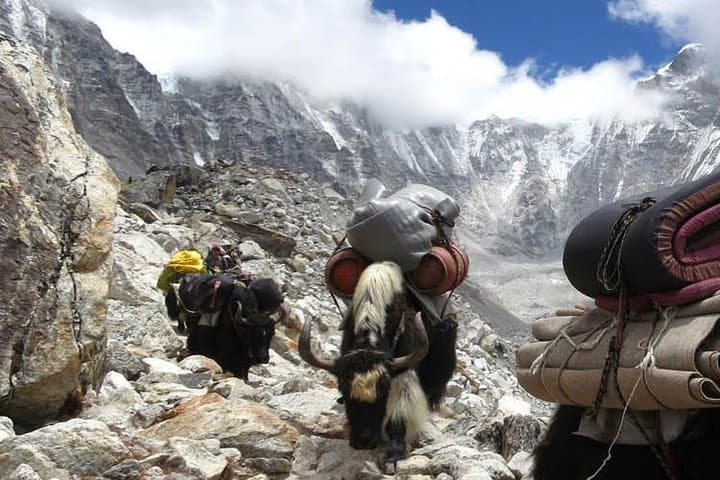
The Khumbu has long been shaped by glacial action and human movement. Sagarmatha (Everest) National Park, created in 1976, protects valleys carved by ice and trails hardened by yak and boot. Sherpa settlements—Khumjung, Namche Bazaar—reflect Tibetan Buddhist culture: mani stones, chortens and monasteries that mark both faith and centuries of mountain trade.
Geology is visible at every switchback: grey schist and moraine, glaciers that once flowed farther into the valleys. The culture is immediate—tea houses serving noodle soup and butter tea, local guides who double as storytellers and altitude sentinels.
Practical guide: this itinerary is short (seven days) and designed for acclimatization with moderate daily walking (3–6 hours). Expect rocky, sometimes muddy terrain with steady climbs to 3,780 m at Syangboche; rainfall and snow are possible depending on season. Flights to Lukla are weather-dependent—build buffer days. Carry layers, a good pair of trekking boots, and a hydration system; use trekking poles for descents. Permits (Sagarmatha National Park and TIMS) are required and usually handled by your operator. Respect local customs—ask before photographing people—and pack out waste where possible. The trek gives quick, sustained access to high Himalayan views without the longer commitment of Everest Base Camp, making it a practical, scenic introduction to the Khumbu.
moderate.
7 days.
Moderate cardio fitness; able to hike 3–6 hours daily at altitude
Yes—Sagarmatha National Park entry and a TIMS permit are required; reputable operators typically arrange these.
Weather in the Khumbu is changeable—flights are commonly delayed; plan buffer days and be flexible.
No prior high-altitude experience is necessary, but a moderate fitness level and acclimatization awareness are important.
Spring (March–May) and autumn (Sept–Nov) offer the most stable weather and best visibility for Himalayan panoramas.
The Khumbu developed as a trading and pastoral corridor; Sherpa culture and mountaineering history are intertwined here, notably after the 1953 Everest ascent.
Sagarmatha National Park regulations and permit fees support conservation; travelers should minimize waste and respect local water and fuel limitations.
Adventure Vision Treks and Travels operates guided outdoor trips and adventures with an emphasis on safety, stewardship, and memorable experiences.
You step off the small plane at Lukla and the Himalayan air exhales—thin, cold, clear. The trail follows the Dudh Koshi, threading through pine and rhododendron, climbing to Sherpa villages where prayer flags snap like wind-driven punctuation. By the time you crest Syangboche, Everest herself fills the horizon, a white shoulder rising above the ridgelines.
You step off the small plane at Lukla and the Himalayan air exhales—thin, cold, clear. The trail follows the Dudh Koshi, threading through pine and rhododendron, climbing to Sherpa villages where prayer flags snap like wind-driven punctuation. By the time you crest Syangboche, Everest herself fills the horizon, a white shoulder rising above the ridgelines.
The Khumbu has long been shaped by glacial action and human movement. Sagarmatha (Everest) National Park, created in 1976, protects valleys carved by ice and trails hardened by yak and boot. Sherpa settlements—Khumjung, Namche Bazaar—reflect Tibetan Buddhist culture: mani stones, chortens and monasteries that mark both faith and centuries of mountain trade.
Geology is visible at every switchback: grey schist and moraine, glaciers that once flowed farther into the valleys. The culture is immediate—tea houses serving noodle soup and butter tea, local guides who double as storytellers and altitude sentinels.
Practical guide: this itinerary is short (seven days) and designed for acclimatization with moderate daily walking (3–6 hours). Expect rocky, sometimes muddy terrain with steady climbs to 3,780 m at Syangboche; rainfall and snow are possible depending on season. Flights to Lukla are weather-dependent—build buffer days. Carry layers, a good pair of trekking boots, and a hydration system; use trekking poles for descents. Permits (Sagarmatha National Park and TIMS) are required and usually handled by your operator. Respect local customs—ask before photographing people—and pack out waste where possible. The trek gives quick, sustained access to high Himalayan views without the longer commitment of Everest Base Camp, making it a practical, scenic introduction to the Khumbu.