THE ADVENTURE COLLECTIVE® · Independent discovery and booking for outdoor travel

A high-elevation helicopter excursion from Kathmandu that delivers front-row views of Everest, Ama Dablam and the Khumbu glaciers with short stops at Lukla and the Everest View Hotel. Ideal for travelers who want dramatic mountain perspective without multi-day trekking.
A high-elevation helicopter excursion from Kathmandu that delivers front-row views of Everest, Ama Dablam and the Khumbu glaciers with short stops at Lukla and the Everest View Hotel. Ideal for travelers who want dramatic mountain perspective without multi-day trekking.
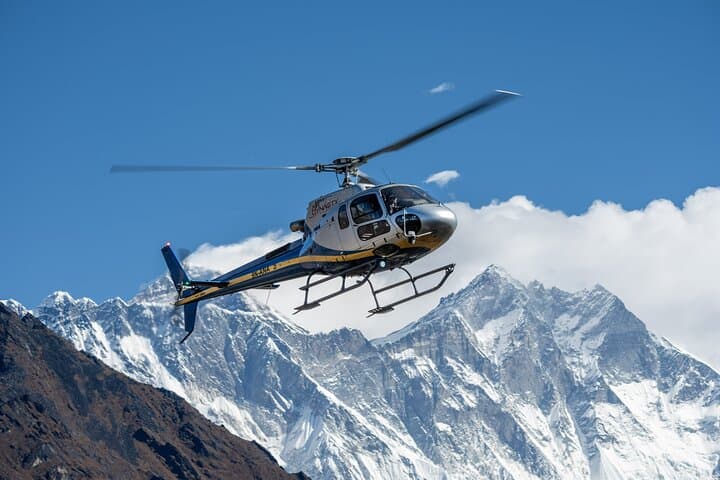
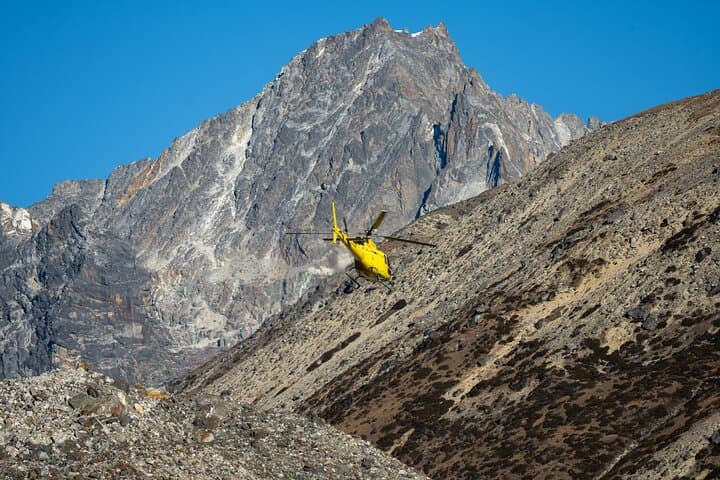
The helicopter lifts off from the bustle of Thamel and, within minutes, Kathmandu Valley shrinks into patchwork fields and stupas. Snowfields come forward like a white sea; ridgelines cut across the sky and the Khumbu glaciers dare you to follow their crevassed tracks. Pilots steer for Lukla’s dramatic strip, circle Khumjung’s clustered stone houses and pause above the high ridges that frame Everest.
Verified experiences and guided adventures in the surrounding area.
Operated by Adventure Wonders · Kathmandu, Bagmati Province
The helicopter lifts off from the bustle of Thamel and, within minutes, Kathmandu Valley shrinks into patchwork fields and stupas. Snowfields come forward like a white sea; ridgelines cut across the sky and the Khumbu glaciers dare you to follow their crevassed tracks. Pilots steer for Lukla’s dramatic strip, circle Khumjung’s clustered stone houses and pause above the high ridges that frame Everest.
This route threads modern Nepali culture with mountaineering history — Lukla is the gateway used by generations of Sherpa-driven expeditions, and the peaks you pass carry the legacy of the 1953 Everest ascent and decades of climbing routes etched in ice and rock. Geologically, the flight traces the collision zone between the Indian and Eurasian plates: folded, uplifted rock beneath colossal ice, with sharp arêtes and hanging glaciers that feed the Khumbu Icefall.
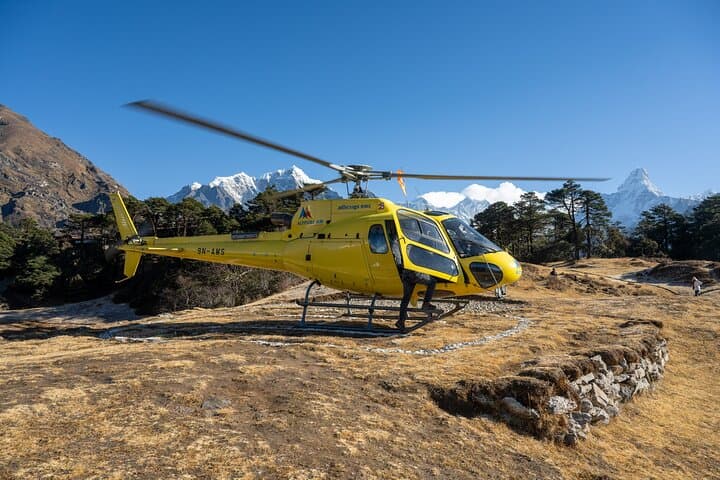
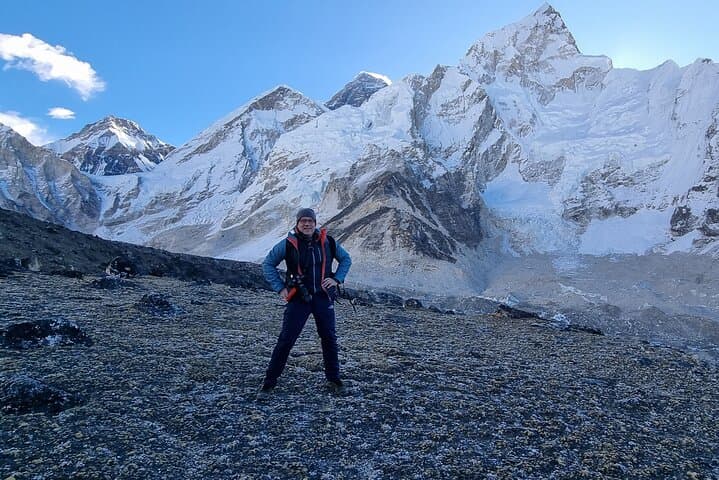
Expect close-up views of Ama Dablam, Lhotse, Nuptse and, on a clear day, the summit of Everest itself at 8,848 m. Stops typically include Lukla for a refuel and the Everest View Hotel (around 3,880 m) for a short breakfast and panorama.
Practicalities: the full excursion runs about 4–5 hours door-to-door. Bring layered clothing, sun protection, and your passport—operators require passenger details and may request weights. Flights are weather dependent; mornings offer the clearest light and calmer air. For responsible travel, follow local guidance, respect Sherpa communities on the ground, and consider carbon offset options for helicopter emissions.
easy.
4–5 hours.
Suitable for most fitness levels; requires only the ability to sit for up to a few hours and manage short walks during landings.
The full experience, including transfers and brief stops, runs about 4–5 hours; actual flight time is shorter depending on weather and routing.
Most scenic flights overfly the higher ice and landing zones; common landings are at Lukla and the Everest View Hotel rather than the technical Everest Base Camp itself.
Flights are marked as wheelchair accessible for boarding and transport, but check with the operator about specific mobility needs and assistance at remote landing sites.
Pre-monsoon (March–May) and post-monsoon (late September–November) offer the clearest skies and more stable mountain weather for aerial visibility.
The Khumbu region became globally known after the 1953 Everest ascent; Lukla developed into the primary access airstrip for expeditions and trade with high-altitude Sherpa communities.
The Khumbu sees heavy seasonal tourism; visitors are urged to respect local waste-management rules, support certified local operators, and consider carbon offsets to mitigate helicopter emissions.
Adventure Wonders operates guided outdoor trips and adventures with an emphasis on safety, stewardship, and memorable experiences.
The helicopter lifts off from the bustle of Thamel and, within minutes, Kathmandu Valley shrinks into patchwork fields and stupas. Snowfields come forward like a white sea; ridgelines cut across the sky and the Khumbu glaciers dare you to follow their crevassed tracks. Pilots steer for Lukla’s dramatic strip, circle Khumjung’s clustered stone houses and pause above the high ridges that frame Everest.
The helicopter lifts off from the bustle of Thamel and, within minutes, Kathmandu Valley shrinks into patchwork fields and stupas. Snowfields come forward like a white sea; ridgelines cut across the sky and the Khumbu glaciers dare you to follow their crevassed tracks. Pilots steer for Lukla’s dramatic strip, circle Khumjung’s clustered stone houses and pause above the high ridges that frame Everest.
This route threads modern Nepali culture with mountaineering history — Lukla is the gateway used by generations of Sherpa-driven expeditions, and the peaks you pass carry the legacy of the 1953 Everest ascent and decades of climbing routes etched in ice and rock. Geologically, the flight traces the collision zone between the Indian and Eurasian plates: folded, uplifted rock beneath colossal ice, with sharp arêtes and hanging glaciers that feed the Khumbu Icefall.
Expect close-up views of Ama Dablam, Lhotse, Nuptse and, on a clear day, the summit of Everest itself at 8,848 m. Stops typically include Lukla for a refuel and the Everest View Hotel (around 3,880 m) for a short breakfast and panorama.
Practicalities: the full excursion runs about 4–5 hours door-to-door. Bring layered clothing, sun protection, and your passport—operators require passenger details and may request weights. Flights are weather dependent; mornings offer the clearest light and calmer air. For responsible travel, follow local guidance, respect Sherpa communities on the ground, and consider carbon offset options for helicopter emissions.