THE ADVENTURE COLLECTIVE® · Independent discovery and booking for outdoor travel

Take a helicopter from Kathmandu across the high Himalaya to Everest Base Camp, stopping at Lukla, Khumjung and the Everest View Hotel for close-up views. This four- to five-hour flight offers glacier panoramas, Sherpa villages, and an optional high-altitude breakfast.
Take a helicopter from Kathmandu across the high Himalaya to Everest Base Camp, stopping at Lukla, Khumjung and the Everest View Hotel for close-up views. This four- to five-hour flight offers glacier panoramas, Sherpa villages, and an optional high-altitude breakfast.
The rotor thumps, Kathmandu shrinks, and within minutes the valley floor gives way to a serrated skyline. From the helicopter you move through a stitch of clouds and wind, glaciers unrolling below like slow rivers daring you to come closer. The aircraft arcs toward Lukla’s short runway, then climbs again toward Khumjung and the broad, ice-scratched bowl of Everest’s approaches.
Verified experiences and guided adventures in the surrounding area.
Operated by Adventure Wonders · Kathmandu, Bagmati Province
The rotor thumps, Kathmandu shrinks, and within minutes the valley floor gives way to a serrated skyline. From the helicopter you move through a stitch of clouds and wind, glaciers unrolling below like slow rivers daring you to come closer. The aircraft arcs toward Lukla’s short runway, then climbs again toward Khumjung and the broad, ice-scratched bowl of Everest’s approaches.
This flight follows routes used by mountaineers and Sherpa communities for decades. Geologically the Himalaya are young and steep—tectonic uplift still pushing peaks skyward—so the views include sharply incised ridgelines, hanging glaciers, and moraine fields that map decades of glacial retreat. Culturally you’ll pass Sherpa villages and gompas that sit at high-altitude crossroads for Everest expeditions; a short breakfast stop at the Everest View Hotel ties the aerial spectacle to daily life in the Khumbu.
Practical guidance: aim for a clear-weather morning—visibility drops with afternoon thermals. Even though the tour is short (4–5 hours round trip), altitude at some stops approaches 4,300–5,000 m; plan for brief exposure and carry medication if you’re sensitive. Cameras with a polarizer and fast shutter will best capture the sharp contrasts of snow and rock. Expect group seating (5–6 passengers) and straightforward logistics: pickup in Thamel, a pre-flight briefing, and strict luggage/weight limits.
The experience is part sightseeing, part access to places most travelers won’t reach on foot. It’s an efficient, high-adrenaline way to read Everest’s lines—its ridges, camps, and glaciers—from above while touching the communities that support high-altitude climbing.
easy.
4–5 hours.
Suitable for most fitness levels, but expect short exposure to high altitude; basic mobility required for boarding and brief walks.
Typical durations are 4–5 hours door-to-door from Kathmandu, including flight time, brief landing stops, and return transfer.
Yes—this tour is suitable for most people, but some stops exceed 4,000 m; those with severe heart or respiratory conditions should check with a doctor.
Helicopter operators have strict weight and small-baggage limits—expect to bring only a small daypack; confirm exact allowances when booking.
Flights are weather-dependent; operators will reschedule or refund if conditions make flying unsafe—book with flexible timing for the best chance of clear views.
The Khumbu has long been inhabited by Sherpa communities that served as high-altitude guides and logistics for early Everest expeditions; the area’s modern trekking infrastructure grew alongside mountaineering since the mid-20th century.
Flights concentrate views in short windows but increase carbon footprint—choose operators supporting local conservation or community programs, and minimize additional flights to reduce impact.
Adventure Wonders operates guided outdoor trips and adventures with an emphasis on safety, stewardship, and memorable experiences.
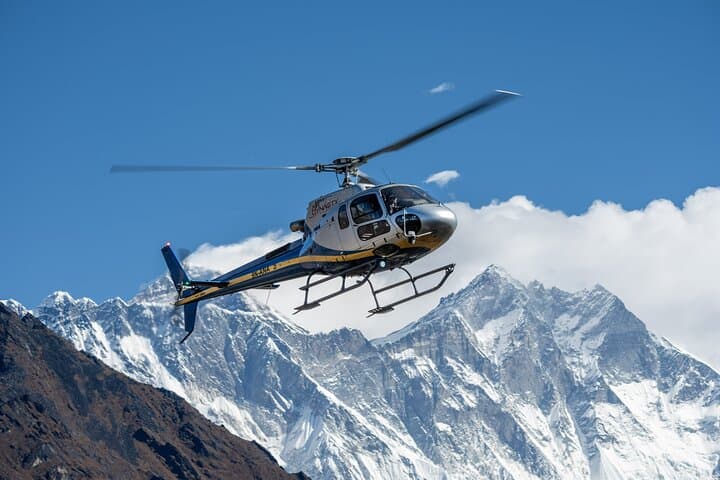
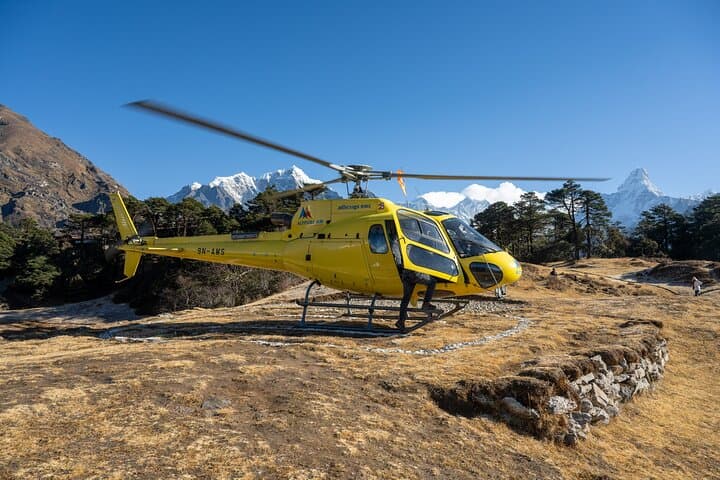
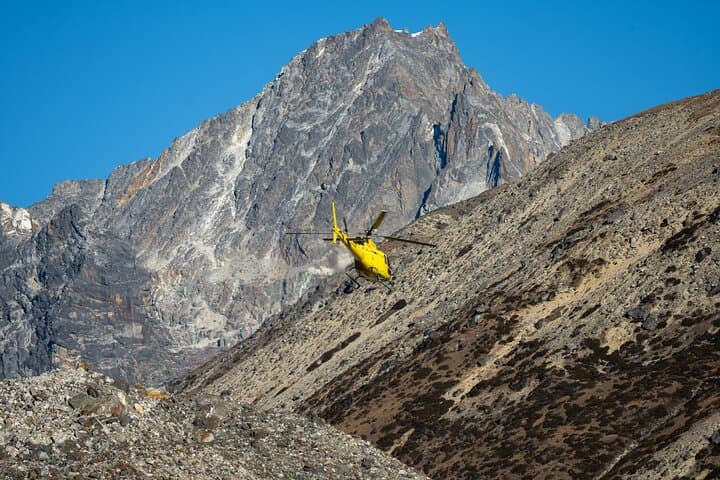
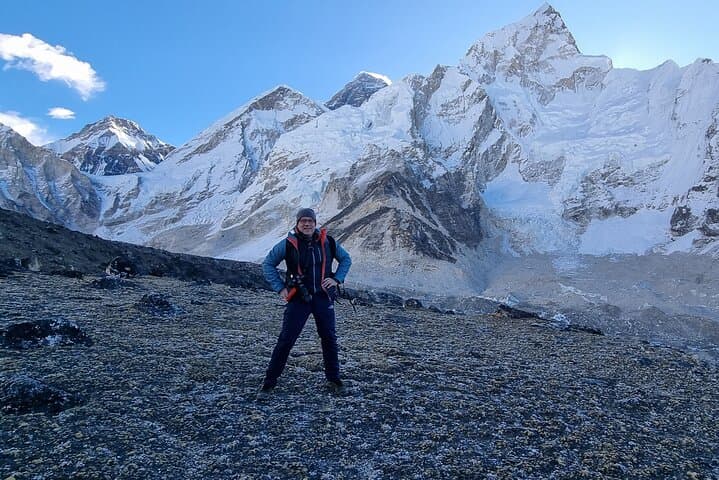
The rotor thumps, Kathmandu shrinks, and within minutes the valley floor gives way to a serrated skyline. From the helicopter you move through a stitch of clouds and wind, glaciers unrolling below like slow rivers daring you to come closer. The aircraft arcs toward Lukla’s short runway, then climbs again toward Khumjung and the broad, ice-scratched bowl of Everest’s approaches.
The rotor thumps, Kathmandu shrinks, and within minutes the valley floor gives way to a serrated skyline. From the helicopter you move through a stitch of clouds and wind, glaciers unrolling below like slow rivers daring you to come closer. The aircraft arcs toward Lukla’s short runway, then climbs again toward Khumjung and the broad, ice-scratched bowl of Everest’s approaches.
This flight follows routes used by mountaineers and Sherpa communities for decades. Geologically the Himalaya are young and steep—tectonic uplift still pushing peaks skyward—so the views include sharply incised ridgelines, hanging glaciers, and moraine fields that map decades of glacial retreat. Culturally you’ll pass Sherpa villages and gompas that sit at high-altitude crossroads for Everest expeditions; a short breakfast stop at the Everest View Hotel ties the aerial spectacle to daily life in the Khumbu.
Practical guidance: aim for a clear-weather morning—visibility drops with afternoon thermals. Even though the tour is short (4–5 hours round trip), altitude at some stops approaches 4,300–5,000 m; plan for brief exposure and carry medication if you’re sensitive. Cameras with a polarizer and fast shutter will best capture the sharp contrasts of snow and rock. Expect group seating (5–6 passengers) and straightforward logistics: pickup in Thamel, a pre-flight briefing, and strict luggage/weight limits.
The experience is part sightseeing, part access to places most travelers won’t reach on foot. It’s an efficient, high-adrenaline way to read Everest’s lines—its ridges, camps, and glaciers—from above while touching the communities that support high-altitude climbing.