THE ADVENTURE COLLECTIVE® · Independent discovery and booking for outdoor travel

See Mount Everest and Nepal’s highest peaks on a short, guaranteed-window seat mountain flight from Kathmandu. This efficient day tour packs hours of Himalayan perspective into a 2–3 hour door-to-door experience.
See Mount Everest and Nepal’s highest peaks on a short, guaranteed-window seat mountain flight from Kathmandu. This efficient day tour packs hours of Himalayan perspective into a 2–3 hour door-to-door experience.
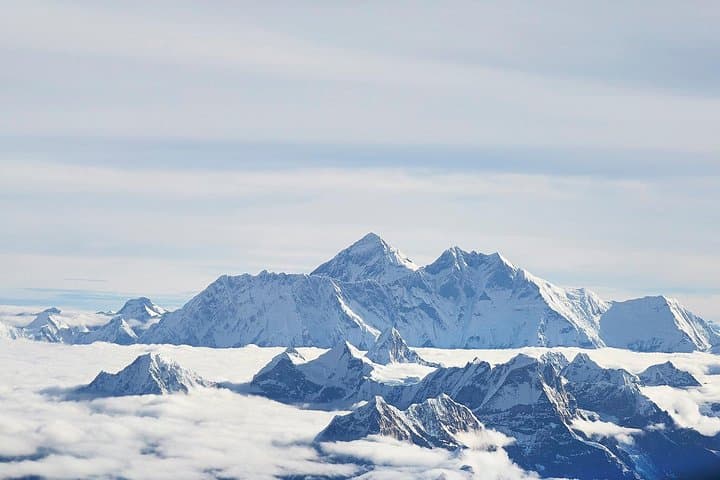
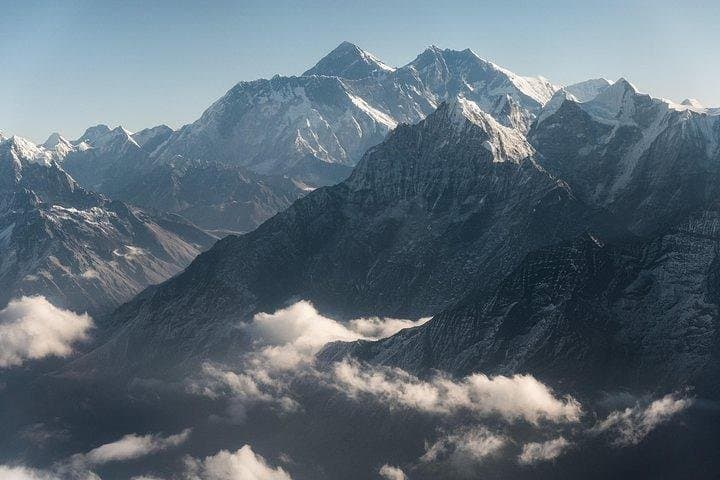
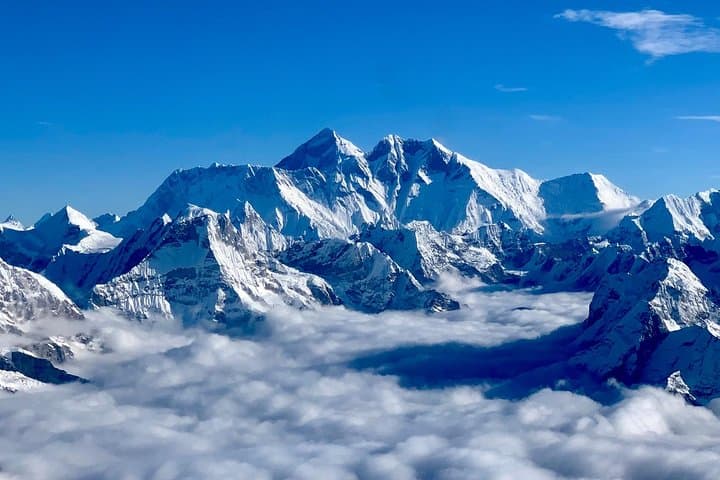
The plane lifts from Tribhuvan International before dawn and Kathmandu shrinks into a scatter of lights. Through the guaranteed window seat, ridgelines sharpen and the first sun slashes the high snow — Everest rises not as a distant icon but as a raw, vertical presence that dares you to look closer.
Verified experiences and guided adventures in the surrounding area.
Operated by Altitude Himalaya · Kathmandu, Bagmati Province
The plane lifts from Tribhuvan International before dawn and Kathmandu shrinks into a scatter of lights. Through the guaranteed window seat, ridgelines sharpen and the first sun slashes the high snow — Everest rises not as a distant icon but as a raw, vertical presence that dares you to look closer.
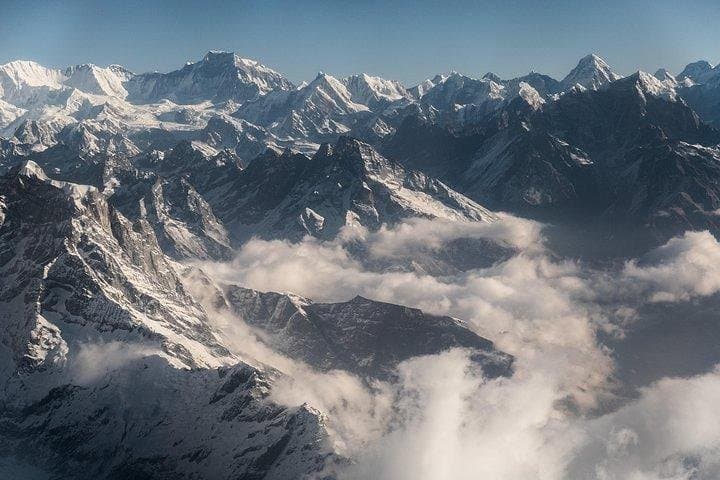
This one-hour mountain flight traces the crest of the Nepalese Himalaya, putting Everest (8,848 m), Lhotse, Makalu, Cho Oyu and Kanchenjunga into dramatic perspective. Geologically these peaks are young, folded thrusts of continental collision; culturally they carry names — Sagarmāthā and Chomolungma — tied to Sherpa identity and the history of mountaineering since Hillary and Tenzing’s 1953 ascent.
From the aircraft you’ll see more than summits: glacial tongues, crevassed bowls, and high ridges that channel wind and weather. The light changes fast; morning flights offer the best clarity before cloud builds. Local pilots and dispatch teams monitor conditions closely — cancellations for poor visibility are common and sensible.
Practical guidance: allow 2–3 hours for transfers and briefing around a roughly 60–70 minute airborne window. Bring a fully charged camera, polarized sunglasses, and a warm mid-layer — the cabin can feel cold despite being at normal cruising altitude. Carry your passport for airport pickup and expect minimal walking; the tour is accessible for most fitness levels. Be ready for sudden changes in light and a compact, thrilling view of the world’s highest peaks — an efficient, unforgettable way to meet Everest without a single step up the mountain.
easy.
2–3 hours.
Minimal walking and no altitude exertion required—suitable for most ages and fitness levels.
The airborne portion is typically about 60–70 minutes, with the whole excursion including transfers and briefings taking roughly 2–3 hours.
Yes—operators on this tour guarantee a window seat for each passenger to maximize viewing and photography opportunities.
Flights may be canceled or rescheduled for safety and visibility; most operators offer full refunds or rebooking if the flight is canceled due to weather.
No acclimatization is required since the flight does not land at high altitude, but carry any routine travel documents and follow airline health guidance.
Everest was first climbed in 1953 by Edmund Hillary and Tenzing Norgay; the mountain is sacred to local Sherpa communities who call it Chomolungma or Sagarmāthā.
Helicopter and fixed-wing tourism adds carbon and contributes to crowding; choose operators who support local conservation funds and practice responsible tourism to minimize impact.
Altitude Himalaya operates guided outdoor trips and adventures with an emphasis on safety, stewardship, and memorable experiences.
The plane lifts from Tribhuvan International before dawn and Kathmandu shrinks into a scatter of lights. Through the guaranteed window seat, ridgelines sharpen and the first sun slashes the high snow — Everest rises not as a distant icon but as a raw, vertical presence that dares you to look closer.
The plane lifts from Tribhuvan International before dawn and Kathmandu shrinks into a scatter of lights. Through the guaranteed window seat, ridgelines sharpen and the first sun slashes the high snow — Everest rises not as a distant icon but as a raw, vertical presence that dares you to look closer.
This one-hour mountain flight traces the crest of the Nepalese Himalaya, putting Everest (8,848 m), Lhotse, Makalu, Cho Oyu and Kanchenjunga into dramatic perspective. Geologically these peaks are young, folded thrusts of continental collision; culturally they carry names — Sagarmāthā and Chomolungma — tied to Sherpa identity and the history of mountaineering since Hillary and Tenzing’s 1953 ascent.
From the aircraft you’ll see more than summits: glacial tongues, crevassed bowls, and high ridges that channel wind and weather. The light changes fast; morning flights offer the best clarity before cloud builds. Local pilots and dispatch teams monitor conditions closely — cancellations for poor visibility are common and sensible.
Practical guidance: allow 2–3 hours for transfers and briefing around a roughly 60–70 minute airborne window. Bring a fully charged camera, polarized sunglasses, and a warm mid-layer — the cabin can feel cold despite being at normal cruising altitude. Carry your passport for airport pickup and expect minimal walking; the tour is accessible for most fitness levels. Be ready for sudden changes in light and a compact, thrilling view of the world’s highest peaks — an efficient, unforgettable way to meet Everest without a single step up the mountain.