THE ADVENTURE COLLECTIVE® · Independent discovery and booking for outdoor travel

Take an early-morning scenic flight from Kathmandu for direct, up-close views of Everest and the surrounding Himalayan giants. This 2-hour experience bundles short air time with sweeping panoramas, clear-weather dependency, and straightforward logistics.
Take an early-morning scenic flight from Kathmandu for direct, up-close views of Everest and the surrounding Himalayan giants. This 2-hour experience bundles short air time with sweeping panoramas, clear-weather dependency, and straightforward logistics.
Dawn light sharpens the ridgelines as the aircraft lifts off from Kathmandu, the city shrinking beneath a lattice of rivers and terraced fields. Within an hour the lowlands fall away and the Himalaya asserts itself—knife-edged peaks and glaciers cutting toward the sky like ancient architecture. From the window the massif approaches, Everest rising above its neighbors with quiet insistence; the wind and snow seem to have their own agenda, pushing the horizon into a living map.
Verified experiences and guided adventures in the surrounding area.
Operated by Nepal Horizon Treks and Expedition Pvt. Ltd. · Kathmandu, Bagmati Province
Dawn light sharpens the ridgelines as the aircraft lifts off from Kathmandu, the city shrinking beneath a lattice of rivers and terraced fields. Within an hour the lowlands fall away and the Himalaya asserts itself—knife-edged peaks and glaciers cutting toward the sky like ancient architecture. From the window the massif approaches, Everest rising above its neighbors with quiet insistence; the wind and snow seem to have their own agenda, pushing the horizon into a living map.
This hour-long mountain flight is as much about geology as spectacle. The Himalaya are a young, rising range formed by the ongoing collision of the Indian and Eurasian plates; thermal currents and sharp elevation gradients create the dramatic weather that governs visibility. Culturally, these peaks are woven into Nepali and Tibetan life—sacred landmarks for Sherpa communities and focal points for centuries of pilgrimage and mountaineering history.
Travelers should expect a compact, early-morning outing: hotel pickup in Kathmandu, airport checks, then about 60–90 minutes aloft viewing Everest, Lhotse, Nuptse and other high summits before returning. Windows seats are prized; camera batteries drain fast in cold, high-altitude air. Visibility is best September–April, though clear winter mornings can be bitterly cold.
Practically, bring your passport, dress in warm layers, and arrive ready for quick security and a light aircraft cabin. Motion-sickness remedies and noise-cancelling headphones improve comfort. The flight delivers panoramic context you can’t get from the valley floor—a concise, efficient way to meet the world’s tallest peaks without climbing them.
easy.
2 hours.
No special fitness required; suitable for travelers in average health though those with serious heart or spinal issues should avoid.
The full experience including transfers is about two hours, with roughly 45–70 minutes of airborne time that passes along the Himalayan front.
Visibility depends on weather—September–April offer the best odds; clouds, haze or monsoon conditions can obscure the peaks and there are no guarantees.
The tour is rated easy and accessible for most ages, but those with serious cardiovascular or spinal conditions, and pregnant travelers, are advised against it.
Yes. A current valid passport is required at check-in; international visitors should also carry any relevant visas.
These flights trace a route over mountains that have drawn pilgrims, traders and climbers for centuries; modern scenic flights grew in popularity with the rise of aviation and tourism in Nepal in the late 20th century.
Operators follow strict flight corridors and altitude procedures to minimize disturbance; respect for mountain communities and controlled tourism are important for preserving fragile alpine ecosystems.
Nepal Horizon Treks and Expedition Pvt. Ltd. operates guided outdoor trips and adventures with an emphasis on safety, stewardship, and memorable experiences.
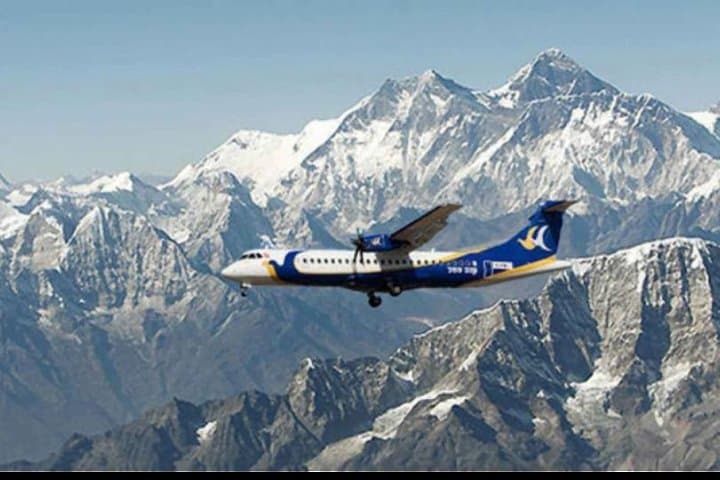
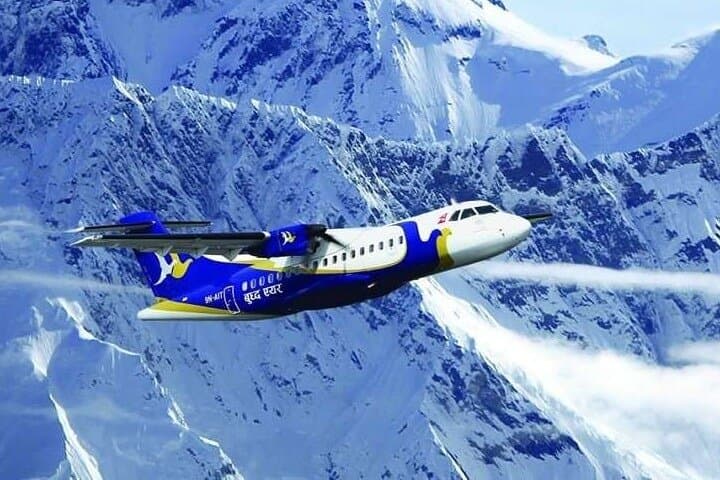
Dawn light sharpens the ridgelines as the aircraft lifts off from Kathmandu, the city shrinking beneath a lattice of rivers and terraced fields. Within an hour the lowlands fall away and the Himalaya asserts itself—knife-edged peaks and glaciers cutting toward the sky like ancient architecture. From the window the massif approaches, Everest rising above its neighbors with quiet insistence; the wind and snow seem to have their own agenda, pushing the horizon into a living map.
Dawn light sharpens the ridgelines as the aircraft lifts off from Kathmandu, the city shrinking beneath a lattice of rivers and terraced fields. Within an hour the lowlands fall away and the Himalaya asserts itself—knife-edged peaks and glaciers cutting toward the sky like ancient architecture. From the window the massif approaches, Everest rising above its neighbors with quiet insistence; the wind and snow seem to have their own agenda, pushing the horizon into a living map.
This hour-long mountain flight is as much about geology as spectacle. The Himalaya are a young, rising range formed by the ongoing collision of the Indian and Eurasian plates; thermal currents and sharp elevation gradients create the dramatic weather that governs visibility. Culturally, these peaks are woven into Nepali and Tibetan life—sacred landmarks for Sherpa communities and focal points for centuries of pilgrimage and mountaineering history.
Travelers should expect a compact, early-morning outing: hotel pickup in Kathmandu, airport checks, then about 60–90 minutes aloft viewing Everest, Lhotse, Nuptse and other high summits before returning. Windows seats are prized; camera batteries drain fast in cold, high-altitude air. Visibility is best September–April, though clear winter mornings can be bitterly cold.
Practically, bring your passport, dress in warm layers, and arrive ready for quick security and a light aircraft cabin. Motion-sickness remedies and noise-cancelling headphones improve comfort. The flight delivers panoramic context you can’t get from the valley floor—a concise, efficient way to meet the world’s tallest peaks without climbing them.