THE ADVENTURE COLLECTIVE® · Independent discovery and booking for outdoor travel

Fly from Kathmandu into the high Himalaya on a helicopter sightseeing tour that takes you over the Khumbu Glacier and up to Everest Base Camp. Short on time but big on perspective, this flight puts Everest and its neighboring giants in sharp relief — with practical notes on timing, weather, and what to bring.
Fly from Kathmandu into the high Himalaya on a helicopter sightseeing tour that takes you over the Khumbu Glacier and up to Everest Base Camp. Short on time but big on perspective, this flight puts Everest and its neighboring giants in sharp relief — with practical notes on timing, weather, and what to bring.
You lift from Kathmandu and the valley slips away — terraced fields shrinking, the city noise thinning until the Himalaya reasserts itself like an old, slow giant. The helicopter arcs toward sharp, ice-lined ridges; the Khumbu Glacier runs like a wound through the rock, and Everest crops up last, crowning the skyline as you hover above the high moraine.
Verified experiences and guided adventures in the surrounding area.
Operated by Recreation Holidays Pvt. Ltd. · Kathmandu, Bagmati Province
You lift from Kathmandu and the valley slips away — terraced fields shrinking, the city noise thinning until the Himalaya reasserts itself like an old, slow giant. The helicopter arcs toward sharp, ice-lined ridges; the Khumbu Glacier runs like a wound through the rock, and Everest crops up last, crowning the skyline as you hover above the high moraine.
The air here is high in stories: Sherpa trade routes, the 1953 first ascent by Edmund Hillary and Tenzing Norgay, and the decades of mountaineering that etched trails and camps into the slopes. Geologically the region is young and violent — uplifted limestone and metamorphic gneiss pushed skyward by the Indian plate — which is why peaks here rise so abruptly from deep valleys. Culturally, villages below carry a Buddhist rhythm; prayer flags and mani stones mark approaches to high passes.
Practically, the trip is an aerial overview more than a trek: expect 3–4 hours total including transfers, with a short landing or hover above the base camp depending on weather and permissions. Temperatures at landing can be bitterly cold even in summer; wind and rotor wash are part of the experience. Photography opportunities are exceptional — use a fast shutter and secure straps — and the pilot will usually circle for maximum views of Lhotse, Nuptse, Ama Dablam and the Khumbu Icefall.
Plan logistics in Kathmandu the day before, allow flexible timing for weather, and pack for rapid exposure to high-altitude cold. This flight lets you stand (briefly) at the edge of the world without days of trekking — a high-impact, low-footprint way to meet Everest.
easy.
3–4 hours.
Minimal fitness required — mostly sitting with brief on-ground exposure; able-bodied travelers only.
Total trip time from Kathmandu is typically 3–4 hours including transit; flight time to the Everest region is about one hour each way depending on routing.
Landing depends on weather, air traffic and permits; many flights hover for photos or land briefly at designated high-elevation sites near Base Camp.
The short exposure reduces risk, but some people feel lightheaded at extreme elevations; stay hydrated and inform the operator of any health issues.
Operators limit luggage to small day bags; infant seats may be available but check age and health restrictions before booking.
The Everest region has been traversed by Sherpa communities for centuries and entered worldwide mountaineering history after the 1953 Hillary–Tenzing ascent; Sagarmatha (Everest) National Park was later named a UNESCO World Heritage site.
This high alpine environment is vulnerable: fly responsibly, respect landing restrictions and park fees that support local conservation and waste management.
Recreation Holidays Pvt. Ltd. operates guided outdoor trips and adventures with an emphasis on safety, stewardship, and memorable experiences.


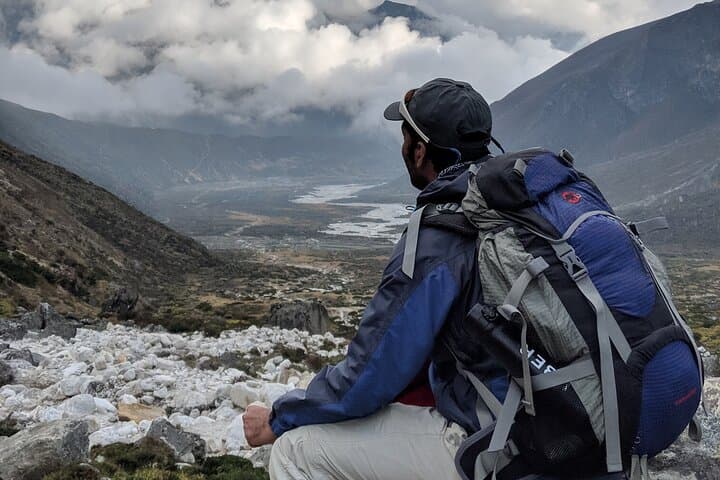

You lift from Kathmandu and the valley slips away — terraced fields shrinking, the city noise thinning until the Himalaya reasserts itself like an old, slow giant. The helicopter arcs toward sharp, ice-lined ridges; the Khumbu Glacier runs like a wound through the rock, and Everest crops up last, crowning the skyline as you hover above the high moraine.
You lift from Kathmandu and the valley slips away — terraced fields shrinking, the city noise thinning until the Himalaya reasserts itself like an old, slow giant. The helicopter arcs toward sharp, ice-lined ridges; the Khumbu Glacier runs like a wound through the rock, and Everest crops up last, crowning the skyline as you hover above the high moraine.
The air here is high in stories: Sherpa trade routes, the 1953 first ascent by Edmund Hillary and Tenzing Norgay, and the decades of mountaineering that etched trails and camps into the slopes. Geologically the region is young and violent — uplifted limestone and metamorphic gneiss pushed skyward by the Indian plate — which is why peaks here rise so abruptly from deep valleys. Culturally, villages below carry a Buddhist rhythm; prayer flags and mani stones mark approaches to high passes.
Practically, the trip is an aerial overview more than a trek: expect 3–4 hours total including transfers, with a short landing or hover above the base camp depending on weather and permissions. Temperatures at landing can be bitterly cold even in summer; wind and rotor wash are part of the experience. Photography opportunities are exceptional — use a fast shutter and secure straps — and the pilot will usually circle for maximum views of Lhotse, Nuptse, Ama Dablam and the Khumbu Icefall.
Plan logistics in Kathmandu the day before, allow flexible timing for weather, and pack for rapid exposure to high-altitude cold. This flight lets you stand (briefly) at the edge of the world without days of trekking — a high-impact, low-footprint way to meet Everest.