THE ADVENTURE COLLECTIVE® · Independent discovery and booking for outdoor travel

Head into the high glacial basin of Gokyo and climb Gokyo Ri for a sunrise that frames Everest at eye level. This guide covers the route, terrain, altitude details and practical planning essentials for the classic Gokyo Lakes trek.
Head into the high glacial basin of Gokyo and climb Gokyo Ri for a sunrise that frames Everest at eye level. This guide covers the route, terrain, altitude details and practical planning essentials for the classic Gokyo Lakes trek.
Dawn breaks cold and clear over pale-blue lakes; the ridge to Gokyo Ri picks out a razor of shadow against the sky. On the Everest Gokyo Lakes trek you move from rhododendron-shaded stone steps into a high, glacial world — moraine hummocks, silty streams and lakes that reflect ice and summit light.
Verified experiences and guided adventures in the surrounding area.
Operated by Peregrine Treks and Tours · Gokyo, Solukhumbu District
Dawn breaks cold and clear over pale-blue lakes; the ridge to Gokyo Ri picks out a razor of shadow against the sky. On the Everest Gokyo Lakes trek you move from rhododendron-shaded stone steps into a high, glacial world — moraine hummocks, silty streams and lakes that reflect ice and summit light.
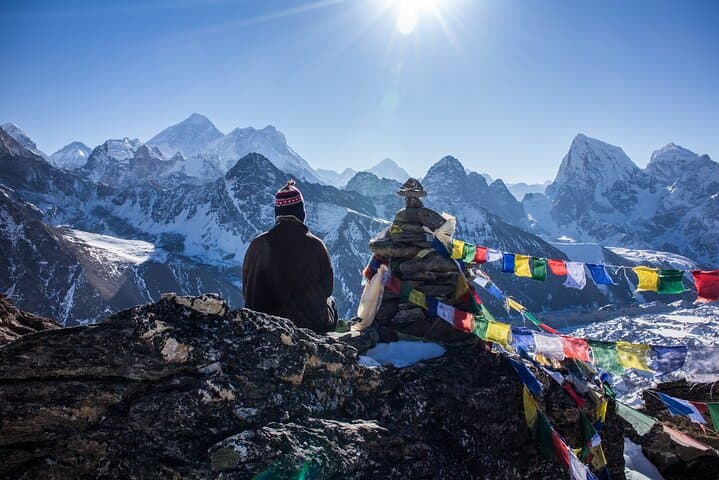
This route follows old Sherpa trails through the Khumbu, passing mani walls, gompas and villages with prayer flags. Geologically it's a study in contrast: river-cut gorges below and the Ngozumpa Glacier, the largest in Nepal, to the north. Culturally the trail runs through Sherpa communities where yak herds and lodge kitchens keep a steady, practical rhythm that has supported mountaineering for generations.
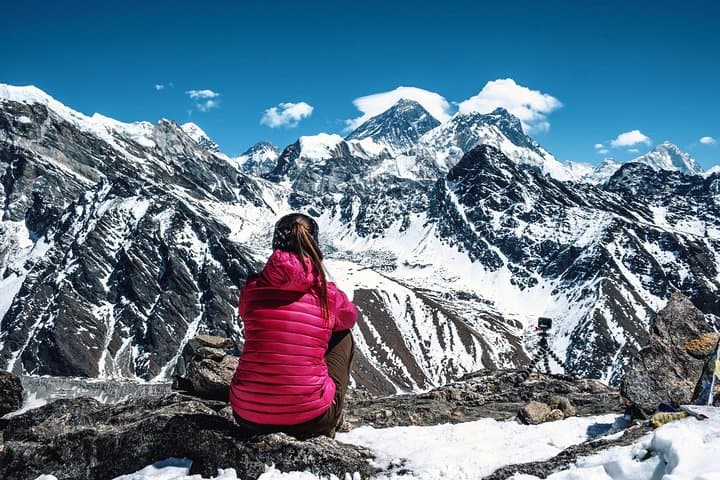
Expect 8–12 days on trail from Lukla to Gokyo and back, with daily walking of 3–6 hours and key altitude gains from ~2,800 m (Lukla) to Gokyo village (≈4,780 m) and Gokyo Ri (≈5,357 m). Terrain shifts from packed trails and stone staircases to steep scree and narrow ridgelines; a morning summit push to Gokyo Ri offers a nearly 90-degree panorama of Everest, Cho Oyu and Cho La ridge.
Plan for staged acclimatization (Namche rest day is standard), simple teahouse lodging, and weather-driven flight variability into/from Lukla. Hydration, layered insulation and conservative pacing are the practical backbone of success here. If you go early to Gokyo Ri—pre-sunrise with a headlamp—you’ll trade crowds for the fragile hush of alpine light.
challenging.
10–12 days (trekking portion).
Good cardiovascular fitness and experience with multi-day trekking at altitude; comfort on uneven terrain.
Pre-monsoon (March–May) and post-monsoon (late September–November) offer the clearest weather and stable trail conditions; winter is colder and summer can be wet and cloudy.
Yes — TIMS and the Sagarmatha National Park permit are required; operators usually handle processing before departure.
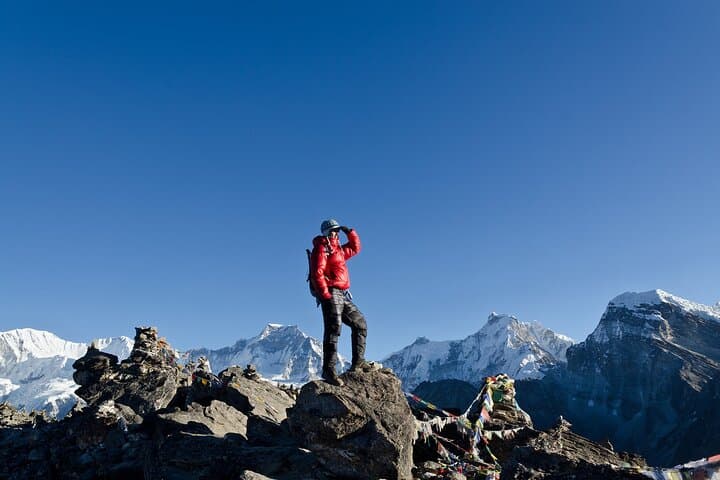
The climb to Gokyo Ri is a steep 2–3 hour ascent from the village at high altitude (≈5,357 m summit) and requires good fitness and pacing; technical climbing gear is not needed in normal conditions.
Most nights are in basic teahouses with shared rooms, simple meals and limited hot water; facilities become spartan above 4,000 m.
The Khumbu region is home to Sherpa communities who have guided Himalayan expeditions for a century; pilgrimage and yak caravan routes predate modern trekking.
Sagarmatha National Park regulates access and waste; trekkers are encouraged to minimize single-use plastics and pack out what they can to protect fragile alpine lakes.
Peregrine Treks and Tours operates guided outdoor trips and adventures with an emphasis on safety, stewardship, and memorable experiences.
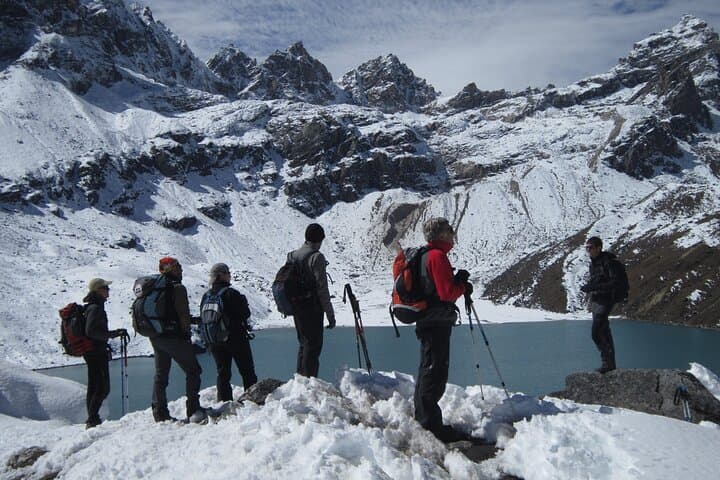
Dawn breaks cold and clear over pale-blue lakes; the ridge to Gokyo Ri picks out a razor of shadow against the sky. On the Everest Gokyo Lakes trek you move from rhododendron-shaded stone steps into a high, glacial world — moraine hummocks, silty streams and lakes that reflect ice and summit light.
Dawn breaks cold and clear over pale-blue lakes; the ridge to Gokyo Ri picks out a razor of shadow against the sky. On the Everest Gokyo Lakes trek you move from rhododendron-shaded stone steps into a high, glacial world — moraine hummocks, silty streams and lakes that reflect ice and summit light.
This route follows old Sherpa trails through the Khumbu, passing mani walls, gompas and villages with prayer flags. Geologically it's a study in contrast: river-cut gorges below and the Ngozumpa Glacier, the largest in Nepal, to the north. Culturally the trail runs through Sherpa communities where yak herds and lodge kitchens keep a steady, practical rhythm that has supported mountaineering for generations.
Expect 8–12 days on trail from Lukla to Gokyo and back, with daily walking of 3–6 hours and key altitude gains from ~2,800 m (Lukla) to Gokyo village (≈4,780 m) and Gokyo Ri (≈5,357 m). Terrain shifts from packed trails and stone staircases to steep scree and narrow ridgelines; a morning summit push to Gokyo Ri offers a nearly 90-degree panorama of Everest, Cho Oyu and Cho La ridge.
Plan for staged acclimatization (Namche rest day is standard), simple teahouse lodging, and weather-driven flight variability into/from Lukla. Hydration, layered insulation and conservative pacing are the practical backbone of success here. If you go early to Gokyo Ri—pre-sunrise with a headlamp—you’ll trade crowds for the fragile hush of alpine light.