THE ADVENTURE COLLECTIVE® · Independent discovery and booking for outdoor travel

See Mount Everest from above on a 1-hour fixed-wing mountain flight from Kathmandu. Morning departures give the clearest views of Everest, Lukla and Namche Bazaar—perfect for travelers who want a dramatic Himalayan perspective without trekking.
See Mount Everest from above on a 1-hour fixed-wing mountain flight from Kathmandu. Morning departures give the clearest views of Everest, Lukla and Namche Bazaar—perfect for travelers who want a dramatic Himalayan perspective without trekking.
A hush settles over Tribhuvan International Airport before takeoff: the engines spool, the city shrinks, and the Himalaya lift into view like a folded, ancient map. From a fixed-wing cabin with oversized windows, Mount Everest rises above the clouds — a glacial crown at 8,848 m — while ridges and icefalls push and pull the light below.
Verified experiences and guided adventures in the surrounding area.
Operated by Liberty Holidays · Kathmandu, Bagmati Province
A hush settles over Tribhuvan International Airport before takeoff: the engines spool, the city shrinks, and the Himalaya lift into view like a folded, ancient map. From a fixed-wing cabin with oversized windows, Mount Everest rises above the clouds — a glacial crown at 8,848 m — while ridges and icefalls push and pull the light below.
Flight routes sweep north from Kathmandu toward Lukla, Namche Bazaar and the Everest Base Camp approaches, climbing to roughly 25,000 ft for an unobstructed panorama. The landscape is a record of geology: young, uplifted rock plates thrusting shale and granite skyward; glaciers that carve valleys and expose blue ice. Sherpa villages and mani walls thread human history into the high country — trade routes, monasteries, and the legacy of the 1953 first ascent all visible in the valleys beneath.
Pilots narrate the route, and the aircraft provides oxygen masks and headphones for comfort and safety. Practicalities matter: morning departures maximize visibility, weather can cancel flights with short notice, and the experience suits nearly all fitness levels but is not recommended for pregnant travelers or those with serious heart or spine conditions.
For travelers, pack warm layers, a camera with a zoom lens, and patience for airport queues and weather windows. Expect a 60-minute round-trip that condenses the region’s scale into a single tangible hour — a high-altitude preview that orients future treks or simply delivers a once-in-a-lifetime view from above.
easy.
1 hour.
No special fitness required—suitable for most travelers who can sit for a short flight
The advertised experience is approximately 60 minutes total from takeoff to landing.
Yes—flights climb to around 25,000 ft to give unobstructed views of Everest (8,848 m) and surrounding peaks, weather permitting.
Most passengers can fly; however, anyone with serious heart, respiratory, or spinal conditions should consult a physician before booking.
Operators typically offer an alternative date or a full refund if you cancel at least 24 hours before departure; same-day cancellations due to weather may allow rescheduling subject to availability.
The modern Everest region became globally notable after Sir Edmund Hillary and Tenzing Norgay’s 1953 summit; Sherpa communities have since been integral to Himalayan mountaineering and trade.
Glacier retreat and increased visitor numbers stress fragile high-altitude environments; choose operators that support local communities and minimize repeat flights when possible.
Liberty Holidays operates guided outdoor trips and adventures with an emphasis on safety, stewardship, and memorable experiences.
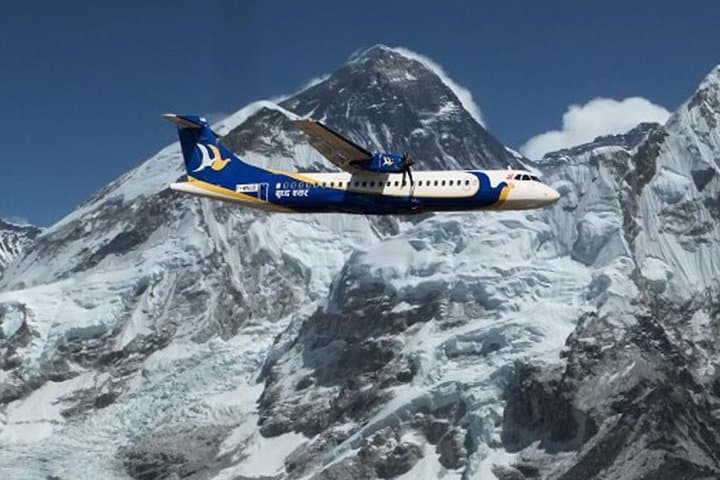
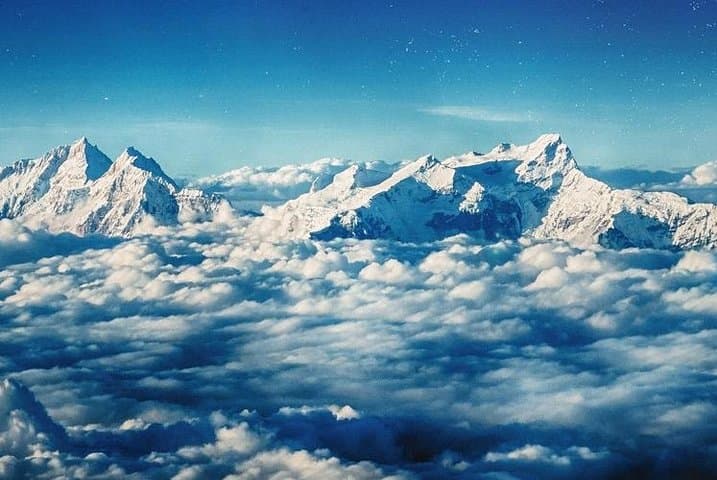
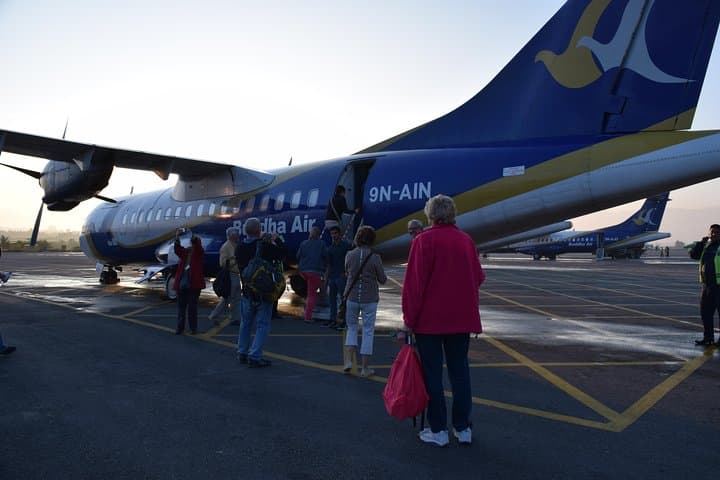
A hush settles over Tribhuvan International Airport before takeoff: the engines spool, the city shrinks, and the Himalaya lift into view like a folded, ancient map. From a fixed-wing cabin with oversized windows, Mount Everest rises above the clouds — a glacial crown at 8,848 m — while ridges and icefalls push and pull the light below.
A hush settles over Tribhuvan International Airport before takeoff: the engines spool, the city shrinks, and the Himalaya lift into view like a folded, ancient map. From a fixed-wing cabin with oversized windows, Mount Everest rises above the clouds — a glacial crown at 8,848 m — while ridges and icefalls push and pull the light below.
Flight routes sweep north from Kathmandu toward Lukla, Namche Bazaar and the Everest Base Camp approaches, climbing to roughly 25,000 ft for an unobstructed panorama. The landscape is a record of geology: young, uplifted rock plates thrusting shale and granite skyward; glaciers that carve valleys and expose blue ice. Sherpa villages and mani walls thread human history into the high country — trade routes, monasteries, and the legacy of the 1953 first ascent all visible in the valleys beneath.
Pilots narrate the route, and the aircraft provides oxygen masks and headphones for comfort and safety. Practicalities matter: morning departures maximize visibility, weather can cancel flights with short notice, and the experience suits nearly all fitness levels but is not recommended for pregnant travelers or those with serious heart or spine conditions.
For travelers, pack warm layers, a camera with a zoom lens, and patience for airport queues and weather windows. Expect a 60-minute round-trip that condenses the region’s scale into a single tangible hour — a high-altitude preview that orients future treks or simply delivers a once-in-a-lifetime view from above.