THE ADVENTURE COLLECTIVE® · Independent discovery and booking for outdoor travel

See Mount Everest from the fastest, most accessible vantage: a 45–60 minute mountain flight from Kathmandu that puts the main ridge of the Himalaya in clear view. Early-morning departures give the best visibility and photo light.
See Mount Everest from the fastest, most accessible vantage: a 45–60 minute mountain flight from Kathmandu that puts the main ridge of the Himalaya in clear view. Early-morning departures give the best visibility and photo light.
Dawn spills pale gold over Tribhuvan Airport as the turboprop taxis to the runway. Within minutes the Kathmandu Valley shrinks beneath you and the Himalaya unrolls into a ragged horizon—a skyline of teeth and terraces. Everest doesn’t hide; it waits, a white face catching the first clean light, while Lhotse, Ama Dablam and Nuptse stand like named companions along the ridge.
Verified experiences and guided adventures in the surrounding area.
Operated by Sunshine Travel Agency · Kathmandu, Bagmati Province
Dawn spills pale gold over Tribhuvan Airport as the turboprop taxis to the runway. Within minutes the Kathmandu Valley shrinks beneath you and the Himalaya unrolls into a ragged horizon—a skyline of teeth and terraces. Everest doesn’t hide; it waits, a white face catching the first clean light, while Lhotse, Ama Dablam and Nuptse stand like named companions along the ridge.
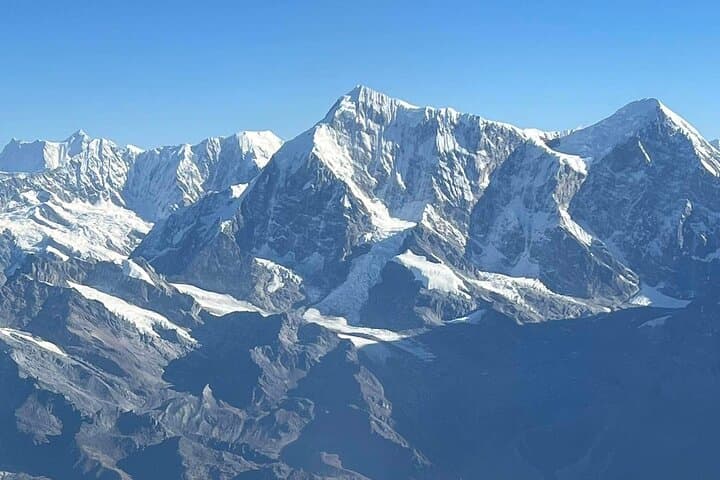
This one-hour mountain flight is a rapid encounter with the roof of the world. Geologically the peaks are young and steep—India’s plate still shoving under Eurasia—so ridgelines are sharp and glaciers carve the valleys below. Culturally, the flight crosses lands shaped by Sherpa communities and centuries of mountaineering: Sagarmatha (Everest) is both a climbing objective and a sacred summit in local lore. Expect to see avalanche-prone cirques, hanging glaciers and settlements clustered on river terraces.
Practical guidance: flights launch very early (pickup ~5:00 AM) to take advantage of stable morning air and maximum visibility; plan for a 45–60 minute window including ascent and approach over Everest. Window seats on the right side are best for Everest; bring a camera with a telephoto or good zoom and binoculars. Weather cancellations are common—book flexibility into your schedule and allow for early-morning airport transfers. Light layers work—cabin temperatures can be cool despite low altitude changes.
This is sightseeing, not a trek: physical demands are minimal but the visual and emotional scale is immediate. Treat the flight as a concentrated introduction to Himalayan terrain—brief, spectacular, and shaped by mountain weather and aviation rules.
easy.
45–60 minutes.
Minimal fitness required; suitable for most travelers who can sit for the duration
The full experience from ascent to return is typically 45–60 minutes; pickups and transfers add more time.
Most flights over the standard route provide clear views of Everest and the main ridge when weather is good—sightings are not guaranteed on cloudy days.
This flight is low-impact and suitable for most ages; infants must sit on an adult’s lap and travelers with specific medical conditions should consult their physician and the operator.
Operators typically refund or reschedule flights for poor visibility or unsafe conditions—book with flexible plans and check the 24-hour cancellation policy.
The region is central to modern mountaineering history and Sherpa culture; Sagarmatha (Everest) has long been both a spiritual landmark and a climbing objective.
High-altitude ecosystems are fragile; travelers are encouraged to minimize additional flights, respect local regulations, and support community-based conservation and waste-reduction efforts.
Sunshine Travel Agency operates guided outdoor trips and adventures with an emphasis on safety, stewardship, and memorable experiences.
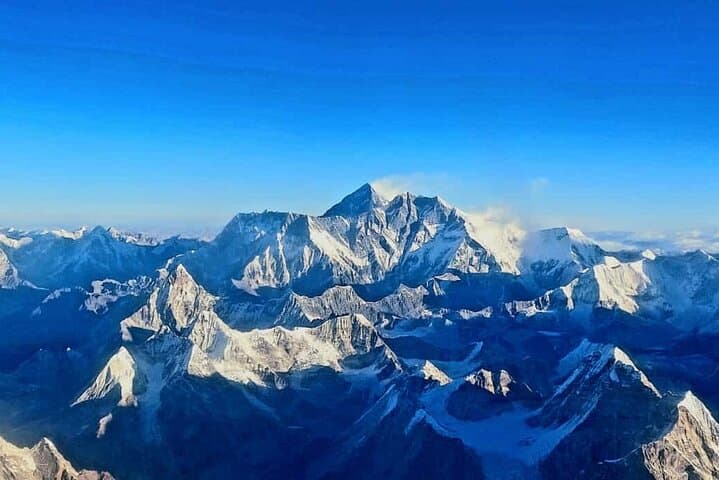

Dawn spills pale gold over Tribhuvan Airport as the turboprop taxis to the runway. Within minutes the Kathmandu Valley shrinks beneath you and the Himalaya unrolls into a ragged horizon—a skyline of teeth and terraces. Everest doesn’t hide; it waits, a white face catching the first clean light, while Lhotse, Ama Dablam and Nuptse stand like named companions along the ridge.
Dawn spills pale gold over Tribhuvan Airport as the turboprop taxis to the runway. Within minutes the Kathmandu Valley shrinks beneath you and the Himalaya unrolls into a ragged horizon—a skyline of teeth and terraces. Everest doesn’t hide; it waits, a white face catching the first clean light, while Lhotse, Ama Dablam and Nuptse stand like named companions along the ridge.
This one-hour mountain flight is a rapid encounter with the roof of the world. Geologically the peaks are young and steep—India’s plate still shoving under Eurasia—so ridgelines are sharp and glaciers carve the valleys below. Culturally, the flight crosses lands shaped by Sherpa communities and centuries of mountaineering: Sagarmatha (Everest) is both a climbing objective and a sacred summit in local lore. Expect to see avalanche-prone cirques, hanging glaciers and settlements clustered on river terraces.
Practical guidance: flights launch very early (pickup ~5:00 AM) to take advantage of stable morning air and maximum visibility; plan for a 45–60 minute window including ascent and approach over Everest. Window seats on the right side are best for Everest; bring a camera with a telephoto or good zoom and binoculars. Weather cancellations are common—book flexibility into your schedule and allow for early-morning airport transfers. Light layers work—cabin temperatures can be cool despite low altitude changes.
This is sightseeing, not a trek: physical demands are minimal but the visual and emotional scale is immediate. Treat the flight as a concentrated introduction to Himalayan terrain—brief, spectacular, and shaped by mountain weather and aviation rules.