THE ADVENTURE COLLECTIVE® · Independent discovery and booking for outdoor travel

Cross high moraine and frozen cols on a classic 17-day traverse linking Gokyo’s sapphire lakes with Everest Base Camp via the challenging Cho La Pass. This guide explains what to expect, how to prepare, and where the hardest moments become the most rewarding.
Cross high moraine and frozen cols on a classic 17-day traverse linking Gokyo’s sapphire lakes with Everest Base Camp via the challenging Cho La Pass. This guide explains what to expect, how to prepare, and where the hardest moments become the most rewarding.
A thin, cold light cuts the valley as you step off the tiny Lukla runway and into the Khumbu — prayer flags snapping like voices along the trail. Pine and rhododendron give way to moraine and blue ice as the path climbs: first to Namche Bazaar’s trading bustle, then higher into the quiet of Gokyo and the sweep of Ngozumpa Glacier. The Cho La Pass looms as a knife of rock and snow that must be crossed to link the Gokyo and Everest Base Camp routes.
Verified experiences and guided adventures in the surrounding area.
Operated by Himalayan Adventure Treks and Tours Pvt Ltd · Lukla, Solukhumbu
A thin, cold light cuts the valley as you step off the tiny Lukla runway and into the Khumbu — prayer flags snapping like voices along the trail. Pine and rhododendron give way to moraine and blue ice as the path climbs: first to Namche Bazaar’s trading bustle, then higher into the quiet of Gokyo and the sweep of Ngozumpa Glacier. The Cho La Pass looms as a knife of rock and snow that must be crossed to link the Gokyo and Everest Base Camp routes.
This corridor sits inside Sagarmatha National Park, a UNESCO protected landscape shaped by tectonics and repeated glaciation; Everest (8,848 m) and neighboring giants dominate the skyline and Sherpa culture shapes every village with mani walls, chortens and teahouses. Local histories — from Tibetan trade routes to modern mountaineering — are visible in stone lodges and monastery murals.
Expect long days on rocky, sometimes snowy trails, with cumulative altitude gain requiring deliberate pacing and acclimatization (rest days at Namche and Gokyo are built in). Tea houses provide simple hot meals and a bed; weather can turn quickly, so layered clothing and waterproofs are mandatory. Hydration and slow ascent are your best defenses against altitude illness; guides and a porter system ease logistics but bring a small medical kit and a sense of self-reliance.
Timing your trek for clear morning views, carrying cash for remote services, and respecting local customs and fragile alpine ecology will make this classic Himalayan traverse safe and unforgettable.
challenging.
14–17 days (trekking days total approx. 10–12 days).
Good cardiovascular fitness and experience with full-day hikes carrying a daypack; ability to walk 6–8 hours on uneven terrain.
Prior trekking experience at altitude is strongly recommended; the itinerary includes several nights above 4,000 m and the Cho La Pass crosses >5,300 m.
Accommodations are tea houses/guesthouses with twin-share rooms, basic hot meals, and limited electricity—expect simple bedding and shared facilities.
Very—flights to/from Lukla and high pass crossings can be delayed by weather; schedule flexibility is necessary and the operator monitors conditions closely.
The itinerary includes acclimatization days, professional guides monitor symptoms, and evacuation/rescue arrangements are included; communicate symptoms early and descend if needed.
The Khumbu served as a traditional Tibetan trade route; Sherpa communities shaped much of the region’s mountaineering support systems and cultural landscape.
Sagarmatha National Park controls permits and fees to manage visitor impact; pack out what you pack in, use designated toilets and support local lodges to minimize environmental footprint.
Himalayan Adventure Treks and Tours Pvt Ltd operates guided outdoor trips and adventures with an emphasis on safety, stewardship, and memorable experiences.
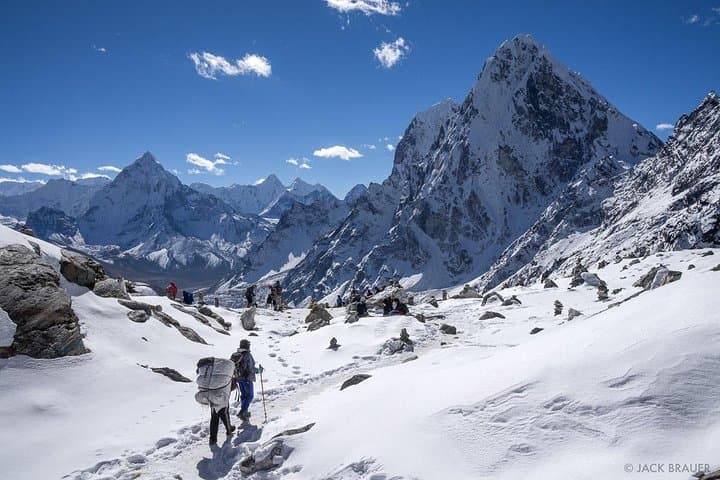
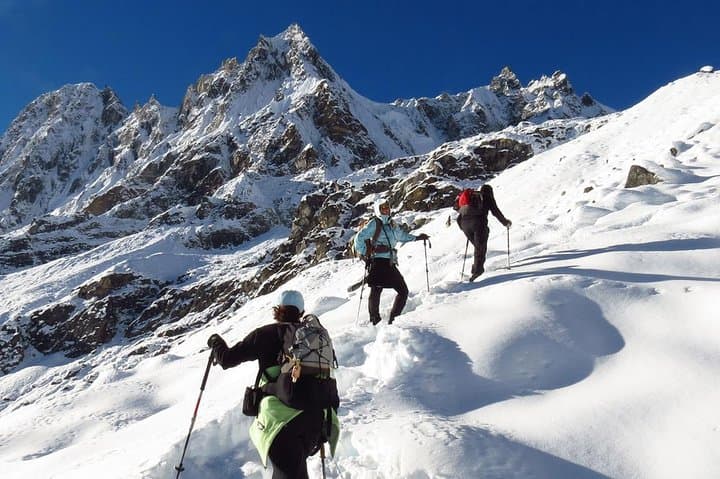
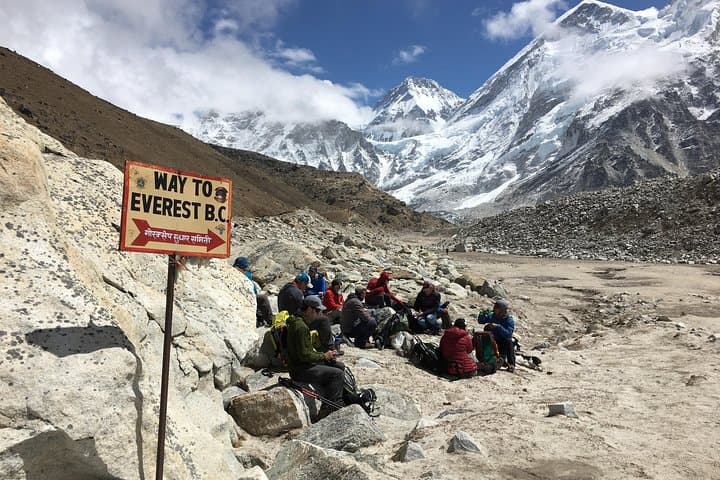
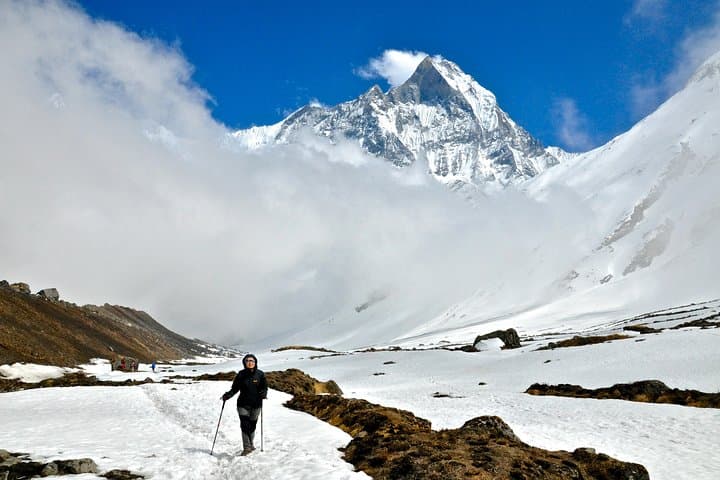
A thin, cold light cuts the valley as you step off the tiny Lukla runway and into the Khumbu — prayer flags snapping like voices along the trail. Pine and rhododendron give way to moraine and blue ice as the path climbs: first to Namche Bazaar’s trading bustle, then higher into the quiet of Gokyo and the sweep of Ngozumpa Glacier. The Cho La Pass looms as a knife of rock and snow that must be crossed to link the Gokyo and Everest Base Camp routes.
A thin, cold light cuts the valley as you step off the tiny Lukla runway and into the Khumbu — prayer flags snapping like voices along the trail. Pine and rhododendron give way to moraine and blue ice as the path climbs: first to Namche Bazaar’s trading bustle, then higher into the quiet of Gokyo and the sweep of Ngozumpa Glacier. The Cho La Pass looms as a knife of rock and snow that must be crossed to link the Gokyo and Everest Base Camp routes.
This corridor sits inside Sagarmatha National Park, a UNESCO protected landscape shaped by tectonics and repeated glaciation; Everest (8,848 m) and neighboring giants dominate the skyline and Sherpa culture shapes every village with mani walls, chortens and teahouses. Local histories — from Tibetan trade routes to modern mountaineering — are visible in stone lodges and monastery murals.
Expect long days on rocky, sometimes snowy trails, with cumulative altitude gain requiring deliberate pacing and acclimatization (rest days at Namche and Gokyo are built in). Tea houses provide simple hot meals and a bed; weather can turn quickly, so layered clothing and waterproofs are mandatory. Hydration and slow ascent are your best defenses against altitude illness; guides and a porter system ease logistics but bring a small medical kit and a sense of self-reliance.
Timing your trek for clear morning views, carrying cash for remote services, and respecting local customs and fragile alpine ecology will make this classic Himalayan traverse safe and unforgettable.