THE ADVENTURE COLLECTIVE® · Independent discovery and booking for outdoor travel

Short on time but determined to stand at Everest Base Camp? This 8–10 day Khumbu trek delivers EBC and Kala Patthar vistas, Sherpa culture and a helicopter return to Lukla to skip uncertain outbound flights.
Short on time but determined to stand at Everest Base Camp? This 8–10 day Khumbu trek delivers EBC and Kala Patthar vistas, Sherpa culture and a helicopter return to Lukla to skip uncertain outbound flights.
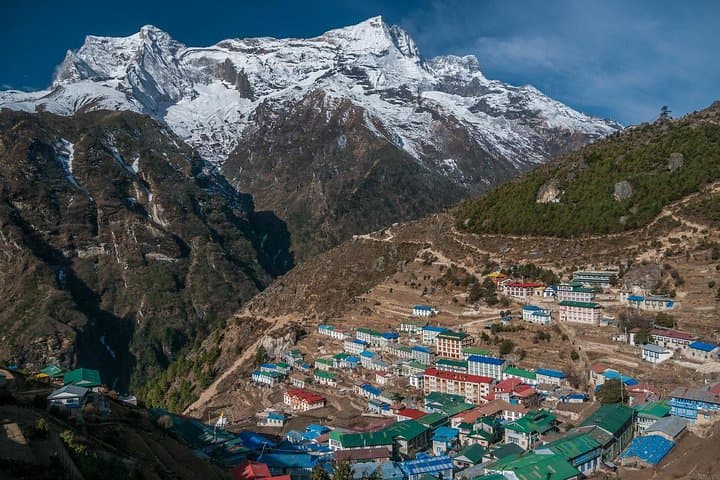
You step out of Lukla’s thin-air bustle onto a trail that drops into the Dudh Koshi valley, prayer flags snapping like wind-driven promises. The route climbs through rhododendron forests, crosses rickety suspension bridges and threads Sherpa villages where children call like mountain guides.
Verified experiences and guided adventures in the surrounding area.
Operated by Master Himalaya Treks and Expedition · Gorak Shep, Province No. 1
You step out of Lukla’s thin-air bustle onto a trail that drops into the Dudh Koshi valley, prayer flags snapping like wind-driven promises. The route climbs through rhododendron forests, crosses rickety suspension bridges and threads Sherpa villages where children call like mountain guides.
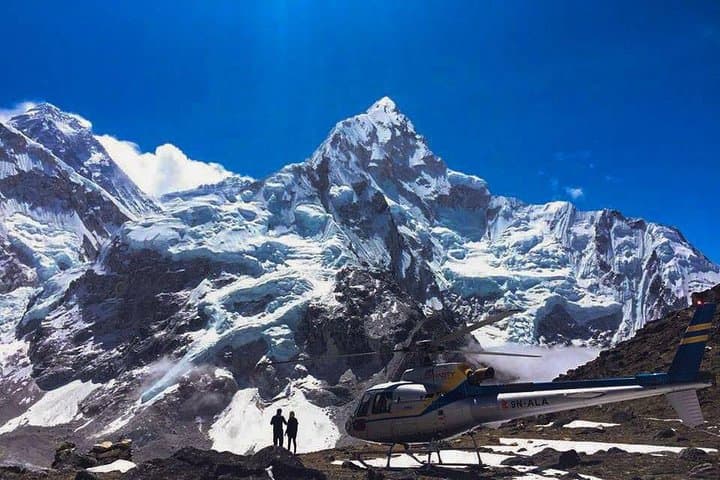
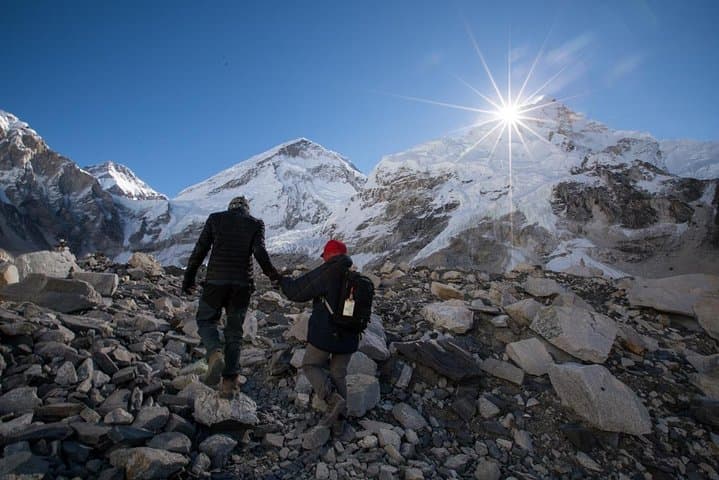
The track follows rivers carved by glacial melt and ends on the moraines of the Khumbu Glacier beneath Everest’s cold face. This itinerary compresses the classic Khumbu approach into roughly 8–10 days of walking, finishing at Everest Base Camp (5,364 m) and Kala Patthar (≈5,545 m) for the sunrise panorama before a helicopter lift back to Lukla.
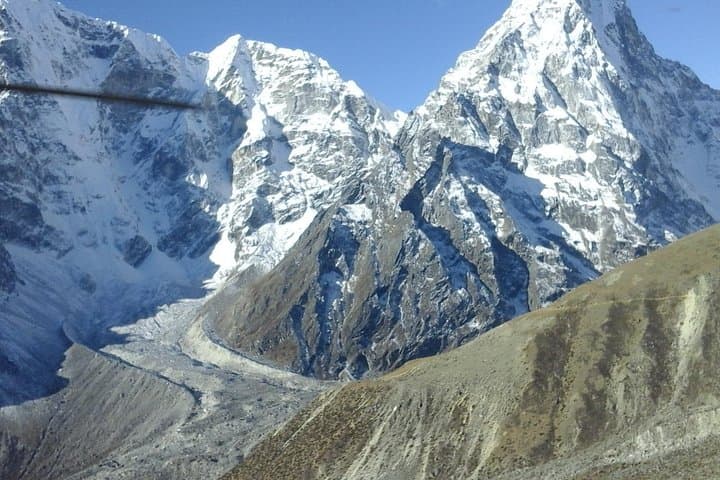
The Khumbu is young geology — jagged granite and moraine fields shaped by active glaciation — and a living Sherpa culture tied to Tibetan Buddhism and 20th-century mountaineering history; you’ll pass Tengboche Monastery and villages shaped by Hillary’s legacy.
Expect 60–75 km round-trip trekking with total elevation gain from Lukla (≈2,860 m) to EBC of about 2,500 m spread across altitude-acclimatization days. Trails vary from packed dirt and stone steps to exposed scree near Gorak Shep; strong winds and sudden weather shifts are common.
Practical notes: hydrate and eat frequently, use trekking poles to protect knees on descents, and plan for 4–8 hours of walking on long days. The helicopter return reduces exposure to unpredictable Lukla flights but still requires flexibility for weather delays. Respect teahouse rules, tip porters fairly, and pack out non-biodegradable waste — the mountains repay careful travelers with clear light and uncompromising views.
challenging.
8–10 days.
Good cardiovascular fitness with experience on multi-day hikes; able to walk 4–8 hours daily carrying a daypack.
Expect 8–10 days of trekking covering roughly 60–75 km round-trip with daily walks of 4–8 hours; exact itinerary varies by operator.
No technical experience is required, but prior multi-day trekking and good fitness help; altitude acclimatization and awareness of AMS are essential.
This program typically includes a helicopter transfer from the Gorak Shep/Gorekshep area back to Lukla, removing the need for a Lukla outbound flight that can be weather-dependent.
Typical inclusions: domestic flights KTM–Lukla–KTM, guesthouse accommodation, all trek meals, licensed English-speaking guide, shared porter service, sleeping bag and some pre/post transfers; confirm specifics with the operator.
The Khumbu region was transformed by Sherpa settlement and 20th-century mountaineering; Sir Edmund Hillary and Tenzing Norgay’s 1953 ascent put these trails on the map.
Trail erosion and waste are persistent issues; use local lodges, pack out plastics when possible, and follow strict litter rules to protect fragile alpine ecosystems.
Master Himalaya Treks and Expedition operates guided outdoor trips and adventures with an emphasis on safety, stewardship, and memorable experiences.
You step out of Lukla’s thin-air bustle onto a trail that drops into the Dudh Koshi valley, prayer flags snapping like wind-driven promises. The route climbs through rhododendron forests, crosses rickety suspension bridges and threads Sherpa villages where children call like mountain guides.
You step out of Lukla’s thin-air bustle onto a trail that drops into the Dudh Koshi valley, prayer flags snapping like wind-driven promises. The route climbs through rhododendron forests, crosses rickety suspension bridges and threads Sherpa villages where children call like mountain guides.
The track follows rivers carved by glacial melt and ends on the moraines of the Khumbu Glacier beneath Everest’s cold face. This itinerary compresses the classic Khumbu approach into roughly 8–10 days of walking, finishing at Everest Base Camp (5,364 m) and Kala Patthar (≈5,545 m) for the sunrise panorama before a helicopter lift back to Lukla.
The Khumbu is young geology — jagged granite and moraine fields shaped by active glaciation — and a living Sherpa culture tied to Tibetan Buddhism and 20th-century mountaineering history; you’ll pass Tengboche Monastery and villages shaped by Hillary’s legacy.
Expect 60–75 km round-trip trekking with total elevation gain from Lukla (≈2,860 m) to EBC of about 2,500 m spread across altitude-acclimatization days. Trails vary from packed dirt and stone steps to exposed scree near Gorak Shep; strong winds and sudden weather shifts are common.
Practical notes: hydrate and eat frequently, use trekking poles to protect knees on descents, and plan for 4–8 hours of walking on long days. The helicopter return reduces exposure to unpredictable Lukla flights but still requires flexibility for weather delays. Respect teahouse rules, tip porters fairly, and pack out non-biodegradable waste — the mountains repay careful travelers with clear light and uncompromising views.