THE ADVENTURE COLLECTIVE® · Independent discovery and booking for outdoor travel

Head into the high Khumbu on a 12-day trek to Everest Base Camp with a helicopter return from Gorak Shep to Lukla. This itinerary balances acclimatization, high-altitude viewpoints like Kala Patthar, and the time-saving helicopter exit.
Head into the high Khumbu on a 12-day trek to Everest Base Camp with a helicopter return from Gorak Shep to Lukla. This itinerary balances acclimatization, high-altitude viewpoints like Kala Patthar, and the time-saving helicopter exit.
The air thins and the trail narrows as you leave Namche Bazaar behind and climb through prayer-flagged suspension bridges toward the granite teeth of the Khumbu. By the time you reach Gorak Shep the landscape switches: moraine-scarred valleys give way to ice and stony plains, and the wind tests your lungs as Everest rises above the horizon.
Verified experiences and guided adventures in the surrounding area.
Operated by Ace the Himalaya · Kathmandu, Bagmati Province
The air thins and the trail narrows as you leave Namche Bazaar behind and climb through prayer-flagged suspension bridges toward the granite teeth of the Khumbu. By the time you reach Gorak Shep the landscape switches: moraine-scarred valleys give way to ice and stony plains, and the wind tests your lungs as Everest rises above the horizon.
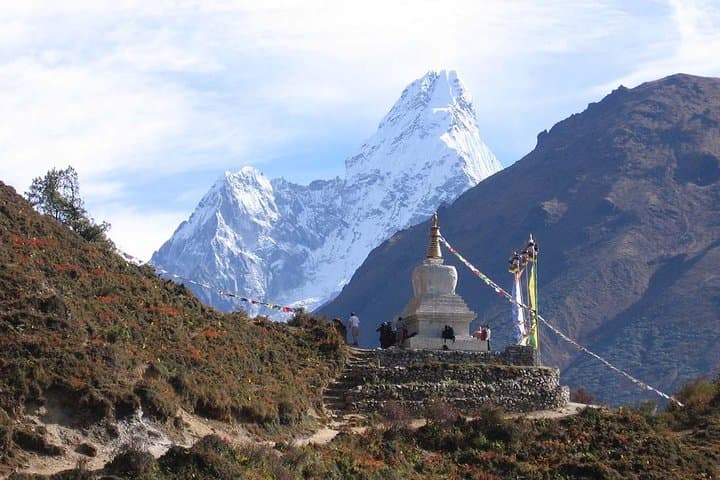
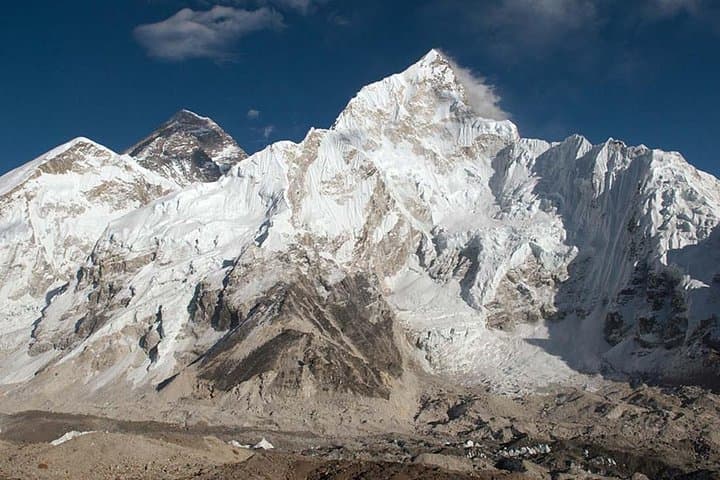
This route follows centuries-old Sherpa trade corridors and modern expedition approaches into Sagarmatha (Everest) National Park. Geologically you move from river-carved valleys and rhododendron forests to lateral moraines and the Khumbu Glacier; at each step the peaks—Ama Dablam, Lhotse, Nuptse—rearrange the skyline. Cultural notes are evident in mani walls, monastery chants in Tengboche, and the tea-house hospitality of Namche’s bakeries and guesthouses.
Expect structured acclimatization days (Namche, Dingboche), steady ascents with planned stops, and mixed terrain: compact dirt, rocky moraine, and high-altitude scree. Key numbers: trip length ~11–12 days, highest walking points Kala Patthar ~5,555 m and EBC ~5,365 m, helicopter transfer Gorak Shep→Lukla ~20 minutes, Lukla→Kathmandu flight ~35 minutes. Guides carry oxygen saturation monitors and first-aid kits; porters typically carry group luggage while you carry a daypack.
Practical guidance: pace conservatively, drink frequently, layer for severe sun and alpine wind, and prepare for weather-driven schedule changes—especially the helicopter leg, which depends on visibility. With solid fitness and respect for altitude, this trek delivers raw high-mountain panoramas and efficient exit logistics by helicopter.
challenging.
11–12 days.
Good cardiovascular fitness and experience with multi-day uphill trekking at altitude; able to walk 5–7 hours daily with sustained climbs.
Highest walking points are Kala Patthar (~5,555 m) and Everest Base Camp (~5,365 m); no technical climbing gear is required—this is high-altitude trekking, not mountaineering.
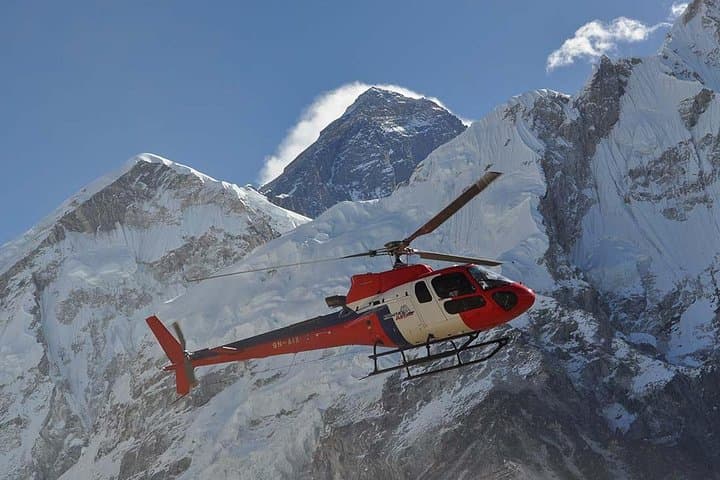
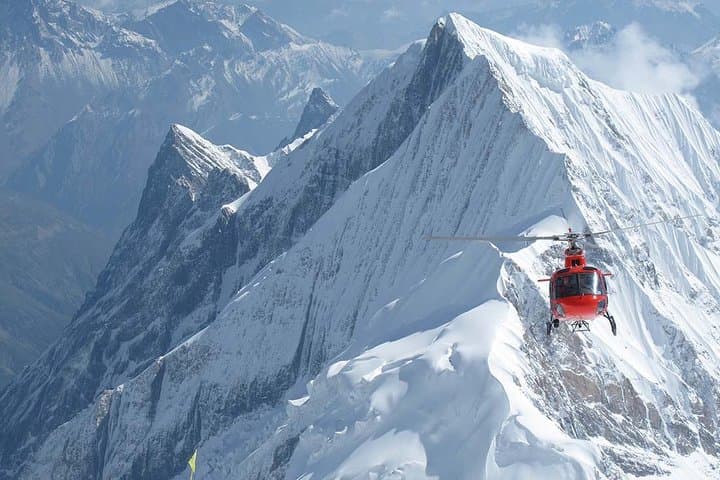
The shared helicopter from Gorak Shep to Lukla is about 20 minutes; flights are weather-dependent and can be delayed or canceled for safety, so itineraries may adjust.
Trekking in the Khumbu requires Sagarmatha National Park entry permit and TIMS (Trekkers’ Information Management System) card; operators normally arrange these.
Altitude sickness is a real risk above 3,000 m; this itinerary includes acclimatization days, pulse oximeters, and trained guides—slow ascent, hydration, and reporting symptoms early are key.
The trail follows traditional Sherpa trade and pilgrimage routes and became globally prominent after early Everest expedition routes were established in the 1950s and 1960s.
Sagarmatha National Park enforces permits and encourages leave-no-trace practices; visitors should minimize single-use plastics and follow local waste management rules to protect fragile alpine ecology.
Ace the Himalaya operates guided outdoor trips and adventures with an emphasis on safety, stewardship, and memorable experiences.
The air thins and the trail narrows as you leave Namche Bazaar behind and climb through prayer-flagged suspension bridges toward the granite teeth of the Khumbu. By the time you reach Gorak Shep the landscape switches: moraine-scarred valleys give way to ice and stony plains, and the wind tests your lungs as Everest rises above the horizon.
The air thins and the trail narrows as you leave Namche Bazaar behind and climb through prayer-flagged suspension bridges toward the granite teeth of the Khumbu. By the time you reach Gorak Shep the landscape switches: moraine-scarred valleys give way to ice and stony plains, and the wind tests your lungs as Everest rises above the horizon.
This route follows centuries-old Sherpa trade corridors and modern expedition approaches into Sagarmatha (Everest) National Park. Geologically you move from river-carved valleys and rhododendron forests to lateral moraines and the Khumbu Glacier; at each step the peaks—Ama Dablam, Lhotse, Nuptse—rearrange the skyline. Cultural notes are evident in mani walls, monastery chants in Tengboche, and the tea-house hospitality of Namche’s bakeries and guesthouses.
Expect structured acclimatization days (Namche, Dingboche), steady ascents with planned stops, and mixed terrain: compact dirt, rocky moraine, and high-altitude scree. Key numbers: trip length ~11–12 days, highest walking points Kala Patthar ~5,555 m and EBC ~5,365 m, helicopter transfer Gorak Shep→Lukla ~20 minutes, Lukla→Kathmandu flight ~35 minutes. Guides carry oxygen saturation monitors and first-aid kits; porters typically carry group luggage while you carry a daypack.
Practical guidance: pace conservatively, drink frequently, layer for severe sun and alpine wind, and prepare for weather-driven schedule changes—especially the helicopter leg, which depends on visibility. With solid fitness and respect for altitude, this trek delivers raw high-mountain panoramas and efficient exit logistics by helicopter.