THE ADVENTURE COLLECTIVE® · Independent discovery and booking for outdoor travel

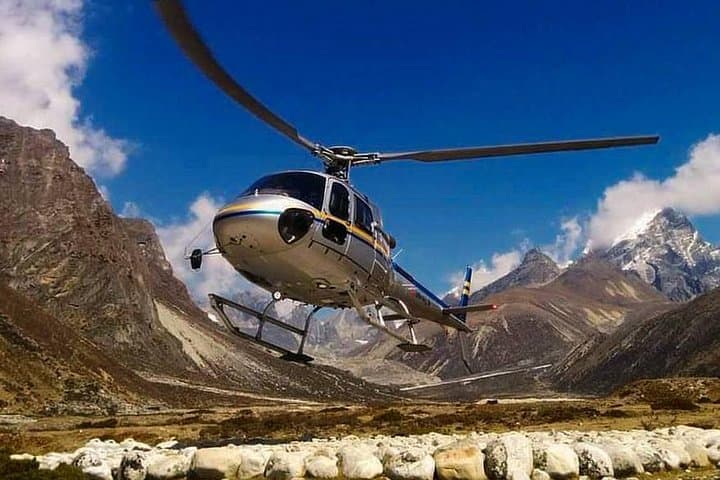
Short on time but hungry for the high Himalaya? This private 8-day trek reaches Everest Base Camp and Kala Patthar, with a shared helicopter return from Gorak Shep to Kathmandu—fast access to classic high-altitude views with tea-house comforts.
Short on time but hungry for the high Himalaya? This private 8-day trek reaches Everest Base Camp and Kala Patthar, with a shared helicopter return from Gorak Shep to Kathmandu—fast access to classic high-altitude views with tea-house comforts.
A thin, cold light lifts over the Khumbu and the trail exhales into the day. Trekkers leave Kathmandu, climb into a short but dramatic Lukla flight, and step into a landscape that pushes and humbles: pine-scented trails, bridges swinging over the Dudh Koshi, and high alpine plains where prayer flags snap like warning banners in the wind.
Verified experiences and guided adventures in the surrounding area.
Operated by Master Himalaya Treks and Expedition · Gorak Shep, Province No. 1
A thin, cold light lifts over the Khumbu and the trail exhales into the day. Trekkers leave Kathmandu, climb into a short but dramatic Lukla flight, and step into a landscape that pushes and humbles: pine-scented trails, bridges swinging over the Dudh Koshi, and high alpine plains where prayer flags snap like warning banners in the wind.
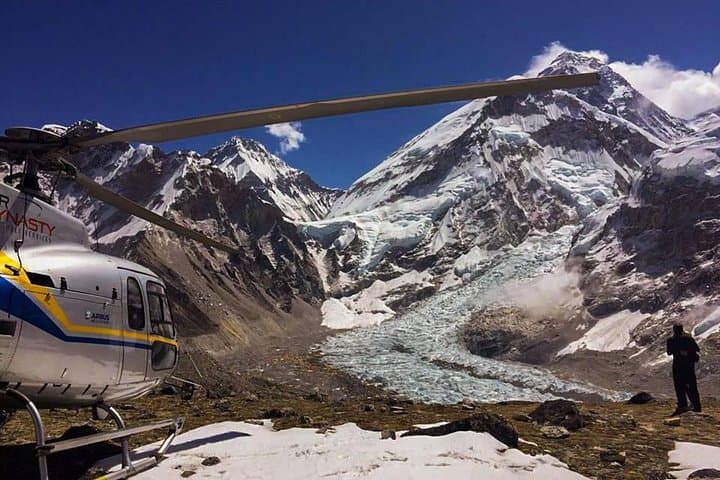
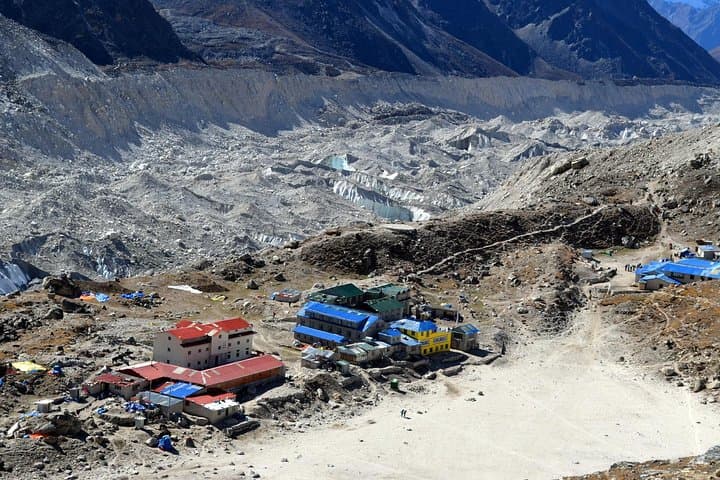
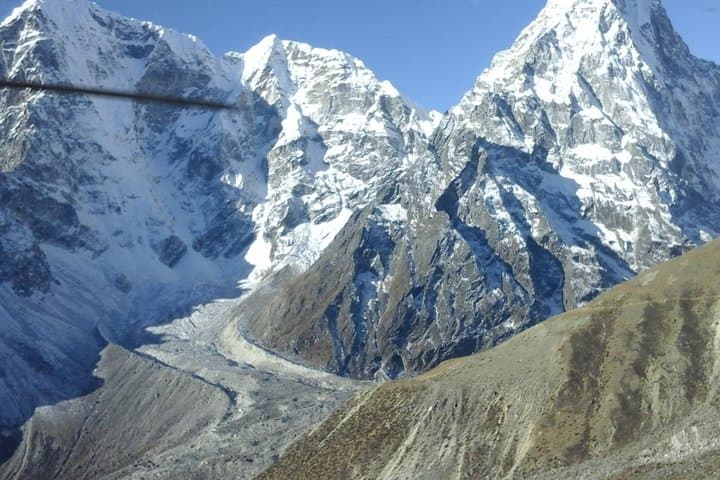
The route follows historic Sherpa corridors carved by trade and pilgrimage. Geologically, you move from river-carved valleys into the shadow of the Khumbu Glacier; moraine and scree bruises the climb toward Gorak Shep and the ragged ice of Everest’s lower flanks. Sherpa villages—Namche Bazaar, Tengboche—hold monasteries and museums that explain local life shaped by mountaineering, Buddhism, and yak pastoralism.
Expect daily hiking of 3–7 hours with 300–800 m of gain on acclimatization-focused days; nights are in family-run tea houses, food included, and one porter is shared per two trekkers. The itinerary peaks near 5,300–5,500 m at Everest Base Camp and Kala Patthar; the helicopter return from Gorak Shep to Kathmandu avoids the long descent and exposed return trek.
Practical guidance: pace conservatively, drink 3–4 liters, use a layering system, and carry water purification and sun protection. Watch for altitude symptoms—early descent is the only effective treatment. Weather changes fast: mornings can be calm; afternoons bring wind and spindrift. With proper conditioning and respect for the mountain’s rules, this one-week circuit delivers the raw, high-alpine panorama of Everest without technical climbing.
challenging.
8 days.
Good aerobic base and prior multi-day hiking experience recommended; ability to hike 4–6 hours at elevation on consecutive days.
The itinerary is eight days, with the highest viewpoints at Kala Patthar (~5,545 m) and Everest Base Camp (~5,364 m); active trekking is typically 3–7 hours per day.
Heli flights can be weather-dependent; operators usually plan alternatives (extended walk or additional overnight) or offer refunds if the flight is cancelled due to conditions.
Yes—trekking permits, TIMS card, and any required domestic flight paperwork are included per the itinerary; you must provide passport details for permit processing.
No technical climbing skills are required—this is a high-altitude trek on marked trails, but participants must be prepared for altitude, cold, and basic scrambling in places.
The Khumbu has been a Sherpa heartland for centuries; modern trekking grew after the 1953 Everest ascent, with Lukla and Namche developing as logistics hubs.
Permits and local fees support community development; trekkers should pack out waste, use refillable bottles, and follow local guidelines to minimize impact.
Master Himalaya Treks and Expedition operates guided outdoor trips and adventures with an emphasis on safety, stewardship, and memorable experiences.
A thin, cold light lifts over the Khumbu and the trail exhales into the day. Trekkers leave Kathmandu, climb into a short but dramatic Lukla flight, and step into a landscape that pushes and humbles: pine-scented trails, bridges swinging over the Dudh Koshi, and high alpine plains where prayer flags snap like warning banners in the wind.
A thin, cold light lifts over the Khumbu and the trail exhales into the day. Trekkers leave Kathmandu, climb into a short but dramatic Lukla flight, and step into a landscape that pushes and humbles: pine-scented trails, bridges swinging over the Dudh Koshi, and high alpine plains where prayer flags snap like warning banners in the wind.
The route follows historic Sherpa corridors carved by trade and pilgrimage. Geologically, you move from river-carved valleys into the shadow of the Khumbu Glacier; moraine and scree bruises the climb toward Gorak Shep and the ragged ice of Everest’s lower flanks. Sherpa villages—Namche Bazaar, Tengboche—hold monasteries and museums that explain local life shaped by mountaineering, Buddhism, and yak pastoralism.
Expect daily hiking of 3–7 hours with 300–800 m of gain on acclimatization-focused days; nights are in family-run tea houses, food included, and one porter is shared per two trekkers. The itinerary peaks near 5,300–5,500 m at Everest Base Camp and Kala Patthar; the helicopter return from Gorak Shep to Kathmandu avoids the long descent and exposed return trek.
Practical guidance: pace conservatively, drink 3–4 liters, use a layering system, and carry water purification and sun protection. Watch for altitude symptoms—early descent is the only effective treatment. Weather changes fast: mornings can be calm; afternoons bring wind and spindrift. With proper conditioning and respect for the mountain’s rules, this one-week circuit delivers the raw, high-alpine panorama of Everest without technical climbing.