THE ADVENTURE COLLECTIVE® · Independent discovery and booking for outdoor travel

A 14‑day guided route that pairs the classic Everest Base Camp approach with the remote Gokyo Lakes and a glacier crossing at Cho La Pass — expect high ridgelines, teahouse nights, and technical snow on the pass.
A 14‑day guided route that pairs the classic Everest Base Camp approach with the remote Gokyo Lakes and a glacier crossing at Cho La Pass — expect high ridgelines, teahouse nights, and technical snow on the pass.
You stand on a high moraine at dawn, wind pushing the smell of ice and yak butter tea toward you, Everest’s north ridge catching first light like a blade. The trail alternates between stony glacier skirts, rhododendron forests, and villages where prayer flags flitter like small warnings and blessings.
Verified experiences and guided adventures in the surrounding area.
Operated by Marvel Treks and Expedition · Kathmandu, Bagmati Province
You stand on a high moraine at dawn, wind pushing the smell of ice and yak butter tea toward you, Everest’s north ridge catching first light like a blade. The trail alternates between stony glacier skirts, rhododendron forests, and villages where prayer flags flitter like small warnings and blessings.
This itinerary threads the classic Khumbu route to Everest Base Camp (5,364m) with the quieter Gokyo Valley and the technical Cho La Pass (5,420m). Geologically you cross young Himalayan uplift, moraines from the Ngozumpa Glacier, and lakes fed by terminal ice — Gokyo’s turquoise basins sit on glacial outwash. Culturally the route moves through Sherpa villages, Tengboche monastery’s chants, and markets in Namche Bazaar that grew alongside mountaineering history after the 1953 Everest ascent.
Expect long days (3–8 hrs hiking on many legs), steady altitude gain, teahouse dorms (twin-share), and a morning flight Kathmandu–Lukla. Guides and porters are standard; permits (Sagarmatha National Park, TIMS) and domestic flights are included. The Cho La crossing often needs crampons and a head for exposure; Gokyo Ri and Kala Patthar provide skyline panoramas of Everest, Lhotse, Cho Oyu, and Makalu.
Practical notes: build in acclimatization (Namche rest day), carry layered insulation, sun protection, and water treatment. Start passes before sunrise to avoid melting snow and crevasse hazard. Cash is limited along the trail; respect local waste rules — pack out plastics where possible. With proper conditioning and a guided team, this route rewards you with solitude, high-altitude lakes, and a fuller picture of the Khumbu than the standard up-and-back trek.
challenging.
14 days (approx.).
Good aerobic fitness with prior multi-day hiking experience; ability to carry a daypack at altitude and tolerate long uphill days.
Cho La is a technical glacier pass with steep, icy sections; guided groups typically use crampons and rope support; fitness and some prior snow travel experience are strongly recommended.
Yes — Sagarmatha National Park and TIMS permits are required for the Khumbu region; this trip includes permits and domestic flights (Kathmandu–Lukla–Kathmandu).
Teahouse twin-share rooms with basic beds, thin mattresses, and shared latrines; hot meals are available but electricity and showers may be limited at higher elevations.
Guides commonly carry satellite communication and the operator includes safety planning and emergency oxygen; evacuation can be arranged but is weather-dependent.
The Khumbu region has been a Sherpa homeland for centuries; modern trekking grew after the 1953 Everest ascent and the creation of Sagarmatha National Park (1976).
Visitors should minimize waste and organic fuel use; Sagarmatha National Park enforces permit systems and local programs encourage pack-in/pack-out practices to protect sensitive alpine ecosystems.
Marvel Treks and Expedition operates guided outdoor trips and adventures with an emphasis on safety, stewardship, and memorable experiences.
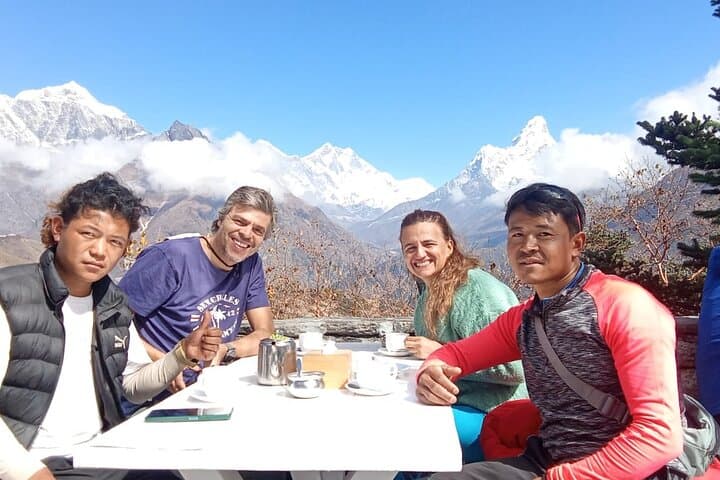
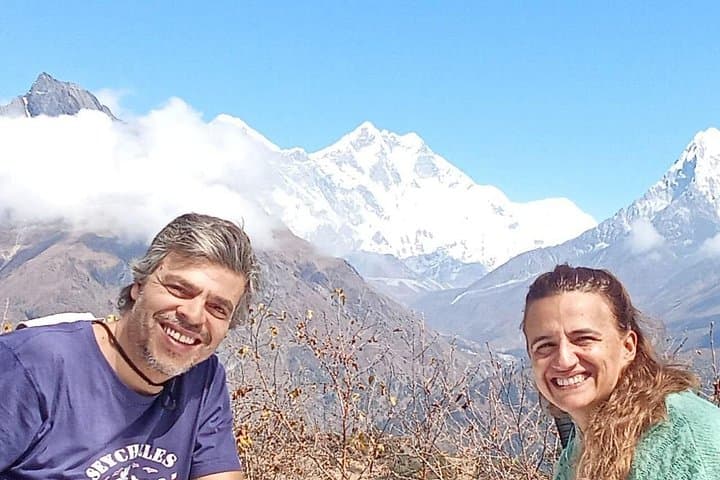
You stand on a high moraine at dawn, wind pushing the smell of ice and yak butter tea toward you, Everest’s north ridge catching first light like a blade. The trail alternates between stony glacier skirts, rhododendron forests, and villages where prayer flags flitter like small warnings and blessings.
You stand on a high moraine at dawn, wind pushing the smell of ice and yak butter tea toward you, Everest’s north ridge catching first light like a blade. The trail alternates between stony glacier skirts, rhododendron forests, and villages where prayer flags flitter like small warnings and blessings.
This itinerary threads the classic Khumbu route to Everest Base Camp (5,364m) with the quieter Gokyo Valley and the technical Cho La Pass (5,420m). Geologically you cross young Himalayan uplift, moraines from the Ngozumpa Glacier, and lakes fed by terminal ice — Gokyo’s turquoise basins sit on glacial outwash. Culturally the route moves through Sherpa villages, Tengboche monastery’s chants, and markets in Namche Bazaar that grew alongside mountaineering history after the 1953 Everest ascent.
Expect long days (3–8 hrs hiking on many legs), steady altitude gain, teahouse dorms (twin-share), and a morning flight Kathmandu–Lukla. Guides and porters are standard; permits (Sagarmatha National Park, TIMS) and domestic flights are included. The Cho La crossing often needs crampons and a head for exposure; Gokyo Ri and Kala Patthar provide skyline panoramas of Everest, Lhotse, Cho Oyu, and Makalu.
Practical notes: build in acclimatization (Namche rest day), carry layered insulation, sun protection, and water treatment. Start passes before sunrise to avoid melting snow and crevasse hazard. Cash is limited along the trail; respect local waste rules — pack out plastics where possible. With proper conditioning and a guided team, this route rewards you with solitude, high-altitude lakes, and a fuller picture of the Khumbu than the standard up-and-back trek.